By
Beth Stackpole
June 6, 2019

Get news, papers, media and research delivered. Sign up for our free newsletters.
Stay up-to-date with news and resources you need to do your job. Research industry trends, compare companies and get weekly market intelligence with Robotics 24/7.
Siemens took the first step toward bolstering its digital design and manufacturing portfolio with low-code application development capabilities via the integration of Mendix with its MindSphere Internet of Things (IoT) platform.
The Mendix for MindSphere integrated solution brings AI-assisted, visual model-based development capabilities to the IoT world, allowing business users or design engineers without formal coding experience to create their own IoT applications. Siemens acquired Mendix last year and this is the first integration deliverable.
While Siemens provides a range of out-of-box connectivity and predictive analytics functionality for its MindSphere cloud-based IoT operating system, it’s become clear that custom applications built around the operating system are where enterprises really see value, according to Bill Boswell, Siemens’ vice president of marketing for cloud application solutions and Mindsphere. “The most powerful apps address specific industry processes, workflows or a job a person focuses on,” Boswell notes, adding that today companies either rely on IT and internal developers to build custom apps or work with a third-party partner.
By integrating Mendix into the mix, Siemens now covers the full range of development options and makes it far more cost effective to quickly build industry-vertical IoT applications. In a Forrester study commissioned by Siemens, 46% of IoT decision makers said that the ability for partners to help develop vertical industry applications would be most helpful to their organizational efforts.
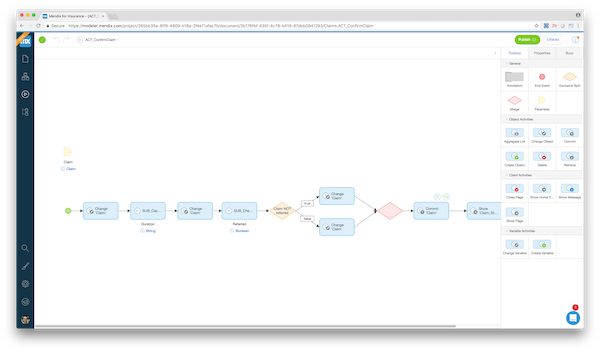
In addition, a low-code environment allows for more iteration and experimentation for IIoT applications, which is important since the market is still in the innovation stage and not close to commoditization, says Hans De Visser, vice president of product management for Mendix.
“This lets you bring people from IT, the business, and operations together in an environment where they can quickly crank out prototypes,” De Visser explains. “It allows you to include many stakeholders in the act of development and get a feel for if an app is going in the right direction or if you should course correct.”
For design engineers, the ability to easily create an IoT app can allow for greater experimentation as part of the overall effort, especially in software which has historically been well out of their wheel house. The ability to take advantage of the product data coming from the connected product and sync it up with other data sources to quickly spin up an app encourages more out-of-box design thinking, De Visser says.
“It enables the engineer to start to think about how business users or end users use data,” he says. “It also helps knock down silos.”
The Mendix team is also working on delivering similar integrations for other Siemens PLM Software products such as Teamcenter PLM.
Watch this video to learn how companies are leveraging Mendix for a rapid application development (RAD) approach to building IIoT applications.

Beth Stackpole is a contributing editor to the Digital Engineering 24/7 and Robotics 24/7 sites.
Software Cloud and Edge IoT Features Product Digital Thread Internet of Things PLM Products Siemens
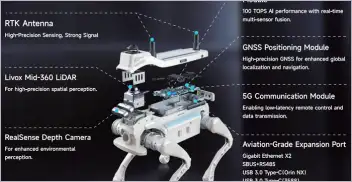
GENISOM AI makes ICRA debut at conference in Vienna
World's first omni-modal evaluation including tactile sensing for…
North America’s largest robotics and automation event winds down
Automate’s largest day ever draws huge crowds to McCormick Place