A
Agentic AI enables artificial intelligence systems to interpret goals, develop plans, make decisions, take actions, evaluate results, and adapt with greater autonomy.
AGV stands for Automated Guided Vehicle. AGVs are used to transport heavy items such as stacks of pallets, rolls of paper or metal, and auto parts along a defined route in a factory or warehouse.
Autonomous mobile robots (AMRs) use intelligent navigation to transport materials, support fulfillment and automate workflows in warehouses, factories and other facilities.
API stands for Application Programming Interface. Application programming interfaces are the links that allow pieces of software to communicate with each other. They are designed to only show programmers the essential details they need to send instructions to another program or device.
ASRS or AS/RS is short for Automated Storage and Retrieval System. These systems are designed to automatically place and retrieve items from defined storage locations in a warehouse.
AS/RS - Automated Storage and Retrieval System news & resources
C
Computer numerical control, or CNC, is a form of industrial automation based on computer-aided design (CAD) and computer-aided manufacturing (CAM) files and replaces manually guided tasks. CNC machines require programming and can work with different types of robots.
Cube-based storage (or grid-based storage) is a high-density automated storage and retrieval approach in which storage bins are arranged in a three-dimensional grid, and robots operate on or within the structure to retrieve inventory.
D
Deep learning is a type of machine learning in which artificial neural networks take a layered or hierarchical approach to processing data. This artificial intelligence technique involves representation learning, in which each layer can transform data into a more abstract representation.
Delta robots are a type of parallel arm robot that maintain the horizontal position of the end effector. They are known for their speed, particularly in pick-and-place applications.
Digital twins create virtual representations of robots, machines, processes and facilities to simulate, monitor, analyze and optimize real-world operations.
F
Robot fleet management software coordinates multiple robots, assigns tasks, manages traffic and charging, monitors performance and optimizes automated operations.
G
Goods-to-Person (GTP) is a logistics and warehouse automation method where items (goods) are brought directly to the worker (person) instead of the worker having to walk around and pick items from shelves. This approach improves efficiency, reduces errors, and speeds up order fulfillment.
GD&T stands for Geometric Dimensioning and Tolerancing. To help them better communicate about structural, geometric, and engineering tolerance aspects of mechanical parts, designers and engineers came up with language and symbols known as the GD&T standard.
Geometric Dimensioning and Tolerancing - GD&T news & resources
H
Humanoid robots combine human-like form, advanced actuators, sensing and AI for applications including manufacturing, logistics, material handling and more.
L
LiDAR uses laser-based sensing to measure distances and help robots map environments, navigate, localize themselves and detect obstacles.
M
Machine learning is a branch of artificial intelligence in which systems use training data to recognize patterns and learn to make decisions without explicit human programming. Machine learning algorithms can be supervised or unsupervised, depending on the level of human involvement in learning to predict outcomes. In reinforcement learning, machines learn through trial and error, weighing the results to improve behavior over time.
N
Neural networks are composed of multi-layered “neurons” that take in and process data – the input layer, the hidden layers, and the output layer. Like a human brain, neural networks strive to predict accurate outcomes by weighing the data they receive over time. Neural networks are the supporting architecture of machine learning.
O
Robotics orchestration platforms coordinate robots, automation equipment, software, people and workflows from multiple vendors across complex industrial and warehouse environments.
P
Person-to-goods (P2G) automation combines human picking with robotic assistance to reduce walking, transportation and manual handling in warehouse fulfillment.
Physical AI enables artificial intelligence to perceive, reason about, and act in the physical world through robots, machines, vehicles and other embodied systems.
R
Robot-to-goods (R2G) automation uses robots to retrieve, move and manipulate inventory, reducing human travel and manual handling in warehouse operations.
Robotics as a Service, commonly abbreviated as RaaS, is a business model in which a robotics vendor offers its hardware, software, and services for rent or lease rather than outright purchase. It is based on Software as a Service (SaaS).
The Robot Operating System is an open-source middleware suite, intended as a flexible framework for robotics software developers. ROS includes tools and libraries to support community collaboration.
S
A cylindrical robot with two parallel rotary joints (horizontally articulated) which provide compliance in one selected plane. SCARA is short for Selectively Compliant Arm for Robotic Assembly or Selective Compliance Articulated Robot Arm.
Simultaneous localization and mapping (SLAM) enables robots to map environments while determining their position for autonomous navigation, localization and obstacle avoidance.
SLAM - Simultaneous Localization and Mapping news & resources
U
The uncanny valley phenomenon can be described as an eerie or unsettling feeling that some people experience in response to not-quite-human figures like humanoid robots and lifelike computer-generated characters.
W
A warehouse control system (WCS) directs automated material-handling equipment such as conveyors, sortation systems and automated storage and retrieval systems.
A warehouse execution system (WES) coordinates people, robots, and automated equipment to prioritize work, optimize workflows, and improve warehouse throughput.
A warehouse management system (WMS) manages inventory, orders, storage, picking, packing and shipping while connecting warehouse operations with automation.
Get news, papers, media and research delivered. Sign up for our free newsletters.
Stay up-to-date with news and resources you need to do your job. Research industry trends, compare companies and get weekly market intelligence with Robotics 24/7.
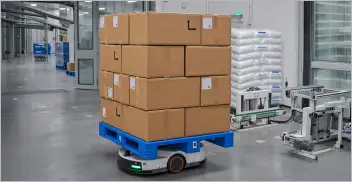
The iWMC is a four-in-one integrated drive module for wheeled mobile robots,…

Comes 11 days after his resignation amidst multiple personal scandals
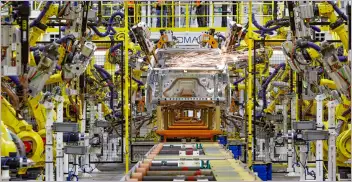
Automaker is developing its own robots at Kokomo, Ind. plant

Colette Kress, current EVP and CFO of NVIDIA named interim CEO