ABB Robotics
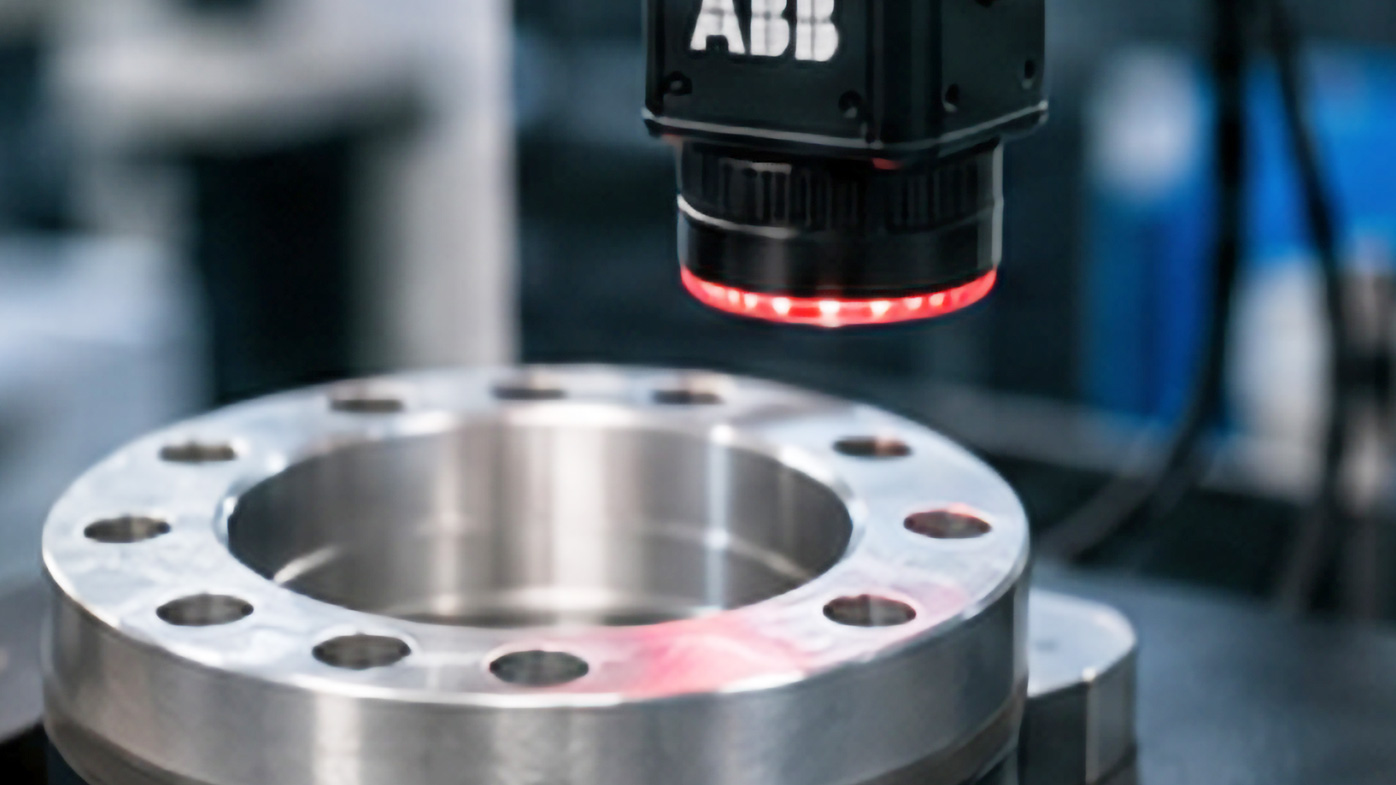
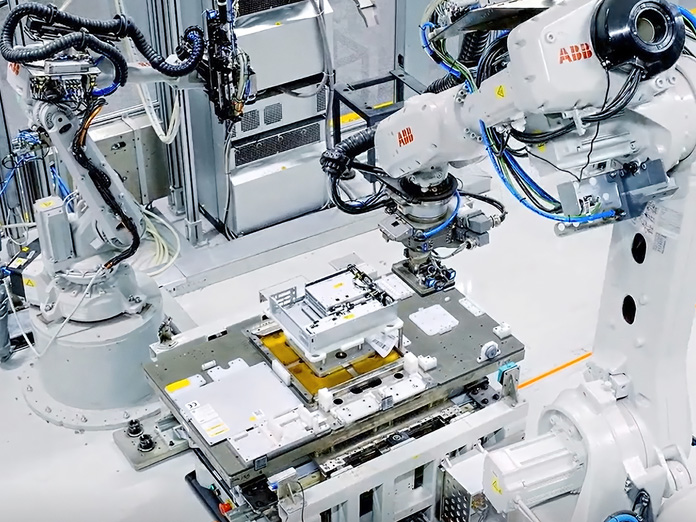
A new white paper from ABB Robotics and NVIDIA, "Industrial physical AI in high-precision manufacturing," investigates how these technologies can expedite digital engineering to deployment readiness.
Get news, papers, media and research delivered. Sign up for our free newsletters.
Stay up-to-date with news and resources you need to do your job. Research industry trends, compare companies and get weekly market intelligence with Robotics 24/7.
ABB Robotics
A new white paper from ABB Robotics and NVIDIA, "Industrial physical AI in high-precision manufacturing," investigates how these technologies can expedite digital engineering to deployment readiness.
ABB Robotics and NVIDIA have jointly published a white paper, which the companies said highlights the transformative impact of industrial-grade physical AI on precision manufacturing.
In the white paper, the companies propose a methodology for its rapid deployment, to revolutionize speed and versatility.
Developed with contributions from AsiaInfo, Deloitte and SKAI Intelligence, ABB Robotics and NVIDIA said that the paper presents a digital-first engineering approach that shifts robotic vision risk assessment upstream into the design phase.
“Through the leap forward in generative AI, we are moving from robots that execute predefined tasks to more Autonomous and Versatile Robotics (AVR) that can understand, adapt and learn in real time,” said Craig McDonnell, business line managing director, industries at ABB Robotics. “Physical AI fundamentally changes what robots do, where they operate and the value they create. Closing the gap between robotic digital twins trained on synthetic data and their real robot counterparts is a breakthrough. Only by combining these hyper-realistic digital twins within a repeatable, industrialized engineering process can the full potential of Autonomous Versatile Robotics be achieved.”
Using digital twins, task-specific synthetic data and AI validation before physical deployment, the companies said that manufacturers can identify and address issues earlier while creating traceable, reusable and verifiable engineering assets. ABB Robotics and NVIDIA added that the real-world operational data then continuously refines and improves the digital model, creating a closed-loop process for ongoing optimization.
“Physical AI is transforming how intelligent systems are developed and deployed in the physical world,” said Deepu Talla, vice president of robotics and edge AI at NVIDIA. “By combining simulation, synthetic data, accelerated computing and AI models, manufacturers can evaluate more scenarios, address edge cases earlier and accelerate innovation before deployment. The opportunity is not simply to build better models, but to create a continuous learning loop between the digital and physical worlds.”
To support this approach, ABB Robotics said that it is pioneering a Physical AI Toolchain that provides this pathway, enabling robots to be trained rather than programmed through a continuous learning workflow that combines simulated, synthetic and real-world data. Through an open and flexible AI ecosystem, ABB Robotics said that customers can combine its industrial expertise with the most suitable data and AI models for their specific applications while maintaining industrial-grade accuracy and scalability.
The publication builds on ABB Robotics’ and NVIDIA’s strategic partnership announced in March 2026. One of the first outcomes of this collaboration is RobotStudio HyperReality, which combines ABB’s RobotStudio offline programming and simulation platform with the physically accurate simulation capabilities of NVIDIA Omniverse libraries. Together, the companies said that these technologies bridge the long-standing 'sim-to-real’ gap, enabling manufacturers to design, test and deploy physical AI-powered robotic applications with greater speed, confidence and scalability.
Download the full white paper here.
Enjoyed this article? Add Robotics 24/7 as a preferred source in Google Search.

Edge computing gives AI agents the processing power to turn instructions into…
Daimon-TWM world model debuts for the public
Platform helps robots adapt to complex tasks

Look beyond the headlines for the latest in humanoid robots