Amazon Robotics
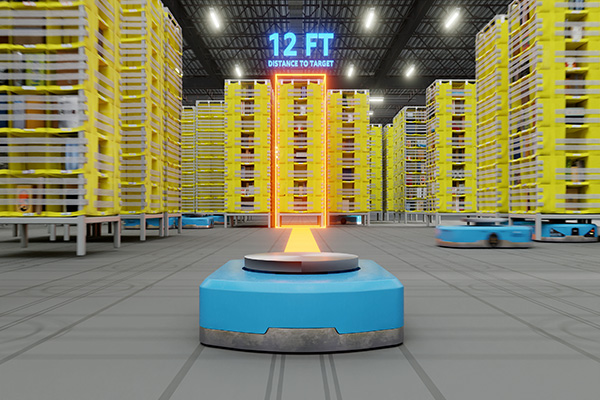
Amazong Robotics launched DeepFleet, and said thr new generative AI foundation model will improve robot fleet travel efficiency by 10%.
Get news, papers, media and research delivered. Sign up for our free newsletters.
Stay up-to-date with news and resources you need to do your job. Research industry trends, compare companies and get weekly market intelligence with Robotics 24/7.
Amazon Robotics
Amazong Robotics launched DeepFleet, and said thr new generative AI foundation model will improve robot fleet travel efficiency by 10%.
Amazon Robotics announced the deployment of its millionth robot, building on its position as the world's largest manufacturer and operator of mobile robotics. This milestone robot was recently delivered to a fulfillment center in Japan, joining the Amazon global network that now spans more than 300 facilities worldwide.
The company also introduced a new generative AI foundation model. Amazon Robotics said it designed the model to make its entire fleet of robots smarter and more efficient.
Called DeepFleet, this AI technology will coordinate the movement of robots across the fulfillment network, improving the travel time of the robotic fleet by 10% and enabling the company to deliver packages to customers faster and at lower costs.
Built using the company’s extensive data sets of inventory movement within its sites and utilizing AWS tools, including Amazon SageMaker, the company this new AI model redefines fleet efficiency. It allows Amazon to store more products closer to customers, leading to faster delivery and lower costs. And, because it is built on AI that learns and improves over time, it will continue to find new ways to optimize how our robots work together.
“Think of DeepFleet as an intelligent traffic management system for a city filled with cars moving through congested streets,” said Scott Dresser, VP, Amazon Robotics, in a blog. “Just as a smart traffic system could reduce wait times and create better routes for drivers, DeepFleet coordinates our robots' movements to optimize how they navigate our fulfillment centers. This means less congestion, more efficient paths, and faster processing of customer orders.
Amazon Robotics started in 2012 with a single type of robot that could move inventory shelves across warehouse floors. Today, we operate a diverse fleet of robots, designed to make its employees' jobs easier and safer, and its operations more efficient.
Amazon’s Hercules robots can lift and move up to 1,250 pounds of inventory. The Pegasus robots use precision conveyor belts to handle individual packages. And Proteus, the company’s first fully autonomous mobile robot, can safely navigate around employees in open and unrestricted areas of sites while moving heavy carts filled with customer orders.
“These robots work alongside our employees, handling heavy lifting and repetitive tasks while creating new opportunities for our front-line operators to develop technical skills,” Dresser said. “I'm particularly proud that since 2019, we've helped upskill more than 700,000 employees through various training initiatives, many focused on working with advanced technologies. In fact, at our next-generation fulfillment center, launched late last year in Shreveport, Louisiana, advanced robotics require 30% more employees in reliability, maintenance, and engineering roles.”
Amazon Robotics said DeepFleet represents its practical approach to AI innovation. Rather than pursuing technology for its own sake, the company said its focused on solving real problems.
For example, by reducing robot travel time by 10%, Amazon said it’s not just improving efficiency, but creating tangible benefits: faster delivery times, lower operational costs and reduced energy usage.
“The combination of our million-robot milestone and DeepFleet points to an exciting future where robotics and AI work together to reimagine what's possible in fulfillment and delivery,” Dresser added. “Twelve years ago, we worked backwards from a simple problem: how to help employees access inventory more efficiently. Today, we're applying the latest AI technology to make our entire robot fleet smarter, ultimately delivering better value to our customers through faster service and lower costs.”
Artificial Intelligence Machine Learning Autonomy Mobile Robots Industrial Automation Collaborative Robots Software Cloud and Edge Fleet Management News Press Release Amazon Robotics Autonomous Mobile Robot Delivery Service Distribution Center Fleet Management Fulfillment Labor Productivity Order Fulfillment Safety

Ultrasonic sensing enhances robotics perception
Cybernetix Ventures’ event kicks off Robotics Tech Week 2026 slate of events
Preview the manufacturing and warehouse components that will be on the…
Preview the manufacturing and warehouse robots and software that will be on…