ARM Institute Issues New Call for Manufacturing, Aerospace, and Defense Projects

ARM members can receive up to $500,000 for each chosen topic addressing U.S. manufacturing and defense needs.

By Eugene Demaitre    June 9, 2021         
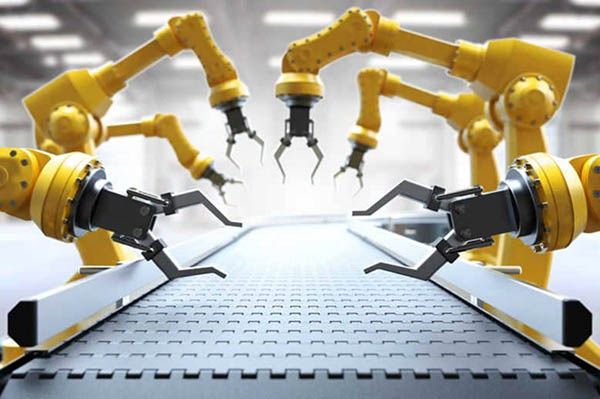
ARM Institute Issues New Call for Manufacturing, Aerospace, and Defense Projects

Getty Images

The ARM Institute has issued a special call for projects to receive up to $500,000 in funding.

Email Sign Up

Get news, papers, media and research delivered. Sign up for our free newsletters.

Stay up-to-date with news and resources you need to do your job. Research industry trends, compare companies and get weekly market intelligence with Robotics 24/7.
Robotics 24/7 newsletter
ARM Institute Issues New Call for Manufacturing, Aerospace, and Defense Projects

Getty Images

The ARM Institute has issued a special call for projects to receive up to $500,000 in funding.

The Advanced Robotics for Manufacturing (ARM) Institute has isssued a special call for technology projects to respond to the needs of the U.S. manufacturing industry, as well as priorities of the U.S. Department of Defense. The selected projects will participate in a 1:1 cost-sharing arrangement and receive up to $500,000 each.

The Pittsburgh-based institute said it expects to award a total of up to $5 million to projects around aerospace and manufacturing. Last week, ARM members attended a Tech Day virtual event featuring Defense Department speakers on project topics.

The ARM Institute is a public-private consortium dedicated to helping American manufacturing be competitive and modernizing the U.S. military through automation and workforce development. The organization is part of the Manufacturing USA network and has more than 300 members.

ARM Institute focuses on urgent topics

The ARM Insitute is seeking submissions for five "special topics" that it and the U.S. Department of Defense (DoD) assessed as being urgent. They include the following:

  • Artificial intelligence in robotics for manufacturing: ARM said it is "seeking solutions to known technical production problems" that would benefit from the application of AI to improve human inputs, enable robots to be aware of their surroundings and one another, and allow them to learn faster.
  • Terrestrial manufacturing for space: Both the DoD and the National Aeronautics and Space Administration (NASA) are interested in developing robots to build structures for deployment in space. The goal is to reduce reliance on high-touch labor, shorten design and production times, and increase throughput while reducing costs.
  • Autonomy in robotics for manufacturing: Most industrial robots still require specialized workers to be set up, and most operate in constrained settings. ARM is seeking systems that factories could use without prior robotics experience and that could adapt to dynamic or unstructured environments. The request for proposals mentioned navigation but did not specify that the capability to operate without human oversight would apply only to autonomous mobile robots.
  • Manufacturing hypersonic components and structures: Aircraft, spacecraft, and missiles going faster than Mach 5 require special materials, precise engineering, and close inspection. The call requests projects to improve the manufacture of hypersonic components using carbon-carbon composite (C/C) or ceramic matrix composite (CMC) materials with the goal of reducing cycle times and scrap rates while increasing throughput.
  • Safe manufacturing of energetics: Energetic materials such as fuel or explosives are difficult to make and transport. The call seeks solutions that can increase safety, manipulate wet and dry materials in grain or stick form, and move materials between process steps.

In addition, the ARM Institute named the following 12 technology investment strategy (TIS) topic areas around risk reduction, human-machine interaction, interoperability, reconfigurable robots, and intelligent systems:

  1. Methods and tools for successful robotics adoption and expansion
  2. Methods and tools for assessing industrial readiness of new technologies
  3. User-friendly interfaces for programming, operation, and maintenance
  4. Human-robot trust and safety
  5. Plug-and-play hardware and software (system level)
  6. Open-source and open architecture software, methods, and environments
  7. Modular robotic designs
  8. Automated path planning and robot instruction generation
  9. Self-aware and adaptive systems
  10. AI and machine learning
  11. Distributed, edge, and cloud computing
  12. Advisor robots -- observation, identification, fault detection, and training

Deadlines and more information

The project call is open to ARM members. The deadline for concept papers is June 28, 2021, and the submission date for proposal packages is Aug. 9.

The ARM Institute will announce the final selections around Sept. 7, followed by sub-awards. The target start date for funded projects will be Oct. 22. It will host a public webinar on June 11 to review the project call and process.

The ARM Institute discusses the state of the organization, and how the Robot Operating System has supported technical developments for its membership.

About the Author
Eugene Demaitre, Editorial Director, Robotics 24/7

Eugene Demaitre

Editorial Director, Robotics 24/7

Eugene Demaitre was editorial director of Robotics 24/7. Prior to joining Peerless Media, he was a senior editor at Robotics Business Review and The Robot Report. Demaitre has also worked for BNA (now part of Bloomberg), Computerworld, and TechTarget. He has participated in numerous robotics-related webinars, podcasts, and events worldwide.

More about Eugene Demaitre

Latest in Manufacturing

Latest in Artificial Intelligence

Article Topics

Artificial Intelligence   Machine Learning   Autonomy   Mobile Robots   Industrial Automation   Robot Arm   Components   Sensors   Software   Cloud and Edge   News   ARM Institute   Cloud   Defense   Manufacturing  

All topics

Editors' Picks

The future of CFD is connected, automated, and AI-enabled

From geometry preparation to AI-assisted analysis, integrated CFD workflows…

Festo gets a grip on AI-based picking

Software-based GripperAI manages mixed picking through basic geometry

How Beckhoff Automation’s EtherCAT and controllers power Dexterity’s Mech ‘superhumanoid’ robot

Safety, communication and motion control components enable smooth operation

Automate 2026: Forklifts, physical AI, vision systems and more from day three in Chicago

North America’s largest robotics and automation event winds down