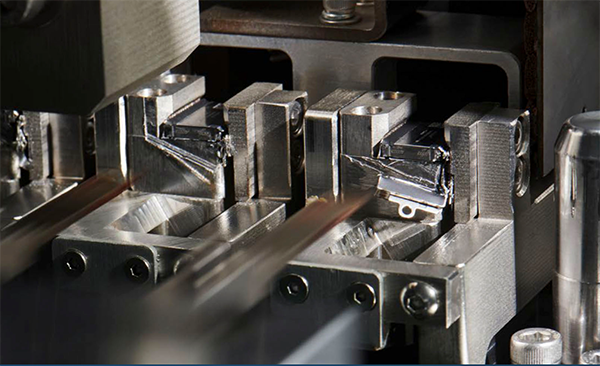
Apple
The Dave recycling robot disassembles the Taptic Engine from iPhones to recover materials such as rare-earth magnets, tungsten, and steel.
Get news, papers, media and research delivered. Sign up for our free newsletters.
Stay up-to-date with news and resources you need to do your job. Research industry trends, compare companies and get weekly market intelligence with Robotics 24/7.
Apple
The Dave recycling robot disassembles the Taptic Engine from iPhones to recover materials such as rare-earth magnets, tungsten, and steel.
Researchers at Carnegie Mellon University are working with Apple Inc. to develop new ways to disassemble old technology. Their latest partnership builds on Apple's existing innovations, including recycling robots Daisy and Dave.
Apple sought to support research initiatives that reimagine the disassembly of electronic devices and the recovery of valuable or hazardous materials. The company chose to work with CMU's Biorobotics Lab, part of the Robotics Institute.
Matt Travers and Howie Choset, co-directors of the lab at Carnegie Mellon, and their team are designing machine learning models that will enable robots to teach themselves how to disassemble a device they have never seen before.

"We're building robots, and we're building AI so that the machine can see any piece of electronics and figure out how to take it apart," said Travers.
To do this, the CMU researchers developed a robot that scanned a phone with a laser to create a 3D model.
The team then simulated cracks, cases or missing batteries to train the model to recognize the different conditions a device might be in when it arrives at a recycling center.
Apple mentioned the work in its latest "Environmental Progress Report." The company said a model typically requires a large amount of data, such as images of a device, to recognize the object and disassemble it.
"Unfortunately, this data is not readily available," Apple wrote. "This research applies to the concept of domain randomization, by synthetically creating the data real images would provide, to grant robots the ability to recognize a broad, varied stream of [electronic waste] for recycling at scale."
Apple said the newly developed software will be open-sourced and available for use in other recycling applications. The work is part of Apple's goal to make its products and packaging using only recycled or renewable materials.
Apple's Daisy robot disassembles iPhones so recyclers can recover more material inside. Dave, Apple's newest recycling robot, disassembles the Taptic Engine from iPhone to enable the recovery of key materials such as rare-earth magnets, tungsten, and steel.
Electronic waste, or e-waste, is any discarded product with a battery or plug. A record 53.6 million metric tons of e-waste was generated worldwide in 2019, according to the United Nation's "Global E-waste Monitor" for 2020. That is a 21% increase over the past five years. The report estimated that by 2030, global e-waste will have doubled from where it was 16 years ago.
The report also found that only 17.4% of e-waste was recycled in 2019, meaning valuable and recoverable materials like gold, silver, copper and platinum — $57 billion worth by conservative estimates — were discarded.
"There's actually a lot of value in trash," Travers said. "It's an area that's pretty ripe for artificial intelligence and machine learning because there are gobs and gobs of data coming in."
Ultrasonic sensing enhances robotics perception
Cybernetix Ventures’ event kicks off Robotics Tech Week 2026 slate of events
Preview the manufacturing and warehouse components that will be on the…
Preview the manufacturing and warehouse robots and software that will be on…