FundamentalVR
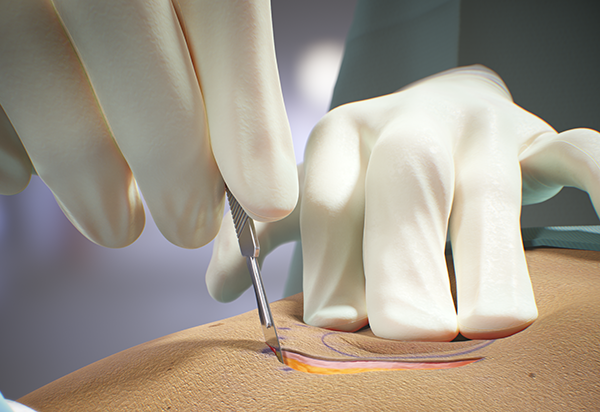
The Haptic Intelligence Engine enables the Fundamental Surgery platform to simulate soft tissue.
Get news, papers, media and research delivered. Sign up for our free newsletters.
Stay up-to-date with news and resources you need to do your job. Research industry trends, compare companies and get weekly market intelligence with Robotics 24/7.
FundamentalVR
The Haptic Intelligence Engine enables the Fundamental Surgery platform to simulate soft tissue.
Thanks to advances in kinesthetic haptic technology, cadavers in surgical training could be replaced by robotics, augmented reality, and virtual reality. FundamentalVR last week announced additions in its Fundamendal Surgery platform that it said provide "a credible complement and alternative to traditional medical education methods."
“We are proud to offer industry-leading technology proven to accelerate learning and transform traditional teaching practices into cost-effective, safe methodologies,” stated Richard Vincent, co-founder and CEO of FundamentalVR. "With the addition of advanced soft-tissue sensation capabilities, users are able to make independent decisions about approach and patient interaction and have full high-fidelity control, feeling, and vision as they make that interaction."
"We have brought a new level of realism to medical education to an extent that the need for surgeons to practice in wet labs on cadavers or patients could be eliminated within just a few years,” he said.
FundamentalVR said it delivers immersive simulations with its Fundamental Surgery platform to help training programs improve consistency and compliance. The multimodal, multi-user platform is designed to enable full rehearsal of medical and surgical procedures, provide deep data insight into competency and skills development, and accelerate safe adoption of products and procedures.
The company, which has offices in London; Parsippany, N.J.; and Boston, said it is the only such platform accredited by leading global educational institutions.
The Fundamental Surgery platform allows users to have the same sights, sounds, feelings, and sensations they would experience in a real operating room, said FundamentalVR. It combines HapticVR technology and analytics of previously unmeasurable data points so that surgeons can acquire advanced techniques.
The company said its Haptic Intelligence Engine delivers full kinesthetic force-feedback haptics into a variety of handheld devices, ranging from base station-held instruments to haptic gloves. It does this within a submillimeter of accuracy, at low cost, and with commercial off-the-shelf hardware, FundamentalVR claimed.
Already deployed prior to the pandemic, the challenges of social distancing and reduction in elective surgeries has fueled a surge in the use of Fundamental Surgery as an alternative to in-person and on-human learning, said the company. It cited the following potential benefits:
With full force-feedback kinesthetic haptics, high-fidelity graphics, and 3D spatial technology, the new soft-tissue capabilities allow surgeons to manipulate and feel the texture of anatomy as if they were in the operating room, said FundamentalVR. This enhancement opens the door for accelerated skills acquisition in a wider range of procedures, building capability and confidence ahead of human interaction through "pre-human competence," according to the company.
The new capabilities are part of FundamentalVR’s five-year technology and clinical journey that has seen its Haptic R&D team work closely with surgeons and educator experts from around the world. The company has drawn from leading universities as well as spatial technology and medical specialists such as Dr. David Farley at the Mayo Clinic.
"The impact of the advanced tissue capabilities are not just skin-deep," said the company. FundamentalVR said it can now deliver enhanced products for simulations in areas such as spine, orthopedic, and ophthalmology as well as new capabilities in soft-tissue surgery, interventional procedures, and more.
VR programs are often used to help acquire medical knowledge, said the company. With new soft-tissue simulation combined with advanced haptics, surgeons around the world can learn more quickly, it added, building the muscle memory required for proficiency and essential for precise surgical skills transfer.
A short overview of the Fundamental Surgery platform.
Wearables Components Sensors Software Simulation News Press Release AR and VR Surgical
Enjoyed this article? Add Robotics 24/7 as a preferred source in Google Search.
Edge computing gives AI agents the processing power to turn instructions into…
Daimon-TWM world model debuts for the public
Platform helps robots adapt to complex tasks

Look beyond the headlines for the latest in humanoid robots