By
DE Editors
September 16, 2020
Get news, papers, media and research delivered. Sign up for our free newsletters.
Stay up-to-date with news and resources you need to do your job. Research industry trends, compare companies and get weekly market intelligence with Robotics 24/7.
Siemens and Nexa3D have announced a collaboration designed to bring Nexa3D’s additive manufacturing production systems up to full Industry 4.0 preparedness. This partnership highlights both companies’ commitment to help additive manufacturing prepare for Industry 4.0 with collaborations, open architecture and predictive serviceability.
Having worked side by side with automotive, aerospace, medical and industrial customers, Siemens and Nexa3D have worked to combine connectivity, digital twin sensing and data acquisition to deliver predictive maintenance, process monitoring and print optimization to deliver polymer additive manufacturing solutions at scale on the factory floor, the companies report.
Under this collaboration, Nexa3D’s entire Quantum Laser Sintering (QLS) product line will be standardized to Siemens’ factory automation and edge computing technologies. Nexa3D plans commercial delivery of its QLS-350 polymer production 3D printer powered by Siemens’ automation controls in the first quarter of 2021.
“COVID-19 underlined the incredibly rapid and flexible nature of our combined factory automation technologies and additive manufacturing capabilities compared to traditional manufacturing and demonstrates how vulnerable the global manufacturing supply chain is to unexpected disruptions," says Tim Bell, head of Additive Manufacturing, Siemens. "Working together with Nexa3D, we are bringing decades of proven Siemens factory automation experience and technology to additive manufacturing to help customers mainstream mission critical production tools for future manufacturing strategies.”
Throughout COVID-19, both companies continue to expand their product portfolios as well as their partnerships and collaborations. This has enabled more customers to strengthen their design agility and supply chain resiliency by compressing their design and manufacturing cycle, reducing the time required to produce functional prototypes and production parts from hours to minutes, the companies note.
“We believe that this collaboration is essential given the strengths of the 3D printing industry as demonstrated throughout the COVID-19 pandemic, and this is the right time to realize the combined potential that this partnership unlocks for the benefit of our expanding customer base," says Kuba Graczyk, head of Thermoplastic Additive Business at Nexa3D.
Sources: Press materials received from the company and additional information gleaned from the company’s website.

DE's editors contribute news and new product announcements to Digital Engineering 24/7 and the Robotics 24/7 sites. Press releases may be sent to them via [email protected].
Enjoyed this article? Add Robotics 24/7 as a preferred source in Google Search.
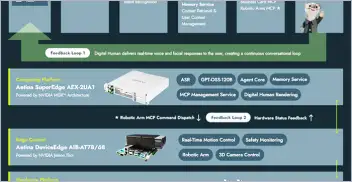
Edge computing gives AI agents the processing power to turn instructions into…
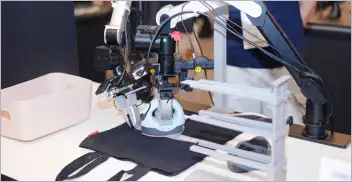
Daimon-TWM world model debuts for the public
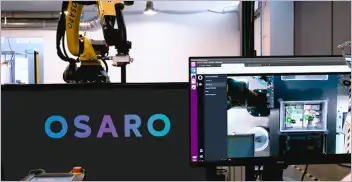
Platform helps robots adapt to complex tasks
Look beyond the headlines for the latest in humanoid robots