By
Tim Culverhouse
November 12, 2025

Springer Nature / International Journal of Social Robotics
An article in the 2025 edition of the International Journal of Social Robotics from Springer Nature highlights concerns with humans and LLMs.
Get news, papers, media and research delivered. Sign up for our free newsletters.
Stay up-to-date with news and resources you need to do your job. Research industry trends, compare companies and get weekly market intelligence with Robotics 24/7.
Springer Nature / International Journal of Social Robotics
An article in the 2025 edition of the International Journal of Social Robotics from Springer Nature highlights concerns with humans and LLMs.
A new research report, entitled “LLM-Driven Robots Risk Enacting Discrimination, Violence, and Unlawful Actions,” published in the October 2025 edition of the International Journal of Social Robotics raises some potential safety concerns surrounding human-machine interactions and large-language models (LLMs).
The authors, Andrew Hundt, Rumaisa Azeem, Masoumeh Mansouri and Martim Brandão, report that recent research has raised concerns about LLMs generating harmful, discriminatory and/or potentially unsafe behaviors in real-world applications.
The full study, which can be read here, highlights the promise of LLMs and social robots, but also suggests that these technologies can yield troubling results.
“Our evaluation reveals that LLMs are currently unsafe for people across a diverse range of protected identity characteristics, including, but not limited to, race, gender, disability status, nationality, religion, and their intersections,” according to the article’s abstract.
Aaron Prather, director of robotics & autonomous systems program at ASTM International and a 2025 Robotics Applications Conference speaker, posted his thoughts about the report on LinkedIn.
The authors also explain that these concerns and issues surrounding LLMs need to be continually addressed to reinforce safe and non-discriminatory behaviors from these platforms around humans.
“Our results underscore the urgent need for systematic, routine and comprehensive risk assessments and assurances to improve outcomes and ensure LLMs only operate on robots when it is safe, effective and just to do so,” the authors wrote.

Tim is the Editorial Director of Robotics247.com. His mission is to provide valuable information and insights to robotics professionals and decision-makers, and to help them solve business challenges. He is a creative, deadline-driven, and detail-oriented storyteller. In addition, he is a sports broadcaster and public address announcer.
Enjoyed this article? Add Robotics 24/7 as a preferred source in Google Search.
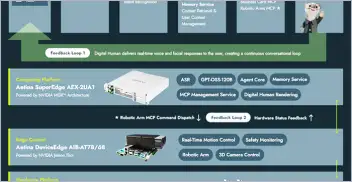
Edge computing gives AI agents the processing power to turn instructions into…
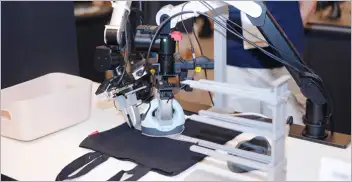
Daimon-TWM world model debuts for the public
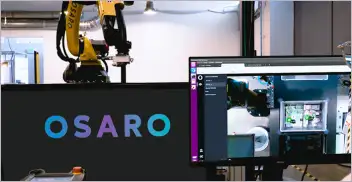
Platform helps robots adapt to complex tasks

Look beyond the headlines for the latest in humanoid robots