Embodied AI
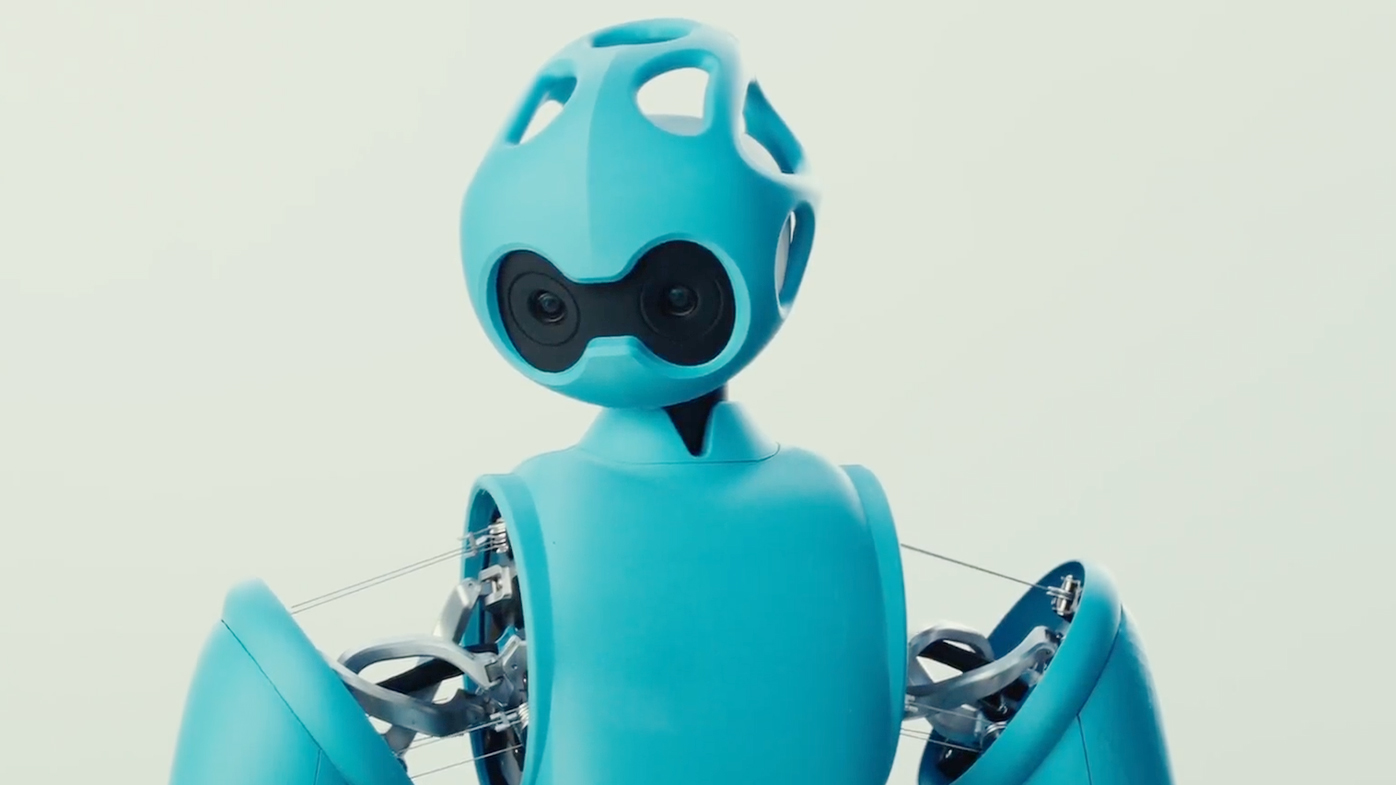
Embodied AI launched AIR, which the company said is a physically safe humanoid robot that learns on the job.
Get news, papers, media and research delivered. Sign up for our free newsletters.
Stay up-to-date with news and resources you need to do your job. Research industry trends, compare companies and get weekly market intelligence with Robotics 24/7.
Embodied AI
Embodied AI launched AIR, which the company said is a physically safe humanoid robot that learns on the job.
Swiss robotics company Embodied AI unveiled the AIR humanoid robot at Humanoid Europe 2026.
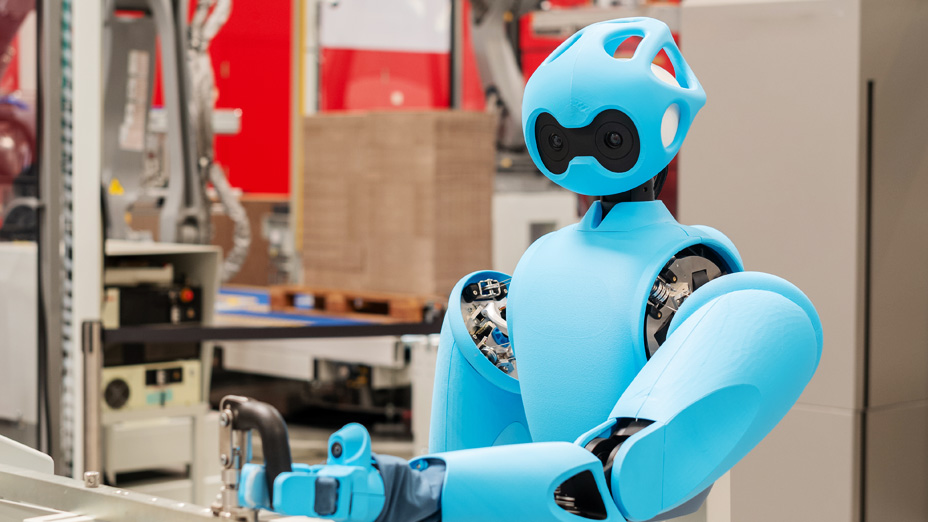
The company said that AIR is a humanoid robot built to share the factory floor with people.
Embodied AI said that AIR takes on the repetitive manual tasks that change too often for conventional robots, so the people already on the line can focus on work that needs their skill.
The company said that it evolved from research to an industrial humanoid in 9 months, and signed contracts with major OEMs globally after spending a fraction of the money that other robotics companies needed to achieve this. Embodied AI said that AIR is now being tested with global manufacturers, and the company is starting plans for scaled production.
Embodied AI said that most humanoids today are still demonstrations, and most industrial robots are built for heavy-duty tasks, so they work behind cages, away from the people who know the job best. The company said that AIR is built to be safe and to complete the high-dexterity tasks that currently are still performed manually. Embodied AI said that AIR goes onto the factory floor as it is, next to the team already there.
“Hallucination of AI models is acceptable in the digital space because humans review, reject, or correct the output before acting on it,” said Francesco Stella, co-founder and CEO of Embodied AI. “In robotics, however, incorrect actions have immediate and irreversible physical consequences. When AI is used to taking physical actions, errors can cause severe damage or endanger human lives. Safety and reliability are non-negotiable requirements of physical AI to enter the real world at scale. These are the principles that guided the design of AIR.”
The company said that it designed AIR with a tendon-driven architecture.
Motors, gearboxes and electronics sit in its torso. Its arms are light and moved by tendons, so they carry almost no mass and give way on contact. It runs on wheels rather than legs, because factory floors are flat and wheels are more stable.
Embodied AI said that safety comes from how it is built, not from software holding it back. AIR is designed under ISO/TS 15066:2016 with CE marking planned for 2027.
To learn and guarantee factory uptime, the company said that AIR starts every job under the control of a human operator, so it is productive from its first shift. Additionally, Embodied AI said that every run is recorded, and the company’s own AI stack learns from those demonstrations until AIR can do the task itself, typically within a month. The operator then stays on hand to cover for anything it hasn’t seen before. What one robot learns, the next can use.
Embodied AI said that its AI stack is already proven in paid factory deployments with its two-arm industrial cell. When a leading consumer electronics manufacturer tested five funded startups on a cable-handling task, none met its targets. Embodied AI said that it met them all, reaching 98% reliability against a 90% goal.
The company said that AIR’s arm design grew out of Stella’s PhD at EPFL, the Swiss Federal Institute of Technology in Lausanne and one of Europe’s leading technical universities. He co-founded the company with CTO Kai Junge and COO Max Polzin, both robotics PhDs with backgrounds at Cambridge, ETH Zurich and EPFL.
The company is backed by Faber, which led its first round, along with TechShop, Look AI Ventures, Plug and Play and Vento.
Enjoyed this article? Add Robotics 24/7 as a preferred source in Google Search.

Colette Kress, current EVP and CFO of NVIDIA named interim CEO

China's Office of the Working Mechanism for Foreign Investment Security…

President Trump orders a review of robotics imports over national security…
Platform helps robots adapt to complex tasks