Google DeepMind
Google DeepMind introduced Gemini Robotics 2.5, which it said enables robots to learn faster for the real world - from everyday skills to the factory floor.
Get news, papers, media and research delivered. Sign up for our free newsletters.
Stay up-to-date with news and resources you need to do your job. Research industry trends, compare companies and get weekly market intelligence with Robotics 24/7.
Google DeepMind
Google DeepMind introduced Gemini Robotics 2.5, which it said enables robots to learn faster for the real world - from everyday skills to the factory floor.
Google DeepMind introduced Gemini Robotics 2.5, which the company describes as an AI model designed to improve how robots learn and perform physical tasks in real-world environments.
The company said that the latest version of its vision-language-action (VLA) model expands the range of tasks robots can perform while improving their dexterity, speed, reliability and ability to operate safely around people.
Google DeepMind previously released Gemini Robotics 2 in August 2026.
Google said the model was evaluated across more than 200 distinct tasks, with success rates increasing 30% to 100% over previous baselines, depending on the task. Robots also completed tasks 20% to 30% faster.
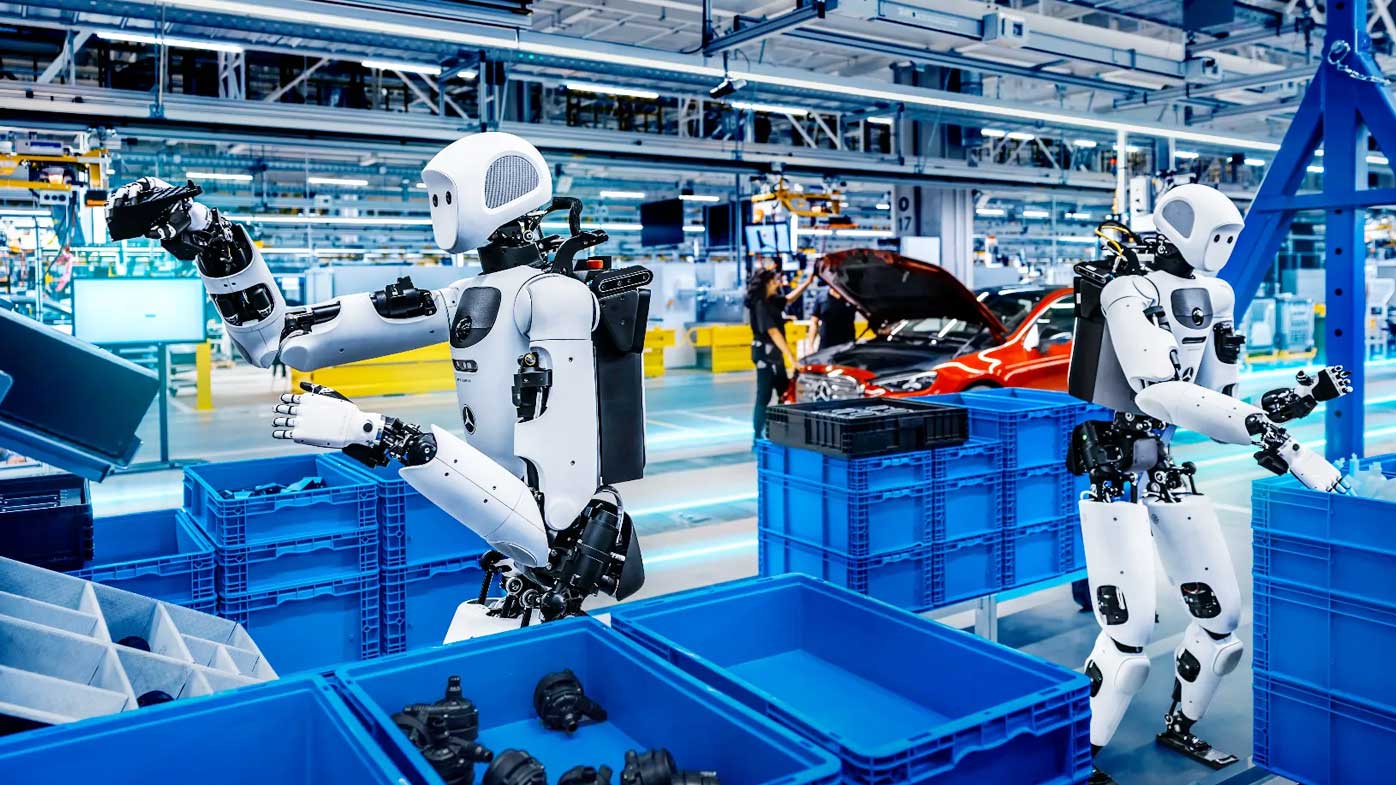
Google said that one of the most significant demonstrations involved Apptronik's Apollo 2 humanoid robot working on Mercedes-Benz automotive production lines. In a proof-of-concept project conducted at facilities in Kecskemét, Hungary, and Sindelfingen, Germany, Google said that Apollo 2 autonomously performed automotive kitting tasks with a reported 96% success rate.
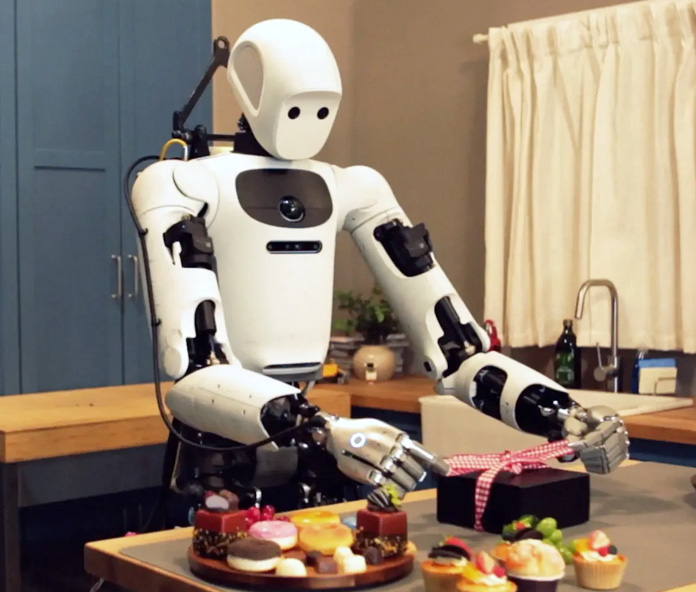
The company said that Gemini Robotics 2.5 is designed to help robots handle a wider variety of objects and tasks, including activities requiring precise manipulation, tool use and interaction with delicate or flexible materials.
Google DeepMind said that the collaboration with Apptronik and Mercedes-Benz provides an example of how Google's AI models could support industrial automation.
During the proof-of-concept, Apollo 2 robots performed automotive kitting, a process that involves sorting individual components from bulk containers into organized trays in the sequence required for vehicle assembly.
The robots retrieved metal automotive brackets from supply bins and placed them into designated sequencing containers. The system also corrected for placement gaps and adapted to changes in its surroundings.
"This is what we built Apollo for: useful work alongside people in real industrial settings," said Jeff Cardenas, co-founder and CEO of Apptronik. “Pairing Apollo 2 with Gemini Robotics, we saw the models improve dramatically in just a few weeks of post-training and carry over to Mercedes-Benz production with very little drop-off. This is the foundation for bringing humanoid robots to industrial and commercial environments at scale.”
Apptronik and GXO announced an expanded partnership, scaling Apollo humanoid rollouts, in November 2026.
Alongside improvements in manipulation, Google said it has strengthened Gemini Robotics 2.5's ability to navigate physical environments safely.
The company said that the model uses inference-time reasoning guidance to help robots identify and avoid physical hazards while executing tasks. According to Google's evaluations, the approach improved safe task completion by 33% around obstacles and 43% around nearby people.
Google said that Gemini Robotics 2.5 also addresses potential security vulnerabilities associated with AI-powered robots. The company introduced ASIMOV-Jailbreak, an open-source benchmark containing hundreds of prompts designed to test whether AI systems can recognize and reject disguised unsafe instructions across different scenarios.
Click here to learn more about Gemini Robotics 2.5.
Enjoyed this article? Add Robotics 24/7 as a preferred source in Google Search.
Edge computing gives AI agents the processing power to turn instructions into…

Colette Kress, current EVP and CFO of NVIDIA named interim CEO

China's Office of the Working Mechanism for Foreign Investment Security…

President Trump orders a review of robotics imports over national security…