By
MMH Staff
May 14, 2019

Get news, papers, media and research delivered. Sign up for our free newsletters.
Stay up-to-date with news and resources you need to do your job. Research industry trends, compare companies and get weekly market intelligence with Robotics 24/7.
The RIA R15.06 Standards Committee has finalized Technical Report (TR) R15.806-2018 to address the test methods and metrics for measuring pressure and force associated with quasi-static and transient contact events of collaborative applications.
A collaborative robot, or cobot, is a type of robot intended to physically interact with humans in a shared workspace. Collaborative robots are experiencing rapid market growth. According to Markets and Markets research, the collaborative robots market is expected to reach a value of $4.28 billion by 2023, growing at an astounding 56.94% compound annual growth rate (CAGR).
As new automation technologies emerge, the committee found, new safety standards are critical.
“One of the benefits of combining human and automated processes is increased flexibility and diversity of applications; but this can also increase safety hazards if a collaborative robot system is not designed and tested accurately. This new standard outlines the optimal testing methods for power and force in power-and-force-limited (PFL) cobot systems,” said Carole Franklin, RIA Director of Standards Development.
The test methods and metrics are brand new to the automation industry. They determine conditions of the test measurements, measurement devices, and accurate testing methods. This document is supplemental to the R15.06-2012 and enhances the R15.606-2016. RIA now offers a Collaborative Robot Safety Bundle featuring both R15.606-2016 and R15.806-2018 in the web store.
“This is an important milestone in standards development because it shows how to test whether or not the PFL collaborative robot is operating within the pain threshold limit values of R15.606-2016. The pain threshold limit values are different for different parts of the human body that the cobot might contact. Collaborative robots have sensors and safety mechanisms built in, but the variety of applications and flexibility of cobots makes it necessary to run tests to ensure that the limits are set appropriately for the type of contact expected,” Franklin said.
To learn more about the TR R15.806-2018 or to purchase a copy of the standard visit Robotics Online.
Enjoyed this article? Add Robotics 24/7 as a preferred source in Google Search.
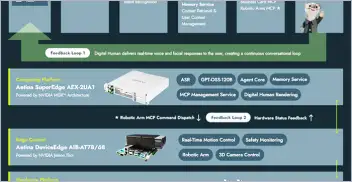
Edge computing gives AI agents the processing power to turn instructions into…
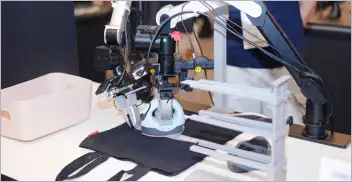
Daimon-TWM world model debuts for the public
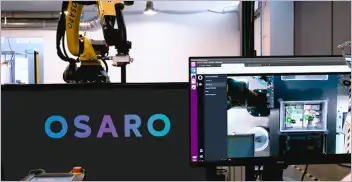
Platform helps robots adapt to complex tasks

Look beyond the headlines for the latest in humanoid robots