MIT News
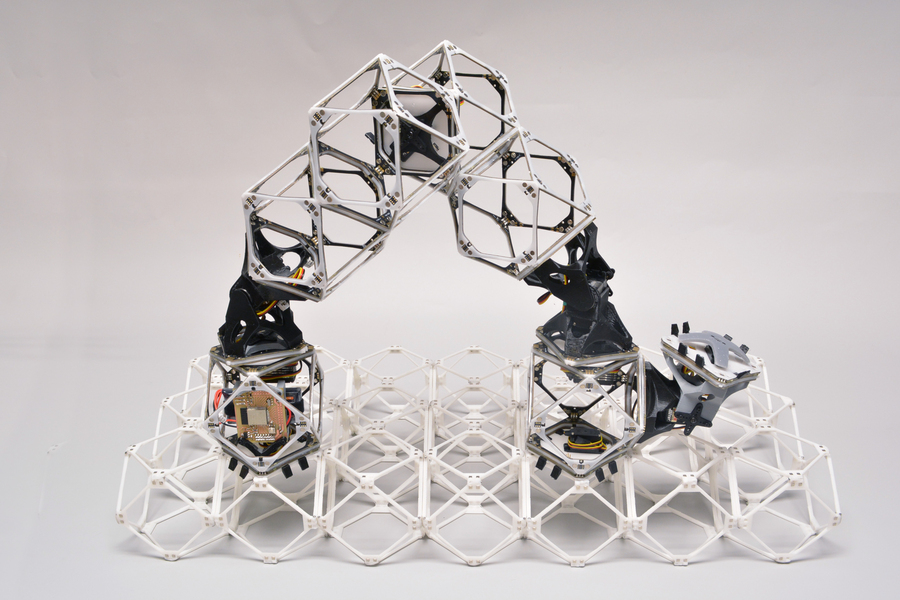
The MIT researchers have been working on the modular robotic system for years.
Get news, papers, media and research delivered. Sign up for our free newsletters.
Stay up-to-date with news and resources you need to do your job. Research industry trends, compare companies and get weekly market intelligence with Robotics 24/7.

MIT News
The MIT researchers have been working on the modular robotic system for years.
Self-building modular robots could be the future of construction and national defense. While robots that assemble themselves may sound like fiction, they’re a reality now thanks to groundbreaking research at the Massachusetts Institute of Technology. How do these robots work? Why are researchers, scientists and engineers so interested in them?
In November 2022, researchers at the MIT Center for Bits and Atoms published a paper detailing their breakthrough modular robotics system. The project is ongoing but already shows incredible potential for many applications.
Modular robotics uses a set of core parts to assemble robots, which can easily swap out and add to one another. MIT’s project takes things a step further by enabling the robot to be self-building. It can autonomously assemble structures like a wall or bridge, as well as bigger versions of itself.
The robot uses five modular components — a “voxel” face, a control and power unit, wrist and elbow servo-actuated joint units and servo-actuated gripper units. These five pieces can create any kind of structure the programmer might want.
What makes this modular robotics system unique is its ability to scale for larger structures automatically.
The robot can recognize when it is too small to finish building a structure effectively. When this is the case, the robot can create either copies of itself or increase its size by adding more voxels. The MIT researchers borrowed the term “voxel” from computer science to describe a single three-dimensional hexagonal building block the robot creates out of flat voxel faces.
MIT’s new modular robotics system is exciting, but what would it be useful for? The self-replicating capability of this system is a huge step forward in modular robotics and opens many new possibilities for applying the technology in the future.
On a big-picture level, this system shows off the vast potential for seemingly simple modular robots. MIT’s robot is essentially just a collection of servo motors and small PCBs. The applications for this system demonstrate the versatility of these PCBs, which are central to defense and industrial applications, as well as numerous other industries. There are a few specific areas where MIT’s self-replicating modular robotics system could be advantageous.
Construction is one of the most valuable applications for self-building modular robotics. According to the Associated Builders and Contractors, the construction industry is short an estimated 650,000 workers, with demand expected to grow as large waves of older workers retire.
Filling this labor shortage requires innovative solutions and self-building robotics could be a perfect fit. The construction industry is already developing new ways to build homes and infrastructure. For example, 3D-printed construction could be the future of housing construction, automating almost the entire process.
The only problem is the printer itself needs to be larger than the structure it is printing. Self-building modular robots could scale the 3D printer autonomously as the building grows. The robots could even build the printer themselves and automate other aspects of the construction process, like placing roof tiles.
Climate change contributes to serious national security and safety concerns caused by increasingly common severe weather events such as hurricanes and floods. The U.S. needs innovative solutions to protect the nation from the threat of these weather conditions. It’s no surprise then that DARPA has expressed interest “for the possibility of building structures for coastal protection against erosion and sea level rise.”
Defending against increasingly common severe weather threats will require future-proofing infrastructure along coasts. Self-building modular robotics could automate the process of building coastal protection structures, making this massive infrastructure project far more manageable. The autonomous scaling capability of MIT’s modular robotics system would allow it to adapt to different building projects effortlessly as the need arises.
Self-building modular robotics is an exciting innovation for many reasons. Scientists are developing this technology for applications in everything from housing construction to national defense.
In fact, these robots could even autonomously build structures in orbit or on the Moon or Mars one day. MIT’s self-building, autonomously scaling modular robotics system is a vital step forward in engineering technology.

Emily Newton is a tech writer who enjoys writing about the latest innovations changing our world. Read more of her articles online at Revolutionized Magazine.
Enjoyed this article? Add Robotics 24/7 as a preferred source in Google Search.

Edge computing gives AI agents the processing power to turn instructions into…
Daimon-TWM world model debuts for the public
Platform helps robots adapt to complex tasks

Look beyond the headlines for the latest in humanoid robots