Getty Images
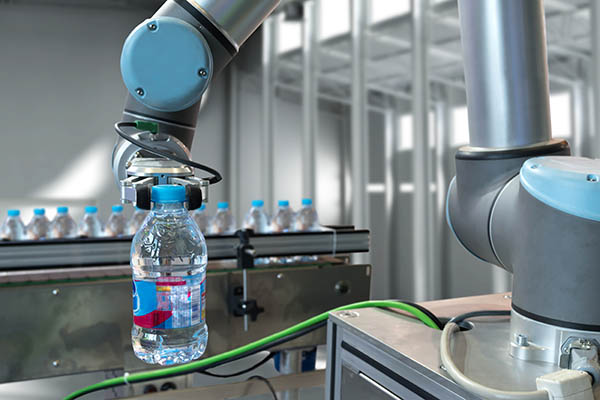
Picking robots are commonly used in packaging applications.
Get news, papers, media and research delivered. Sign up for our free newsletters.
Stay up-to-date with news and resources you need to do your job. Research industry trends, compare companies and get weekly market intelligence with Robotics 24/7.
Getty Images
Picking robots are commonly used in packaging applications.
A pick-and-place robot is a type of industrial robot that is used for handling and placing products on a production line. They are typically used in high-volume manufacturing settings, where they can quickly and accurately place products onto conveyor belts or other production equipment.
Picking robots are designed to automate the tasks of handling and placing products on a production line. This can include tasks such as picking up products from a conveyor belt and placing them onto another conveyor belt or piece of production equipment.
There are many types of pick-and-place robots, each with their own set of capabilities. Some pick-and-place robots are designed for use in specific industries, such as the food and beverage industry, while others are more general-purpose. Pick-and-place robots can also vary in terms of their payload capacity, or the amount of weight they can lift.
Some picking robots are also equipped with additional features, such as vision systems or grippers. Vision systems allow the robot to identify products that need to be picked up, while grippers enable the robot to grasp products.
Pick-and-place robots can be used in a variety of settings, including warehouses and distribution centers. They are often used in high-volume manufacturing settings, where they can quickly and accurately place products. The robots can also place products into packaging, such as boxes or bags.
In addition to their use in factories, pick-and-place robots are also increasingly being used in logistics applications. In these settings, such robots can be used to load and unload trucks, sort and organize packages, and load containers onto ships.
Some of the most common types robots for these operations include:
Gantry robots: Gantry robots consist of a beam that spans the width of a production line. Gantry robots are often used in high-volume manufacturing settings, where they can quickly and accurately put items on production equipment.
Articulated robots: Articulated robot arms have a series of joints that allow the robot to move in multiple directions. Articulated robots are often used in packaging applications, where they can place products into boxes or bags.
SCARA robots: SCARA robots have a horizontal arm and a vertical arm. SCARA robots are often used in assembly applications, where they can pick up and move products onto a production line.
Delta robots: Delta robots consist of three arms that are mounted on a triangular base. Delta robots are often used in packaging applications, where they can place products into boxes or bags.
There are many benefits of using pick-and-place robots, including:
Increased productivity: These robots can increase the productivity of a manufacturing or logistics operation by automating the tasks of handling products.
Improved accuracy: Pick-and-place robots can improve the accuracy of product placement, which can reduce errors and improve quality control.
Reduced labor costs: Robots can reduce labor costs by eliminating the need for manual handling of products.
Flexibility: Such systems can be configured to handle a wide variety of products, making them suitable for use in a variety of settings.
Improved safety: Pick-and-place robots can improve safety by eliminating the need for workers to handle products.
Picking robots are used in a variety of settings. Some of the most common applications for pick-and-place robots include:
Pick-and-place robots are versatile machines that can be used in a variety of settings. They offer a number of advantages, including reduced labor costs, flexibility, and improved safety. When selecting a pick-and-place robot, it is important to consider the specific needs of your operation.

Andrew Lighstead is the sales director at PWR Pack, a robotics solutions company focused on the food industry.
Editor's note: This article was republished and edited with permission from Packaging With Robots (PWR Pack).
TaskMate Robotic Systems® from ESS Technologies integrate a FANUC robot with ESS ingenuity to create a compact robotic cell to automate machine loading and unloading, product collation, pick-and-place, assembly, kit packaging, and more. ESS-designed end-effectors handle a wide range of products.

Ultrasonic sensing enhances robotics perception
Cybernetix Ventures’ event kicks off Robotics Tech Week 2026 slate of events
Preview the manufacturing and warehouse components that will be on the…
Preview the manufacturing and warehouse robots and software that will be on…