Press Release: Tuofa CNC Machining

Humanoid robots are human-like robots with multiple joints and parts. These parts are interconnected in a robot, which means each part requires ultra-precision machining for better efficiency in motion transformation. This article focuses on the precision machining of humanoid robot joints.
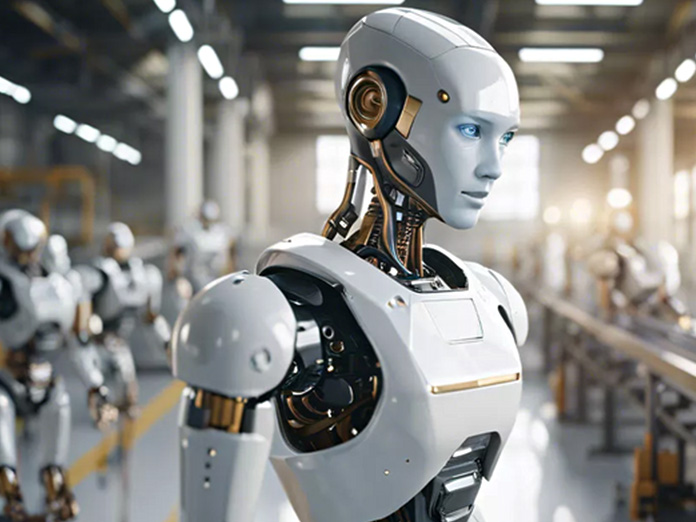
Humanoid robots can move, sense things, and live in a human-like environment. It means they resemble humans. The purpose of their invention is to assist humans because they can live in the same environment. Humanoid robots can be equipped with legs, arms, human-like faces, etc.
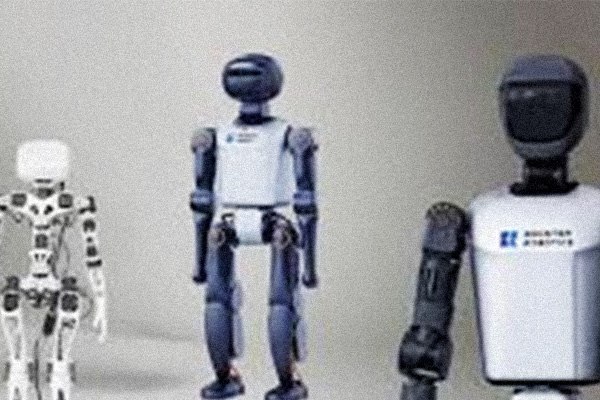
Humanoid is a system that is equipped with a human-like degree of freedom, motion patterns and mechanical structure. A humanoid robot is capable of:
To resemble humans, each part needs ultra-high precision to set into the system, so it is important to be understood.
Backlash means loss between the mechanical components of a robot. For instance, when the motor turns, the robot doesn’t move immediately. It is due to backlash.
A system can move independently in how many numbers of ways is called the degree of freedom. In robotics, if a robot can only rotate, it means its degree of freedom is one.
Humanoid robots are available in different types. For instance, according to the reports issued by companies, like Figure AI, used a type of humanoid robots materials handling in the industries.
These human-like robots can hear, speak, and walk, but cannot understand the actual context of the situation. Material handling or transporting, etc., are the common examples in factories where biped humanoids are used. Boston Dynamics uses these robots in their factories.
Their intelligence level includes:
For instance, UBTECH – Walker S uses these robots to employ for lightweight parts or documents for indoor applications.
These robots are smarter than compact service humanoids and are used in big companies, like Hanson Robotics, use these robots for demos and customer engagement. These robots are equipped with wheels instead of legs, which provide long runtime, simple controls, and good speed in movement.
The reports published by the International Federation of Robotics (IFR) have mentioned over a hundred types of robotic joints, which differ from each other based on their degree of freedom mainly.
This joint is responsible for the rotation of a robot about a fixed axis. The example can be a hinge. DoF for this robotic joint is 1.
This joint is responsible for the movement in a straight direction along a fixed axis. DoF for this robotic joint is 1.
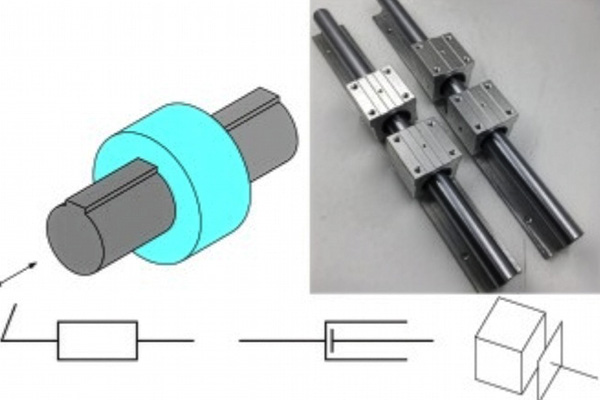
In robotics, a module is a compact joint that enables a robot to move independently in more than one way. So, the degree of freedom is integrated in these modules.
These joints are customized according to the unstandardized requirements. So, the DoF varies accordingly. To achieve better DoF, custom CNC machining and other advanced methods are required.
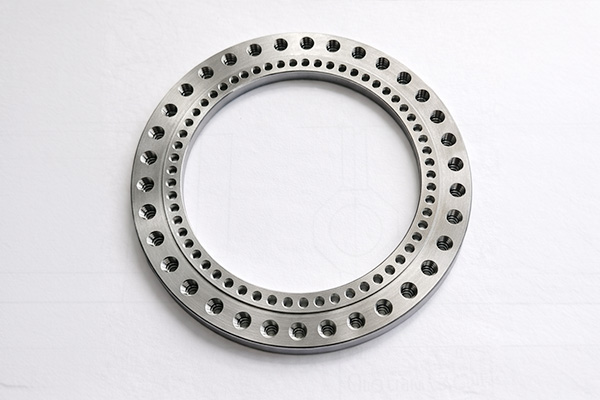
The structural parts include:
The transmission parts include:
The supportive parts include:
In a robot, these are the protection parts:
CNC machining excels when the parts need high precision due to tight tolerances. The same is the case with robotic joints manufacturing, where micron-level precision is required. The big companies in China, such as Unitree Robotics, use CNC machining.
To meet a tight tolerance, such as ±0.01mm for robotic joints, precision machining is required.
Near-net shape means the machined part does not need or very minimal post-machining operations. CNC machining operations can efficiently achieve ultra-high precision without wasting material and post-machining operations. The applications include humanoid robot kits.
The joints can be manufactured by depositing material layer-by-layer (additive manufacturing) or by subtractive methods (by removal of unnecessary material). Or both methods can be used spontaneously.
It is like one-stop manufacturing where additive and subtractive manufacturing methods are used commonly in precision robot components. Big companies, such as Hybrid CNC Parts, use hybrid manufacturing of joint parts. As one of the companies making custom vehicles machinery robotics, Tuofa CNC Machining also provides advanced custom solutions:
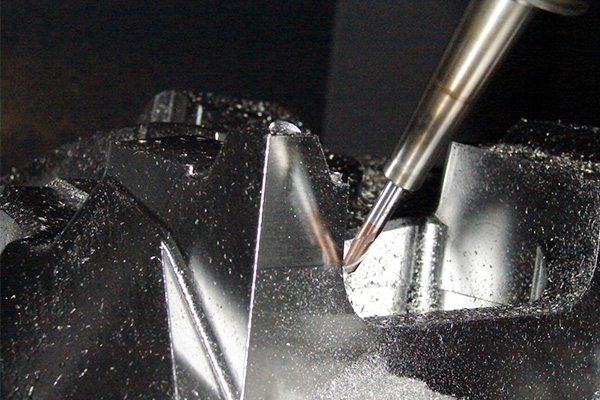
Machining components starts with designing and material selection. Other steps include:
To meet tight tolerances in robotic joint parts, such as +/-0.005 to 0.01, 5-axis machining plays a crucial role. The reason behind such tight tolerances is that machining errors accumulate through the kinematic chain, which reduces the efficiency of the parts.
During the design phase, the design of welds, fasteners, etc., is optimized for easier and cheaper machining. It is called design for manufacturability (DFM).
The manufacturing process is selected based on the workpiece material, e.g., 17-4PH stainless steel, the part’s functions, and other aspects, such as where to put the springs, etc.
For your projects, a lot of testing is done to ensure the precision of your components. These tests include:
A Coordinate Measuring Machine is an advanced tool to verify dimensions, alignment, fit, and assembly of the components. CMM ensures that the part is machined according to exact requirements.
Multiple tests are performed to check the functional performance of the parts:
To ensure that the robotic part is transmitting the motion without any backlash, slipping, or overloading, this test is conducted.
To check how much input energy is converted into useful motion.
Analyzes if a small movement occurs when the direction of motion is reversed.
These tests ensure that the parts fit perfectly and function properly.
One of the big reasons behind joint failures is poor machining. Precision machining is the solution to such cases.
Typical Cause
A prototype is a sample of the actual part. It is made to test design concepts, functionality, and to get identified with potential issues before mass production. Once the prototype is passed, then the actual production of robotic joints starts.
The production of robotic joints starts with the design, prototyping, and finally the mass production.
For your projects, where robotic parts need to be machined with ultra-high precision, come to TUOFA CNC Machining. TUOFA specializes in achieving micron-level precision using advanced 5-axis CNC machines. Recently, TUOFA worked on a project of humanoid robots to manufacture wrist rotation joints. These high-precision transmission parts are manufactured successfully by 17-4PH steel using 5-axis CNC machining processes. So, TUOFA is a perfect option for your robotic projects of high-precision parts.
The future of robots, especially the humanoid robots, is emerging from industrial to everyday applications. For instance, now the care robots are used at home for assistance of disabled people. The artificial intelligence for features, like perception and decision-making, is evolving day-by-day.
For these robotic parts, your projects will require ultra-high precision 5-axis machining. You do not need to worry about it, as TUOFA CNC Machining is here to help you. Come to us for the best robot joint parts machining.
Tuofa CNC Machining
GENISOM AI makes ICRA debut at conference in Vienna
World's first omni-modal evaluation including tactile sensing for…
North America’s largest robotics and automation event winds down

Automate’s largest day ever draws huge crowds to McCormick Place