The White House
By
Tim Culverhouse
October 30, 2026

Wikimedia Commons
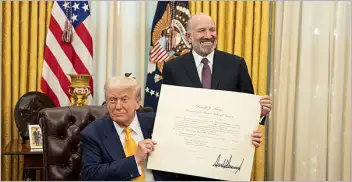
President Donald Trump and The White House are reviewing robotics and industrial machinery imports over national security concerns, directing trade negotiations while leaving potential tariffs on the table.
Get news, papers, media and research delivered. Sign up for our free newsletters.
Stay up-to-date with news and resources you need to do your job. Research industry trends, compare companies and get weekly market intelligence with Robotics 24/7.
Wikimedia Commons
President Donald Trump and The White House are reviewing robotics and industrial machinery imports over national security concerns, directing trade negotiations while leaving potential tariffs on the table.
President Donald Trump and his administration is moving to address U.S. reliance on imported robotics, industrial machinery and related components, citing national security concerns and the need to strengthen domestic manufacturing capacity.
On Oct. 28, 2026, President Trump signed a proclamation under Section 232 of the Trade Expansion Act of 1962, directing the U.S. Department of Commerce and the Office of the U.S. Trade Representative to negotiate agreements with foreign trading partners concerning imports of robotics, industrial machinery, and their parts and components.
The October 2026 proclamation comes just over a year since the Trump administration opened tariff discussions related to robotics and industrial machinery.
The action follows a Commerce Department investigation into how imports of these technologies affect U.S. national security. However, the proclamation does not impose immediate tariffs or other import restrictions. Instead, it establishes negotiations as the administration's initial course of action, while leaving open the possibility of additional trade measures.
In October 2025, the Association for Advancing Automation (A3) urged the President to not impose tariffs, and instead working on the development of a national robotics strategy.
Under the directive, Commerce Secretary Howard Lutnick and U.S. trade representatives must jointly pursue or continue negotiations with trading partners. The agencies are required to provide President Trump with an update on their progress within 180 days of the proclamation.
Depending on the outcome of those discussions, the proclamation said that the President could consider additional measures, including tariffs, duties, quotas and fees on imported robotics and industrial machinery. The proclamation also identifies potential incentives for new investment in U.S. production of robotics, industrial machinery and their components.
The Trump administration's decision follows findings from a Commerce Department investigation that identified foreign import dependence as a potential vulnerability for the U.S. industrial base.
According to the proclamation, the United States relies on foreign imports for most types of robotics and industrial machinery, as well as many of their components. The proclamation said that the value of these imports has increased over the past decade and is projected to continue growing.
The investigation also found that domestic manufacturers currently lack sufficient production capacity to meet U.S. demand for these technologies, despite recent investments in manufacturing facilities.
President Trump’s administration cited the importance of robotics and industrial machinery across defense manufacturing and the nation's 16 critical infrastructure sectors. Applications include:
The proclamation also identified potential cybersecurity and safety vulnerabilities associated with equipment sourced from certain foreign entities. Because robotics and industrial machinery can be integrated into manufacturing and defense systems and may process or store sensitive data, the administration said foreign-sourced technologies could introduce cybersecurity risks.
The proclamation specifically identified the following advanced robotic systems for their potential military applications, including intelligence, surveillance, reconnaissance and hazardous-material handling:
The administration's decision places robotics and industrial machinery among the industrial sectors being reviewed under Section 232, which authorizes presidential action when imports are determined to threaten U.S. national security.
The investigation covers a broad range of technologies, including:
For robotics manufacturers, automation suppliers and U.S. companies that depend on imported equipment and components, the proclamation suggests that the immediate impact is limited because no new tariffs were announced.
However, the potential for future trade restrictions could influence sourcing decisions, manufacturing investments and supply-chain planning as negotiations progress.
The Commerce Department will continue monitoring imports and reviewing their potential national security implications. The next significant milestone will be the administration's 180-day update on negotiations, which could help determine whether additional measures are pursued.

Tim is the Editorial Director of Robotics247.com. His mission is to provide valuable information and insights to robotics professionals and decision-makers, and to help them solve business challenges. He is a creative, deadline-driven, and detail-oriented storyteller. In addition, he is a sports broadcaster and public address announcer.
Enjoyed this article? Add Robotics 24/7 as a preferred source in Google Search.
Edge computing gives AI agents the processing power to turn instructions into…
President Trump orders a review of robotics imports over national security…
Platform helps robots adapt to complex tasks

Look beyond the headlines for the latest in humanoid robots