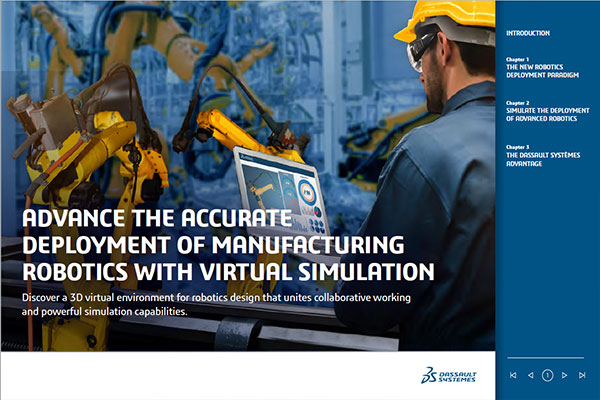
While the robotics market continues to expand—slated to enjoy 9.9 percent CAGR until the end of the decade—there is a growing need to ensure the accurate deployment of robotics in increasingly complex manufacturing environments.
First, products are becoming increasingly personalized in what’s known as “Production of One,” that is, manufacturers need to be flexible enough to produce for the unique needs of a single consumer.
Second, global manufacturers have to contend with the prospects of a fast-greying population. There isn’t enough available labor to replace retiring talent; therefore, robotics will have to be more quickly integrated to provide a production multiplier effect to meet projected demand levels.
Third, manufacturers have to deliver innovative products in diverse global markets beset with the prospect of volatility and disruption. In these scenarios, coordination of distributed production lines is paramount and manufacturers have to become more agile in modifying their production lines in response to these challenges. “While robotic systems are extremely flexible, it’s up to the manufacturer or the robotics system integrator to quickly develop or modify a robotics system to solve a problem,” explained Tony Karew, a Senior Specialist in the DELMIA Robotics Portfolio.
Download this doc and learn more about the Dassault Systèmes advantage

Colette Kress, current EVP and CFO of NVIDIA named interim CEO

China's Office of the Working Mechanism for Foreign Investment Security…

President Trump orders a review of robotics imports over national security…
Platform helps robots adapt to complex tasks