By
MMH Staff
November 13, 2019
Get news, papers, media and research delivered. Sign up for our free newsletters.
Stay up-to-date with news and resources you need to do your job. Research industry trends, compare companies and get weekly market intelligence with Robotics 24/7.
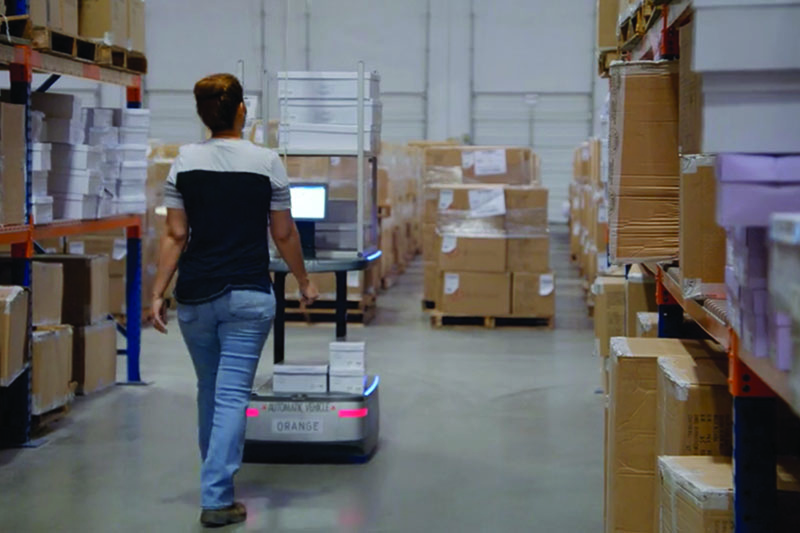
As it continued to grow and meet increasing customer demands, ACT Fulfillment, a California-based third-party logistics (3PL) provider, encountered many challenges. From capacity limiting fulfillment volume, to process snags related to labor intensity and high employee turnover, the 3PL knew it needed an automated solution to ensure steady operations. After all, it was averaging 25 units per hour pick-to-ship.
Industrial engineer Ryan Cox originally considered a few traditional options, including a post-pick sortation system. But more than 12 months would be necessary for that automation implementation, as it would also require intensive infrastructure changes and came with a starting price tag of $5 million.
“These barriers, [along with the] lead time and cost, stopped us previously in progressing with automation,” Cox adds.
In the end, collaborative robots were the most competitive alternative to traditional automation to help the company streamline its operations in a 40,000-square-foot picking area dedicated to shoe fulfillment for retail replenishment. The new robots optimize the picking route to reduce walking, provide carry totes (which ensure associates are hands-free), confirm picks and indicate which container items they should be placed into, and provide context-specific reason codes, so that exception handling is a breeze.
In three months, ACT noticed considerable productivity gains by using collaborative robots. With a custom solution that fits its needs, the company tripled its pick rates and decreased in-aisle walking by 50% with pick path optimization. Overall, ACT sped up its processing by more than three times—from 25 units per hour to 85 units per hour (in-aisle picking), along with 72 units per hour across the new simplified picking process.
Due to this solution, ACT used cart pick, rather than bulk pool, sort and segregate, thereby eliminating double picks and reducing mispicks by 90%. More importantly, by implementing collaborative robots, ACT’s worker productivity and employee morale increased. When it came to the bottom line, ACT noticed a return on its investment in five months, as it continues to use collaborative robots to enhance associate tasks.
6 River Systems
(866) 602-4825
GENISOM AI makes ICRA debut at conference in Vienna
World's first omni-modal evaluation including tactile sensing for…
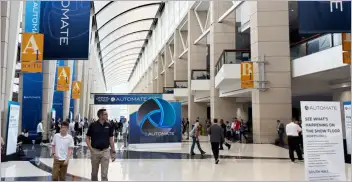
North America’s largest robotics and automation event winds down
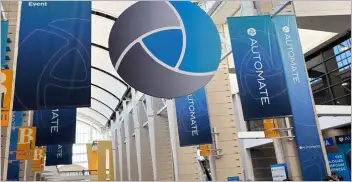
Automate’s largest day ever draws huge crowds to McCormick Place