Alliad & viAct
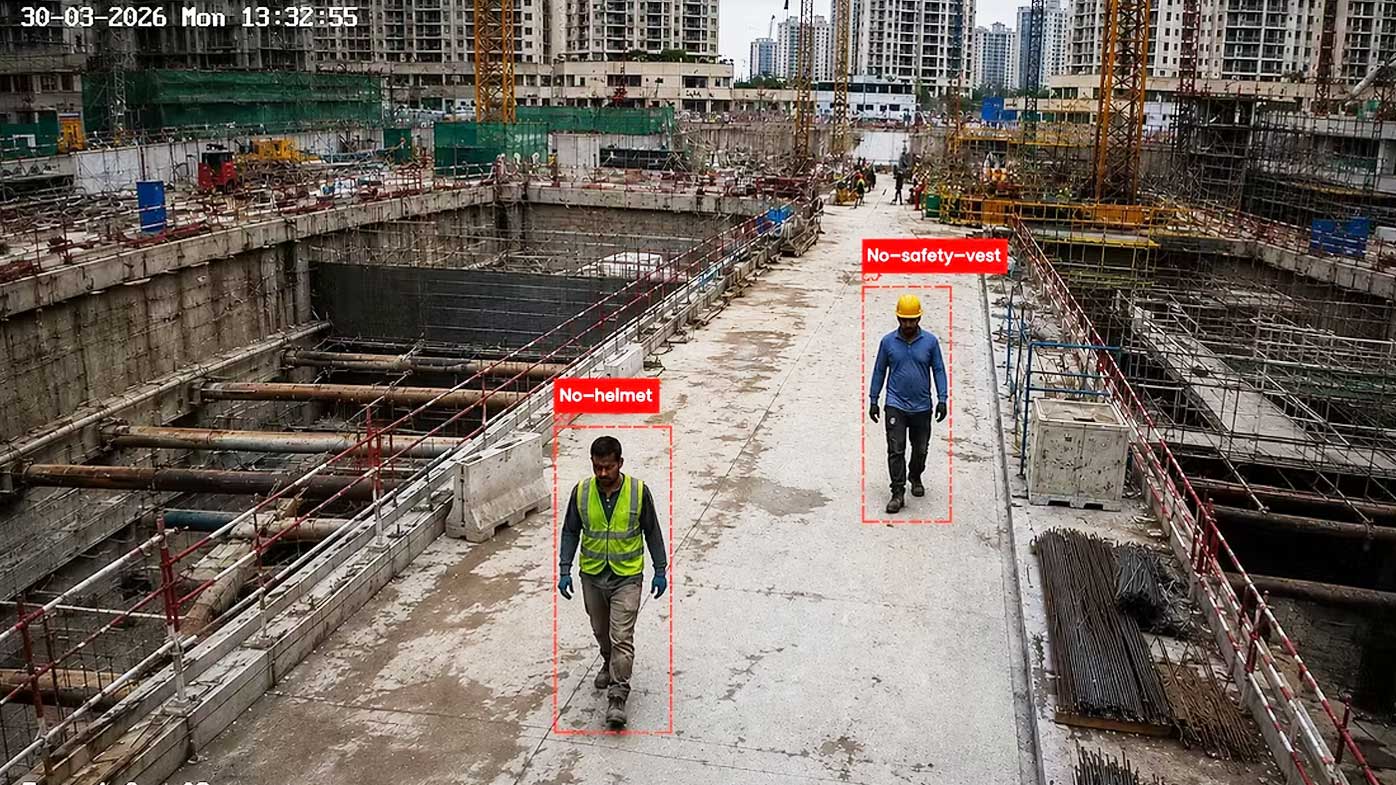
Alliad deployed viAct’s AI-powered video analytics across its existing cameras to continuously monitor PPE compliance, danger-zone intrusions and fire & smoke risks.
Get news, papers, media and research delivered. Sign up for our free newsletters.
Stay up-to-date with news and resources you need to do your job. Research industry trends, compare companies and get weekly market intelligence with Robotics 24/7.

Alliad & viAct
Alliad deployed viAct’s AI-powered video analytics across its existing cameras to continuously monitor PPE compliance, danger-zone intrusions and fire & smoke risks.
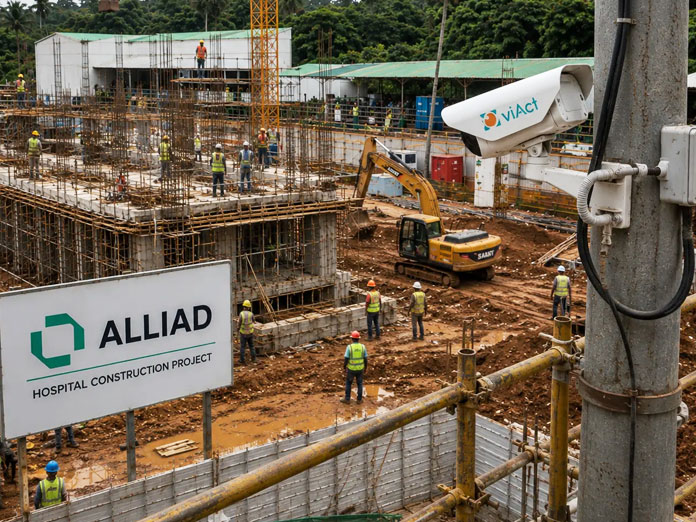
Alliad, a global construction, engineering, and logistics operator, said that it has enhanced safety oversight at a remote healthcare construction site through viAct's AI-powered video analytics across its existing camera infrastructure.
The project registered a 41.7% reduction in PPE non-compliances and a 46.3% reduction in danger zone violations in just three months, along with constant real-time monitoring of fire and smoke detection across the site.
Keeping high safety standards at a busy, remote and heavily populated construction site requires continuous commitment. For Alliad's Engineering & Construction Division, safety remained a priority from the very onset.
Instead of waiting for gaps to emerge and pressurize them, the team said that it looked for technologies that could help them enhance the safety processes that were already in place.
"Maintaining visibility across a busy project site is always a challenge. viAct provided an additional layer of real-time monitoring that helped our teams identify potential compliance issues sooner and support our ongoing commitment to high safety standards,” said Mounir Ziani, head of QHSE, Engineering & Construction Division at Alliad.
Working under a tight timeline, Alliad said that it wanted an offering that could deliver value quickly, without a lengthy technology rollout or additional hardware investment.
Alliad said that viAct’s AI-powered safety system analyzed existing camera feeds in real-time, allowing Alliad's safety team to have a complete overview of the site. Further, it facilitated site supervision along with reporting processes through its real-time alerts and integrated dashboard.
For PPE monitoring, viAct’s AI-powered PPE detection module monitored workers 24/7 across the four different types of PPEs:
The real-time reporting feature enabled the Alliad team to identify risks faster and intervene on time, before any non-compliance turned catastrophic.
“What we are seeing at Alliad’s Côte d'Ivoire project reflects where EHS is heading across the construction sector,” said Gary Ng, co-founder & CEO of viAct. “These days, safety teams increasingly need continuous, real-time visibility, not just periodic checks and they need it without overhauling infrastructure that already works. Deployments like this reflect a broader shift in how AI-powered monitoring is perceived: not as an additional system running alongside existing safety processes, but as a layer built directly on them.”
Alliad said that viAct’s ability to run multiple AI modules on the same camera network enabled the company to extend monitoring beyond PPE, without adding any additional camera. The same feeds were also used to flag any access to restricted or hazardous zones and detect any such pre-conditions that could lead to fire hazards. Thus, it helped team Alliad achieve a complete real-time monitoring of the project site without adding any extra headcount for the continuous supervision of the workers.
"One of the objectives of this pilot was to make better use of our existing camera infrastructure,” said AbdulAziz Al-Enizi, IT manager, Business Solutions & Projects, at Alliad. “Working with viAct allowed us to turn that visibility into more actionable insights, supporting faster responses and informed operational decision-making."
Alliad said that it saw results within just three months of deployment. PPE violations dropped by 41.7%, while unauthorized access to danger zones decreased by 46.3% as workers and supervisors adjusted to continuous AI-powered monitoring. From day one, Alliad said that fire detection was simultaneously operating on all connected cameras, providing round-the-clock monitoring for dangerous situations related to fire hazards that conventionally rely on a person being present in order to be detected.
“What excites us about projects like this is the replication potential,” said Hugo Cheuk, co-founder and COO of viAct. “A single successful deployment on one remote site gives an operator like Alliad a validated model they can extend across dozens of others, without starting from scratch each time. That’s the direction we see EHS technology is heading, from isolated pilots to scalable, portfolio-wide standards.”
Alliad said that the overall results tell more than just figures. The companies said that it demonstrates what is possible when AI-backed monitoring is layered onto the existing infrastructure.
Enjoyed this article? Add Robotics 24/7 as a preferred source in Google Search.
The iWMC is a four-in-one integrated drive module for wheeled mobile robots,…

Comes 11 days after his resignation amidst multiple personal scandals
Automaker is developing its own robots at Kokomo, Ind. plant

Colette Kress, current EVP and CFO of NVIDIA named interim CEO