Avatar Robotics
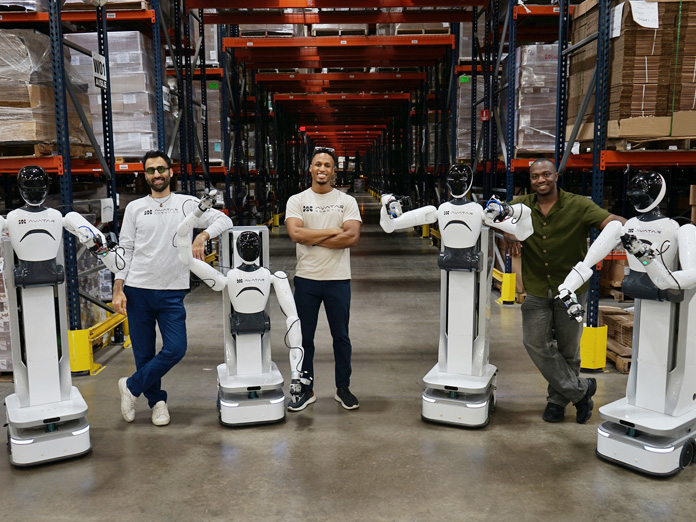
Avatar Robotics founder Colin Webb, CEO (center), Hamid Farzaneh, Ph.D., founding engineer (left), and Nenye Anagbogu, chief screwdriver (right). The company announced a $6.5M funding round.
Get news, papers, media and research delivered. Sign up for our free newsletters.
Stay up-to-date with news and resources you need to do your job. Research industry trends, compare companies and get weekly market intelligence with Robotics 24/7.
Avatar Robotics
Avatar Robotics founder Colin Webb, CEO (center), Hamid Farzaneh, Ph.D., founding engineer (left), and Nenye Anagbogu, chief screwdriver (right). The company announced a $6.5M funding round.
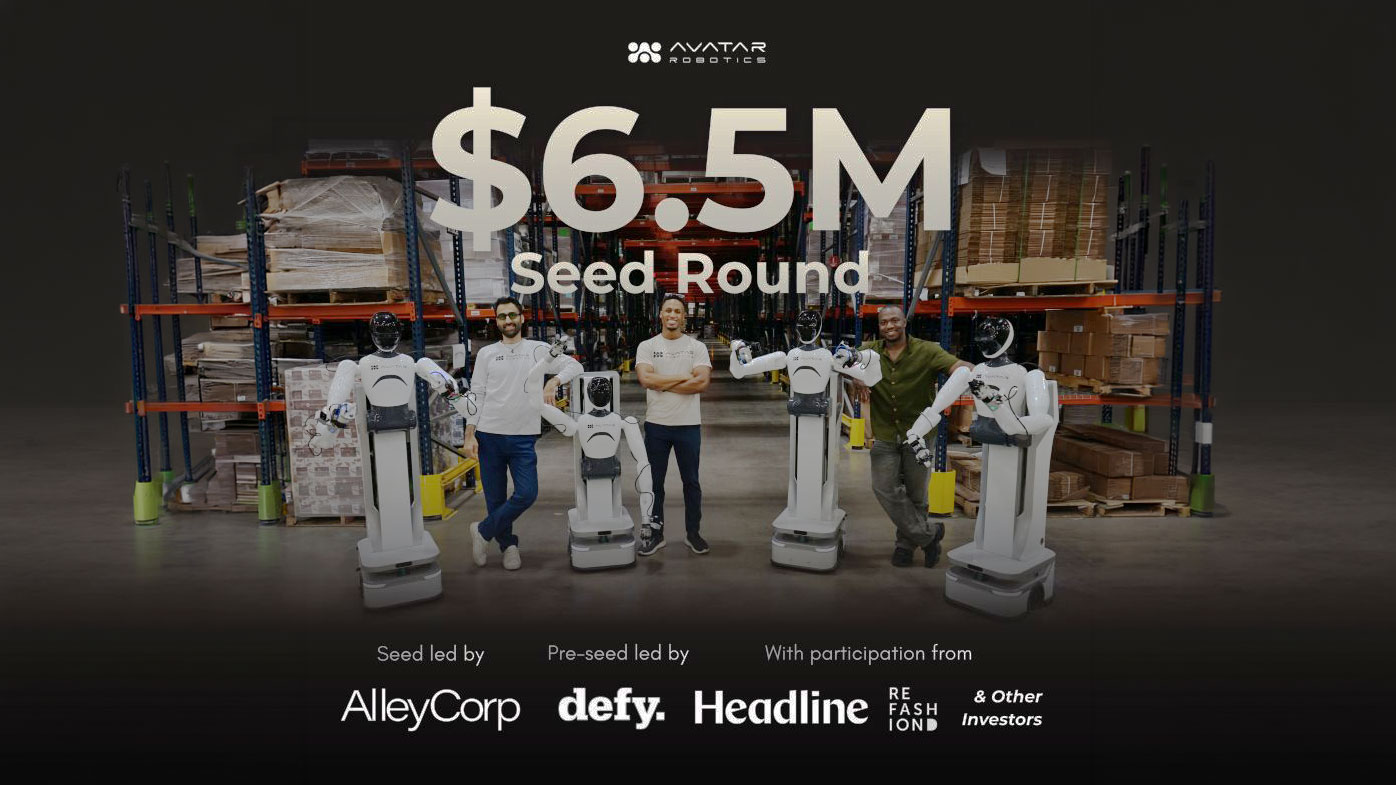
San Francisco-based startup Avatar Robotics announced that it raised a $6.5 million Seed round led by AlleyCorp, alongside pre-seed funding led by defy.vc, and participation from Headline, Henry Ford III, Refashiond, Paul Vogel, Jack Huffard and Samuel Udotong.
The company said that it is “building the unlimited workforce for industrial labor.”
Avatar Robotics said that it addresses one of the largest structural constraints facing the U.S. economy: persistent labor shortages across warehousing, logistics and manufacturing. As companies reshore operations and demand faster fulfillment, the company said that many facilities struggle to hire and retain enough workers for physically demanding or repetitive jobs.
Avatar said that its technology unleashes a new category of industrial infrastructure that combines robotics, remote human operators and AI-driven autonomy. The company said that its humanoid robots can perform high-value warehouse and manufacturing workflows such as picking, packing, kitting, sorting, cycle counting and material movement - delivering flexible labor capacity 24/7.
"The United States has a massive labor shortage, and the warehouses and factories that power daily life are struggling to hire enough workers," said Colin Webb, founder and CEO of Avatar Robotics. "For the first time, affordable robotics, high-speed connectivity and AI-driven autonomy make it possible to create a new kind of workforce. Avatar Robotics gives businesses access to scalable industrial labor, while enabling workers to operate fleets of robots remotely from safer and more comfortable environments. Over time, this can dramatically lower the cost of goods and expand economic opportunity to people anywhere in the world."
Since launching in December 2025, Avatar Robotics said that it has packed, sorted and helped ship more than 900,000 products, including for a leading global beauty retailer, via robots deployed across live customer environments. The company added that it has also begun a post-pilot expansion with a multi-billion-dollar warehouse operator to support sorting and picking workflows, with additional deployments underway.
"Avatar Robotics has built strong partnerships with their initial customers - and is already delivering meaningful value in real workflows - through their human-in-the-loop system, which is performing at a level competitive with skilled human operators," said Brannon Jones, principal at AlleyCorp. "In doing so, Avatar Robotics has also generated large datasets of robot control data, which the industry currently lacks and will help to inform foundation models and enable more scalable labor supply."
Unlike traditional automation systems that require rigid workflows and expensive upfront integration, Avatar said that its platform is “plug-n-play,” using remote operators to complete tasks reliably from day one. While operating, the company said that its Avatar Robots continuously learn from the data they generate, enabling robotic foundation models to bring intelligent automation to every task.
Avatar Robotics said that this results in a new kind of robotics infrastructure for the physical economy. Customers get labor capacity immediately, and Avatar Robotics produces the data needed to improve autonomy, where eventually one warehouse operator will command entire fleets of robots. In the future, Avatar said that it will power an ever-growing suite of autonomous workflows for today's highly manual, complex tasks.
"Colin's vision for Avatar instantly captivated me," said Amy Yin, Partner, defy.vc. "The path to full robotic autonomy will require both better hardware and massive amounts of real-world data. Avatar's approach is incredibly clever: use remote human operators to bridge the gap today while improving autonomy with every task completed. I believe that model can help Avatar build one of the largest humanoid robot fleets in the world."
Avatar Robotics said that the new capital will be used to expand deployments, accelerate autonomy software development, scale robot fleets and grow the company's engineering and operations teams. The company said that it envisions scaling to millions of robots operating across warehouses, factories, mines, farms and future infrastructure projects - allowing businesses of any size to access industrial-grade labor on demand, and enabling workers globally to control fleet-scale physical systems virtually.
Enjoyed this article? Add Robotics 24/7 as a preferred source in Google Search.
Edge computing gives AI agents the processing power to turn instructions into…

China's Office of the Working Mechanism for Foreign Investment Security…

President Trump orders a review of robotics imports over national security…
Platform helps robots adapt to complex tasks