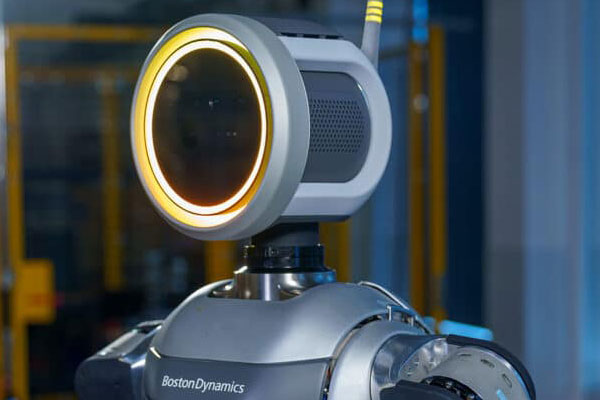
Boston Dynamics
Boston Dynamics and the Robotics & AI Institute announced a partnership that looks to advance humanoid robots through reinforcement learning.
Get news, papers, media and research delivered. Sign up for our free newsletters.
Stay up-to-date with news and resources you need to do your job. Research industry trends, compare companies and get weekly market intelligence with Robotics 24/7.
Boston Dynamics
Boston Dynamics and the Robotics & AI Institute announced a partnership that looks to advance humanoid robots through reinforcement learning.
Boston Dynamics and the Robotics & AI Institute (formerly The AI Institute) announced a partnership to advance humanoid robots through reinforcement learning. The two organizations will establish a shared reinforcement learning training pipeline for the new electric Atlas robot to build dynamic and generalizable mobile manipulation behavior.
The work, which kicked off in February 2025, brings together two research teams to advance robot technology and to produce new capabilities on Atlas.
The partnership expands upon previous collaborations between Boston Dynamics and the Robotics & AI Institute (RAI Institute), including joint development work on Spot’s Reinforcement Learning Researcher Kit. Released last year, the kit trains unique behavior and modes of locomotion on the quadruped, and was used to achieve record running speeds of 11.5 mph (5.2 m/s.) This collaboration builds upon that work, with a new focus on humanoid robots.
“We are living in an extremely exciting time for humanoid robot development,” said Robert Playter, CEO of Boston Dynamics. “But for humanoids to be useful, they must be flexible enough to work in many different kinds of environments and perform tasks in a wide variety of applications. Our collaboration with the RAI Institute brings together two of the world’s leading robotics organizations to help accelerate core capabilities needed to make robots like Atlas a valuable tool in people’s lives.”
Boston Dynamics and the Robotics & AI Institute highlighted several key objectives for the project, including:
“Our aim at RAI is to develop technology that enables future generations of intelligent machines,” said Marc Raibert, executive director of the RAI Institute. “Working on Atlas with Boston Dynamics enables us to make advances in reinforcement learning on arguably the most sophisticated humanoid robot available. This work will play a crucial role in advancing the capabilities of humanoids not only by expanding its skillset, but also streamlining the process to achieve new skills.”
The RAI Institute is a research organization focused on solving the most important problems in artificial intelligence related to robotics, to achieve fundamental advances in what robotics and other intelligent machines can do.
The organization’s work is focused on developing the perception, situational understanding, reasoning and other cognitive functions underpinning robots’ abilities and combining them with advances in their physical capabilities. The organizations said that the partnership will both build upon the RAI Institute’s existing research in AI and learning, and help the organization further advance the technology as it applies to other robot platforms.
The organizations will periodically release updates on this collaborative work, including publications and demonstrations with Atlas.

Ultrasonic sensing enhances robotics perception
World's first omni-modal evaluation including tactile sensing for…

Cybernetix Ventures’ event kicks off Robotics Tech Week 2026 slate of events

Preview the manufacturing and warehouse components that will be on the…