Getty Images
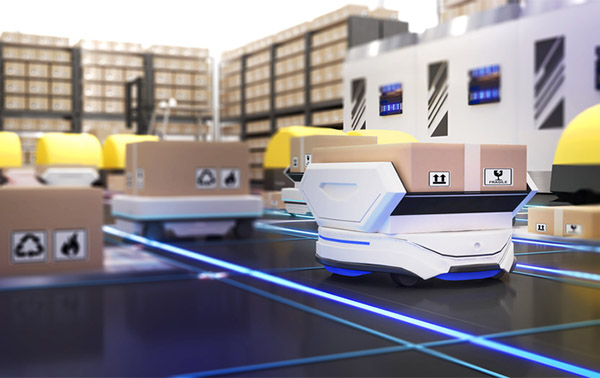
Mobile robots offer benefits to multiple industries.
Get news, papers, media and research delivered. Sign up for our free newsletters.
Stay up-to-date with news and resources you need to do your job. Research industry trends, compare companies and get weekly market intelligence with Robotics 24/7.
Getty Images
Mobile robots offer benefits to multiple industries.
Many companies have turned to mobile robots to boost efficiency and flexibility. These autonomous devices offer various benefits, enabling businesses to thrive in increasingly competitive markets.
Mobile robots are revolutionizing operations across various sectors. They are particularly effective in warehouses, where they can help streamline tasks such as picking, packing, and transportation. These devices can navigate complex environments with sophisticated algorithms and sensors, demonstrating exceptional agility.
Moreover, mobile robots are an excellent solution to labor shortages, as they can operate continuously without fatigue or breaks. They significantly lower the risk of workplace injuries by taking over dangerous tasks.
These versatile machines are not restricted to the confines of the warehouse floor. From delivering goods to customers' doors to providing telemedicine services in healthcare facilities, mobile robots are transforming how companies do business.
The implementation of mobile robots requires careful planning and consideration. It is essential to assess your organization's needs thoroughly and seek the advice of experienced professionals. With the right approach, you can use these innovative machines to optimize your business operations.
Mobile robots can automate complex tasks, making them a promising way for businesses to stay competitive.
Autonomous mobile robots (AMRs) are at the forefront of advancements in the robotics industry. Unlike automated guided vehicles (AGVs), these self-navigating systems can operate independently in uncontrolled environments without the need for human guidance or fixed pathways.
AMRs have sensors and onboard computing power that enable them to perceive their surroundings, create maps of their environments, and make decisions on path planning. This technology is commonly used in industries such as warehousing and manufacturing to optimize processes by automating tasks such as materials handling and intralogistics.
Unlike traditional automated systems, such as conveyor systems requiring fixed infrastructure, AMRs can navigate dynamically adjusted paths to adjust to environmental or task changes. This adaptability makes them an economically viable solution for companies looking to automate without significant facility modifications.
The implementation of AMRs is not without its challenges. Technical issues such as reliable object detection and avoidance, efficient path planning, and safe human-robot interaction are ongoing research and development areas.
In addition, there are regulatory considerations, as autonomous systems in public spaces are still subject to evolving legislation and standards.
Although mobile robots are already having a significant effect on industries such as manufacturing and warehousing, their full potential is yet to be realized. The continued advancement of this technology will undoubtedly open new avenues for automation and efficiency, driving future robotics innovation and adoption.
There are several types of mobile robots, each with its unique functionalities and applications:
Prospective users should evaluate the mobile robots whose designs best address the demands of the task at hand.
AMRs and related systems can help businesses in various sectors in the following ways:
In the rapidly evolving technology landscape, mobile robots stand out, with innovations transforming industries and setting new standards for efficiency and productivity.
John Levan is a professional freelance writer for AxControl.com. A graduate of Alvernia University with a B.A. and California State University with an M.A., he is a former manufacturing business owner now specializing in writing about manufacturing topics. This column is reposted with permission.
Editor's note: For more about how mobile robots can add operational agility, see Robotics 24/7's October Special Focus Issue.
Mobile Industrial Robots describes how its AMR with the Interroll conveyor module can optimize intralogistics.
From geometry preparation to AI-assisted analysis, integrated CFD workflows…
North America’s largest robotics and automation event winds down

Automate’s largest day ever draws huge crowds to McCormick Place

North America’s largest robotics and automation event kicks off