Wikimedia Commons
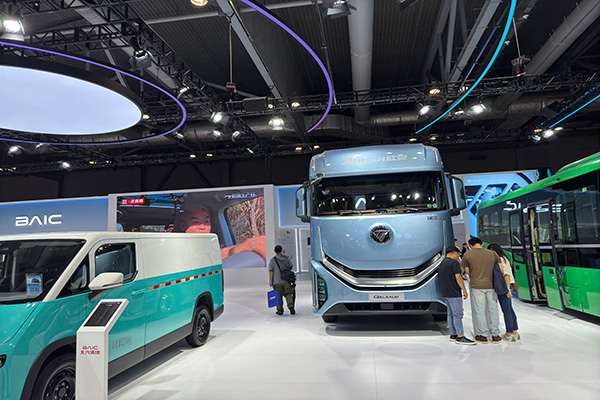
The 2025 International Automotive & Supply Chain Expo (Hong Kong). A recent Gartner Inc. report suggests that 1 in 20 supply chain managers will manage robots rather than humans, by 2030.
Get news, papers, media and research delivered. Sign up for our free newsletters.
Stay up-to-date with news and resources you need to do your job. Research industry trends, compare companies and get weekly market intelligence with Robotics 24/7.
Wikimedia Commons
The 2025 International Automotive & Supply Chain Expo (Hong Kong). A recent Gartner Inc. report suggests that 1 in 20 supply chain managers will manage robots rather than humans, by 2030.
Eighty percent of humans will engage with smart robots daily, and one in 20 supply chain managers will manage robots, rather than humans, by 2030, according to a recent report from Gartner, Inc.
Organizations are placing greater emphasis on enhancing the capabilities of their existing workforce by supplementing with robotics due to factors like labor scarcity and rising costs.
Gartner, Inc. said smart robots have been identified by chief supply chain officers (CSCOs) as an important investment area, though many acknowledge their organizations lack internal robotics expertise to maximally leverage these innovative technologies.
“CSCOs must develop an organizational structure to support the management of growing fleets of robots by creating a warehouse automation strategy,” said Abdil Tunca, senior principal analyst in Gartner’s Supply Chain practice. “Managers will encounter different scenarios when managing robots than they would with people, especially when managing fleets of task-specific and polyfunctional robots, which will navigate more tasks and spaces within warehouses and fulfillment centers.”
As robot fleets expand rapidly, more companies will adopt and explore diverse robotics applications. Initially, when fleets are small and specialized, a technical professional or engineer will oversee operations within specific functional boundaries. However, as fleets grow and companies embrace varied robotics use cases, establishing a management structure to oversee robotics operations becomes essential.
Most organizations have well-established human capital management practices to guide managers on how to manage people and have skills needed to be successful, yet there are few methodologies today for managing robots and almost none for managing varied fleets of robots.
Gartner Inc. said that while it won’t be necessary for supply chain managers to have the engineering skills required to build robots, they will need a general technical understanding of what the robots can do and how they work together with other robots and people. This knowledge will be crucial for understanding the business problems robots can reasonably address and provide this guidance to business leaders.
For instance, if a mobile robot is tasked with retrieving pallets in a warehouse, but the specific pallets are situated at a considerable height within a zone where humans are also present, a manager must acknowledge the safety challenges involved.
Additionally, they would need to allocate extra time and resources to ensure the mobile robot can accomplish the task.
“The journey toward adopting robotics will be valuable, but also challenging, and requires organizational support,” Tunca said. “Initially, robot management will operate as a distinct role within supply chain. Over time, managing robots will become integrated into various departments and job functions, akin to how the IT function has evolved and gained prominence within organizations.”
To support the transition to managing mobile robots, Gartner Inc. said companies should:
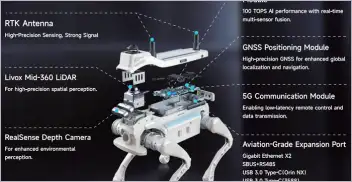
GENISOM AI makes ICRA debut at conference in Vienna

World's first omni-modal evaluation including tactile sensing for…
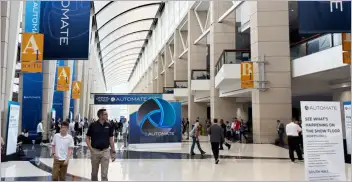
North America’s largest robotics and automation event winds down

Automate’s largest day ever draws huge crowds to McCormick Place