PushCorp
PushCorp released the STC0440-BT40 robotic servo spindle at IMTS 2026 in Chicago.
Get news, papers, media and research delivered. Sign up for our free newsletters.
Stay up-to-date with news and resources you need to do your job. Research industry trends, compare companies and get weekly market intelligence with Robotics 24/7.

PushCorp
PushCorp released the STC0440-BT40 robotic servo spindle at IMTS 2026 in Chicago.
PushCorp, a WALTER Surface Technologies company, launched the STC0440-BT40 at IMTS 2026 in Chicago.
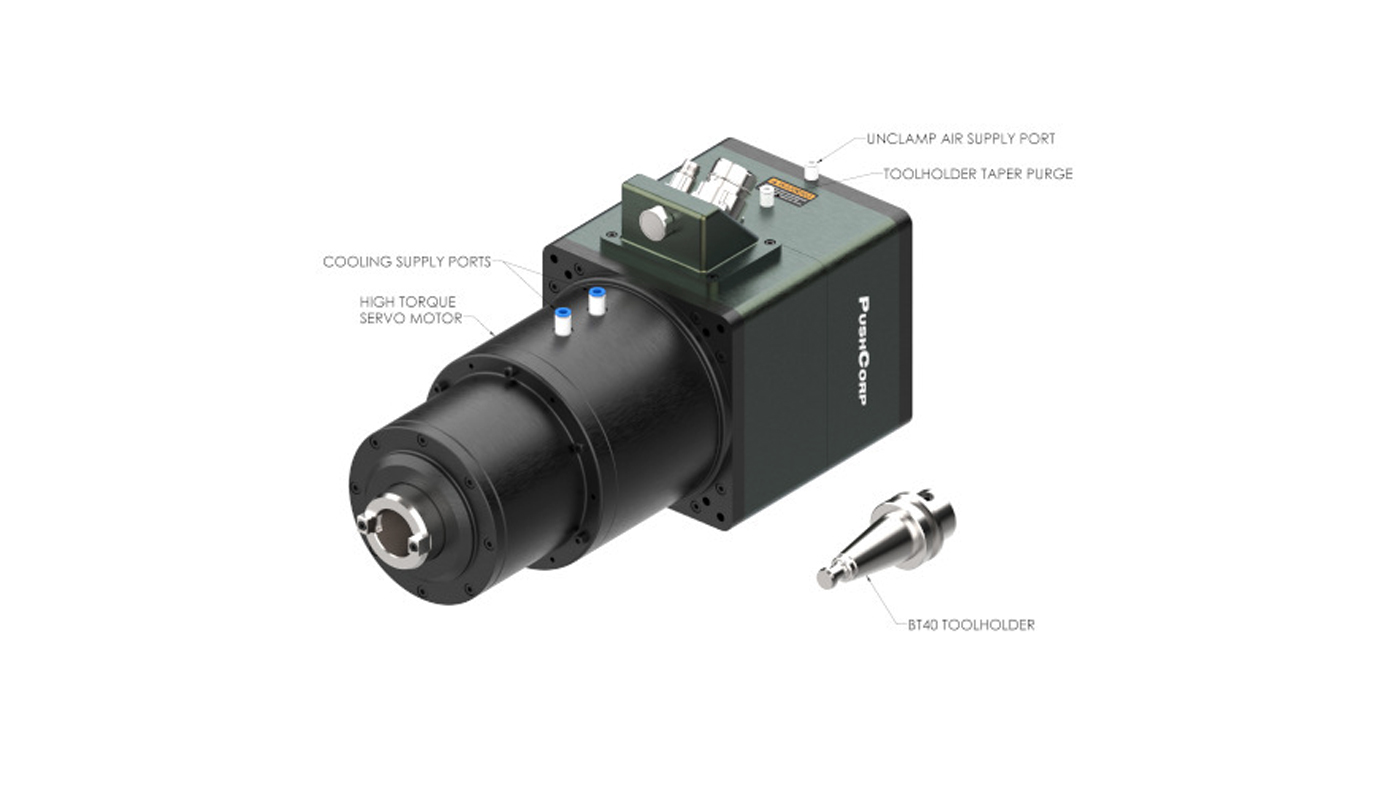
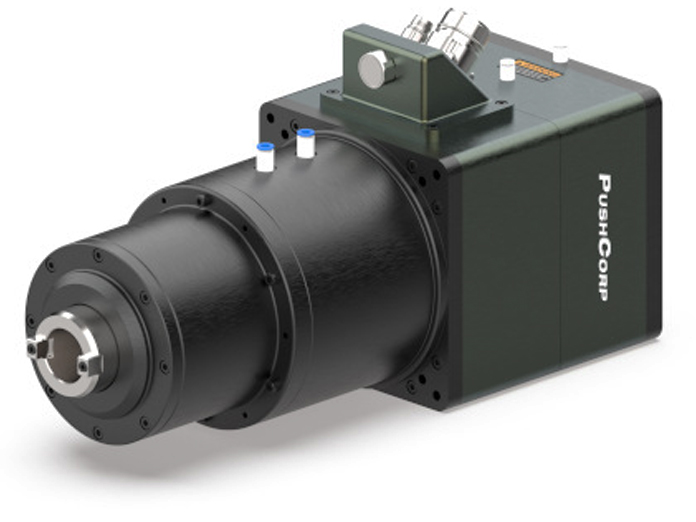
The company said that the STC0440-BT40 is a high-power robotic servo spindle with 40 horsepower for heavy-duty foundry and casting operations. The spindle is designed for automated machining, deflashing, gate removal and other material-removal applications that require high power and rigid tool positioning.
Built around a liquid-cooled 40.0 hp [30 kW] servo motor, PushCorp said that the STC0440-BT40 delivers adjustable and reversible speed up to 4,000 rpm, with +/-5% speed regulation. The company said that its quad-bearing front and duplex-bearing rear configuration supports high radial and axial loads, making the spindle suitable for applications where rigid tool positioning is required.
"The STC0440-BT40 now gives manufacturers and integrators a high-power platform for material-removal tasks,” said Eddie Erlbacher, VP of engineering & operations, PushCorp. “Its 40-horsepower servo motor will help teams build automated processes for the highest demanding applications."
PushCorp said that the spindle accepts standard BT40 tapered toolholders, giving integrators access to readily available CNC tooling and PushCorp custom toolholders. The company said that the interface supports a range of cutting and material-removal tools, including abrasive disks, grinding wheels, drill bits and end mills.
For applications that benefit from controlled contact force, PushCorp said that the STC0440-BT40 mounts directly to its active and passive force-compliance devices, including the AFD1240 and AFD92. Additionally, the company said that the spindle can be installed in parallel or perpendicular orientations, helping integrators manage contact force and achieve repeatable surface finishes as part of a complete robotic end-of-arm offering.
PushCorp provided the following specifications for the STC0440-BT40:
Enjoyed this article? Add Robotics 24/7 as a preferred source in Google Search.

Edge computing gives AI agents the processing power to turn instructions into…

President Trump orders a review of robotics imports over national security…
Platform helps robots adapt to complex tasks

Look beyond the headlines for the latest in humanoid robots