Intel
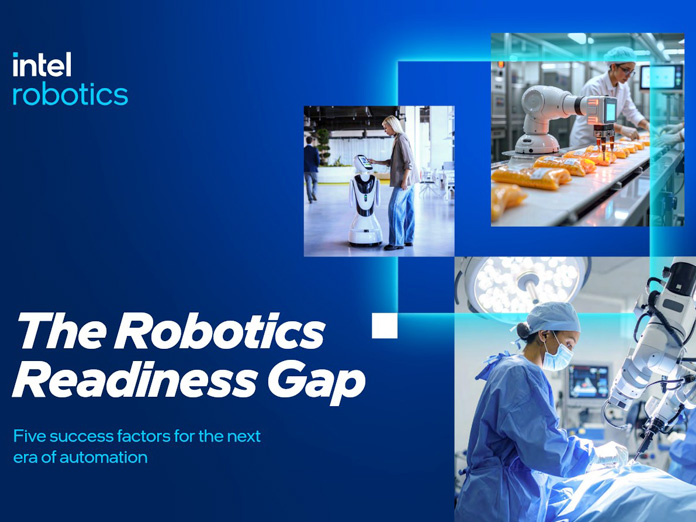
Intel's Robotics Readiness Gap report finds a significant difference in excitement and readiness for robotics usage in environments.
Get news, papers, media and research delivered. Sign up for our free newsletters.
Stay up-to-date with news and resources you need to do your job. Research industry trends, compare companies and get weekly market intelligence with Robotics 24/7.
Intel
Intel's Robotics Readiness Gap report finds a significant difference in excitement and readiness for robotics usage in environments.
Robotics is no longer a bet on the future - it's a plan for the next five years.
But according to new research commissioned by Intel, entitled The Robotics Readiness Gap, most organizations are moving faster than their operating models can support.
Intel said that the study finds a stark disconnect: six in 10 senior leaders expect their organization to operate a fleet of robots within five years, but only four in 10 currently have a formal strategy to manage a mixed human-robot workforce. That gap between ambition and operational readiness is the central finding of the report.
Conducted in partnership with Man Bites Dog and Coleman Parkes Research, Intel said that the research surveyed 800 senior business and IT leaders, robotics specialists, and government and healthcare officials across the United States, United Kingdom, Germany, Japan, China and South Korea. Respondents represented organizations with annual revenue exceeding $500 million.
Intel said that The Robotics Readiness Gap confirms robotics has moved beyond experimentation. Organizations already deploying robots report measurable gains in productivity, quality and speed of service and increasingly view robotics not as a pilot project, but as a competitive necessity.
"The next phase of robotics adoption won't be defined by whether organizations can deploy robots - it will be defined by whether they're ready to scale them,” said John Healy, vice president and general manager, Industrial and Robotics division, Intel. “Those that embed robotics and physical AI into their core operations, rather than layering them on top of existing systems, will be the ones who capture the full value of this shift.”
Intel's research identifies five factors that will separate organizations that scale robotics successfully from those that stall at the pilot stage:
Click here to download the full report.
Enjoyed this article? Add Robotics 24/7 as a preferred source in Google Search.
Edge computing gives AI agents the processing power to turn instructions into…
Daimon-TWM world model debuts for the public
Platform helps robots adapt to complex tasks

Look beyond the headlines for the latest in humanoid robots