By
Roberto Michel
March 26, 2022
Get news, papers, media and research delivered. Sign up for our free newsletters.
Stay up-to-date with news and resources you need to do your job. Research industry trends, compare companies and get weekly market intelligence with Robotics 24/7.
In getting ready for the MODEX event, a full two years out from the last live event, I’m looking forward to seeing the technology I write about on a daily basis, up close and in-person. A chance to kick the tires, so to speak, on all the autonomous mobile robots (AMRs) which will be on display at the event.
But just the robots, on their own, is not what I find most interesting about the direction of warehouse and materials handling automation. That’s because it’s not just what a specific robot can do, in terms of payload, or attachments, or shelf/bin configurations, that matters most. What matters more these days is how robotics interact with systems that manage warehouse and plant floor material handling processes—how well robotics gels with software systems, and with the people who are using these systems.
As a result, one thing I’ll be keeping my eye on are partnerships and product innovations that enable autonomous, cross-workflow handoffs of materials between systems. Some innovations don’t even need a human-triggered bar code scan to call a robot or record a material move, because the robots can communicate with execution-level software, and self-trigger delivery of materials or containers at a destination.
For a recent “Productivity Solutions” case study article in Modern’s March issue, I highlighted the use of automated guided vehicles (AGV) lift trucks at the TRUMPF “Smart Factory” facility in suburban Chicago. The factory uses the AGV lift trucks to autonomously transport metal parts and other work-in-process materials between work cells that are using TRUMPF’s latest laser cutting and smart production machinery.
The interesting thing about that case, to me, is that the production machinery operator at the TRUMPF Smart Factory does not have to log onto an AGV fleet manager to trigger a material move, or even scan a bar code. Instead, the “fab” or manufacturing execution system software from TRUMPF knows when a production step is complete, or materials are running low, and autonomously triggers the AGV fleet manager software that a material move is needed. When materials get dropped off at special smart docking stations at the Smart Factory’s work cells, the fab software instantly knows the materials are there.
This is an autonomous, “closed loop” system for moving materials that allows skilled production machine operators to stay concentrated on value added steps in making parts, instead of worrying about indirect materials transport processes, Kartik Iyer, director of the Smart Factory, recently told me when we spoke about the use of the autonomous lift trucks. The intent of the solution, which TRUMPF also offers to customers of its production machinery, is to use the fab software and AGV system to enable a fully hand-offs, smart material flow, so that machine operators can concentrate on actual production steps like laser cutting or deburring a part.
“We are not only transporting the parts autonomously, but transporting the right part, to the right location, in the right priority, so that operators can focus on running the equipment and keeping the throughput and quality high,” Iyer says.
That case was a demo center environment with some real-world production processes being run, not a warehouse, but in warehousing as well, there is a similar trend toward autonomous handoffs of materials between systems, governed by software, usually some type of warehouse execution system (WES). That’s why I say that focusing on the specs of a robot isn’t all the important. What tends to be more important is how a fleet of AMRs interacts with pack out lines, or how they hand off totes to a powered conveyor, or interact with human associates making use of mobile devices or voice-enabled systems. I think that is why I’m seeing so many partnership announcements between AMR vendors and warehouse integrators who also offer WES. The interplay of robotics with other systems, and with people-centered processes, is where much of the value is.
The handoffs between robotics and people-centered systems should be easy, and as much as possible, automated. That’s already happening, because AMR vendors have fleet software that can inform other systems when a tote full of materials or picked orders has arrived at a destination. My advice: ask how vendors how their technology ensures a smooth handoff between systems. Do they require a worker to scan a bar code, or enter a request into another software system? Or, can the completion of a process itself trigger the next needed step in a workflow?
Traditional bar code scanning, however, is still valuable and will remain a mainstay method of recording transactions, or verifying the right materials are being selected. But other “data capture” technology like radio frequency identification (RFID) or real-time locating systems (RTLS) can create zones in busy warehouses or dock areas where the location of inventory or reuseable containers is always known, without a manual scan needed. More data of value, but fewer data capture tasks.
Another interesting tech trend to watch for is vision and camera technology that crunches the imagery with artificial intelligence (AI) software. Solution providers use AI and vision in different ways, with applications for autonomous piece picking, as well vision for ergonomics and safety, including lift truck safety. Let’s face it, keeping warehouses staffed up with adequately trained people is one of the biggest challenges in the industry, so it makes sense to use technology to automate tasks where possible, and in some cases, use technology to make the work of human operators safer or more productive. It’s not about forcing a fully automated or “lights-out” approach to warehouse systems before that is practical or cost effective, but rather, using technologies like AI & vision to create smarter, safer warehouses in which people, robotics, and industrial automation can work well together.
What we are starting to see, if we take a step back, is the Industry 4.0 concept coming to fuller fruition in the solutions we see at events like MODEX. Just five years back, my first impression at events like MODEX was, “heck, there’s a lot of robots here” in this hall. This year, I know I’ll still see a lot of robots, but what I’ll be delving into is how they interact with other forms of automation, with execution-level software, and with people-centered work processes that make use of voice or other wearables. The action is in that interplay between systems, not so much another robot.

Roberto Michel, senior editor for Modern, has covered manufacturing and supply chain management trends since 1996, mainly as a former staff editor and former contributor at Manufacturing Business Technology. He has been a contributor to Modern since 2004. He has worked on numerous show dailies, including at ProMat, the North American Material Handling Logistics show, and National Manufacturing Week. You can reach him at: [email protected].
Enjoyed this article? Add Robotics 24/7 as a preferred source in Google Search.
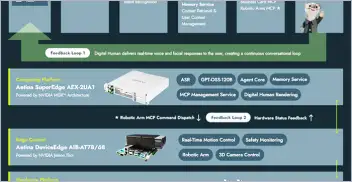
Edge computing gives AI agents the processing power to turn instructions into…
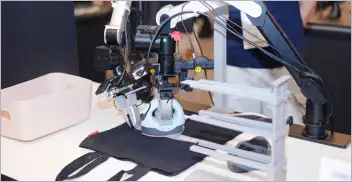
Daimon-TWM world model debuts for the public
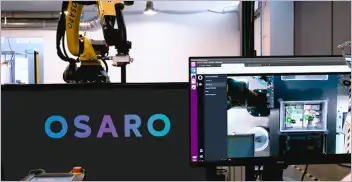
Platform helps robots adapt to complex tasks
Look beyond the headlines for the latest in humanoid robots