By
Sara Pearson Specter
March 1, 2016
Get news, papers, media and research delivered. Sign up for our free newsletters.
Stay up-to-date with news and resources you need to do your job. Research industry trends, compare companies and get weekly market intelligence with Robotics 24/7.
One of the biggest trends in robotic systems developed for use within warehousing pick, pack and kitting operations has been collaboration. This refers to robotic mechanisms that work side by side with humans and interact as needed within a workcell, but with no physical safety barrier between the two.
ABB Robotics’ latest offering in that space is the small-parts-handling YuMi, says Rick Tallian, manager of picking, packing and palletizing products and applications.” Users with space constraints in their palletizing zones are eager to see the same type of barrier-free interaction on robotic palletizers that are much larger,” he says, adding that ABB is developing such a solution now.
However, some suppliers may be over-promising on current collaborative robotic palletizer capabilities, he cautions. Before a facility considers purchasing such equipment, a few key points are important to keep in mind.
First, standards for the safe design and operation of collaborative robotic technologies (including palletizers) are still under development by the Robot Industries Association (RIA) and the International Organization for Standardization (ISO). There are, however, “very specific guidelines (ISO 10218) established to determine safe operation conditions for robotic devices and the cell around the robot,” Tallian notes.
Second, “both organizations recommend that a trained professional perform a risk evaluation of your operation prior to installing equipment,” he explains. “Make sure you understand the amount of force a robot may impart if it contacts a person, and that speed and torque limiting features should be integral to the robot’s design to prevent injury.”
Third, the robotic palletizer’s task parameters may preclude a collaborative model simply by nature of the packages being handled, Tallian notes: “Most of the robotic operations performed in manufacturing and warehousing are designed to maximize the speed and throughput. But a typical palletizing operation—handling heavy boxes and moving massive robot arms at high speeds—does not qualify for current collaborative robotic mechanisms on the market today.”
For now, he adds, space-limited operations wishing to remove a physical safety barrier around a palletizer do have other options. “There are safety technologies—including light barriers and photo eyes—that detect the presence and proximity of a person and trigger the robot to slow down or stop at certain points for safety.”

Sara Pearson Specter has written articles and supplements for Modern Materials Handling and Material Handling Product News as an Editor at Large since 2001. Specter has worked in the fields of graphic design, advertising, marketing, and public relations for nearly 20 years, with a special emphasis on helping business-to-business industrial and manufacturing companies. She owns her own marketing communications firm, Sara Specter, Marketing Mercenary LLC. Clients include companies in a diverse range of fields, including materials handing equipment, systems and packaging, professional and financial services, regional economic development and higher education. Specter graduated from Centre College in Danville, Ky. with a bachelor’s degree in French and history. She lives in Oregon’s Willamette Valley where she and her husband are in the process of establishing a vineyard and winery.
Enjoyed this article? Add Robotics 24/7 as a preferred source in Google Search.
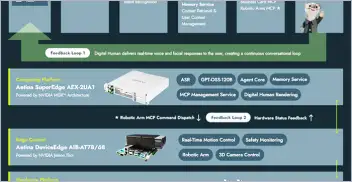
Edge computing gives AI agents the processing power to turn instructions into…
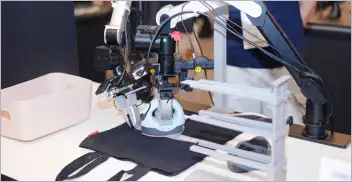
Daimon-TWM world model debuts for the public
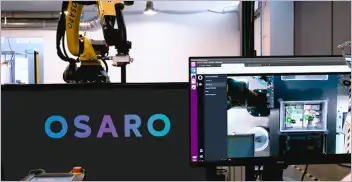
Platform helps robots adapt to complex tasks

Look beyond the headlines for the latest in humanoid robots