Getty Images
Robot adoption greatly accelerated at the height of the pandemic, and companies will continue to turn to automation regardless of a potential recession, argues Conor McGuinness.
Get news, papers, media and research delivered. Sign up for our free newsletters.
Stay up-to-date with news and resources you need to do your job. Research industry trends, compare companies and get weekly market intelligence with Robotics 24/7.

Getty Images
Robot adoption greatly accelerated at the height of the pandemic, and companies will continue to turn to automation regardless of a potential recession, argues Conor McGuinness.
Are we headed for a recession?
It’s a question many in the innovation economy ask when considering whether investments in automation will continue.
But the reality is we should expect a wave of automation regardless of broader macroeconomic conditions.
In the early days of the pandemic, we saw a sharp spike in automation as employers turned to technology to maintain output when they couldn’t hire enough people.
As just-in-time global supply chains recover from the stress of the pandemic, operators have begun reshoring and using automation to offset higher U.S. labor costs. Businesses are also dealing with a perceived low status of “frontline” jobs, reduced immigration, and more retirements with lower replacement rates.
Whether or not the U.S. economy shrinks in 2023 or 2024, we should see much of the same occurring across industries like construction, manufacturing, and logistics.
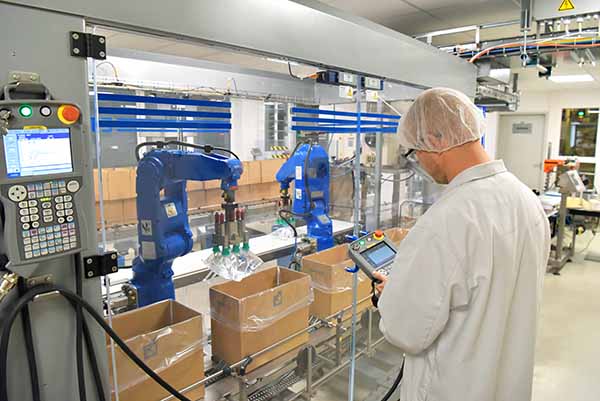
Manufacturing: The use of industrial robots in factories is quickly accelerating. There are over 4 million industrial robots, or about 126 robots per 10,000 employees, which is nearly double the share from five years ago.
Nearly three-quarters of contractors say construction projects took longer than anticipated in 2022 because of labor shortages, according to the Associated General Contractors of America (AGC).
Our corporate partners are continuing to invest in process automation. We’ve thus seen startups thrive by finding ways to automate business practices and optimize worker time, from completing insurance paperwork to automating task assignments for warehouse workers to deploying autonomous forklifts.
By adding an automated project management system, for example, employers can offset shortages and achieve quicker turnaround times.
One Ohio manufacturer recently told us they prefer humans to robots, in part because people are physically nimble when it comes to assembly, filling, and packing jobs. The problem is that it’s difficult to find people—and for him that’s where automation comes in.
Commentators often say automation does not come without concerns, namely worker displacement. But if you consider the above, this seems overblown - at least for now. Further, the World Economic Forum expects technology to create at least 12 million more jobs by 2025 than it displaces. In the long run, automation will be a net positive for society.
If we can be thoughtful about the future, automation doesn’t have to be a losing proposition—or even a zero-sum game. With the current labor shortages affecting many industries, it’s challenging to recruit, train, upskill, and retain workers.
Whether or not a recession is looming, automation will continue, and that’s a good thing for American productivity and for keeping American jobs at home.

Conor McGuinness is a partner at Heartland Ventures overseeing the firm’s Platform function. He leads engagement with LPs and Midwest industry leaders to ensure Heartland’s portfolio aligns with their strategic and financial needs.

From geometry preparation to AI-assisted analysis, integrated CFD workflows…
Software-based GripperAI manages mixed picking through basic geometry
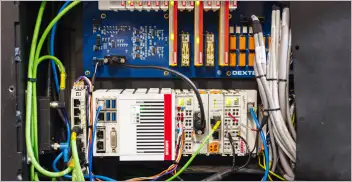
Safety, communication and motion control components enable smooth operation

North America’s largest robotics and automation event winds down