By
Brian Albright
January 21, 2019
Get news, papers, media and research delivered. Sign up for our free newsletters.
Stay up-to-date with news and resources you need to do your job. Research industry trends, compare companies and get weekly market intelligence with Robotics 24/7.
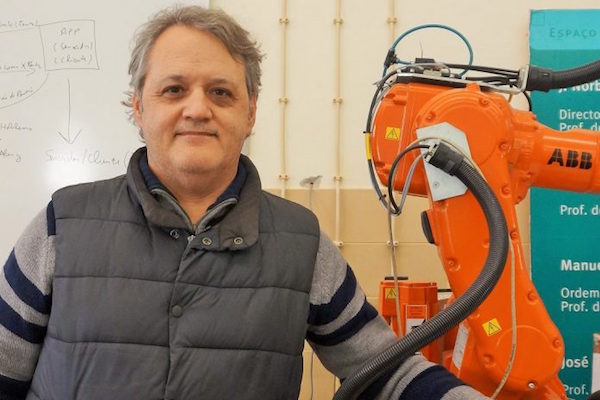
Portugese and Norwegian scientists have created a 6-axis 3D printer that can produce large metal parts for automotive, aerospace and other applications. According to the scientists, the device can print parts from any angle and plane.
The Faculty of Science and Technology of the University of Coimbra (FCTUC) and the Norwegian University of Science and Technology’s research/development partner SINTEF collaborated on the project.
Tata Steel in India has already expressed interest in using the printer.
The printer uses a dexterous robotic arm and leverages a simultaneous simulation solution that predicts variables like temperatures and phase changes in the material. This allows the printer to immediately correct for any anomalies in the print process.
“Currently, printing is performed by trial/error until the desired parameters are achieved,” said Norberto Pires, professor in the Department of Mechanical engineering at FCTUC.
According to Pires, the team had to overcome a number of challenges in developing the technology. “On the one hand, finding a way to adapt existing printing technology to such a system—automation and integration of technology—and, on the other hand, to incorporate tools of simulation that allow the real-time correction of the parameters of the parts printing,” Pires said.
A number of European universities have submitted the project for additional funding from the European Union.
Source: Portugal News

Brian Albright is the editorial director of Digital Engineering and a contributor to Robotics 24/7.
Enjoyed this article? Add Robotics 24/7 as a preferred source in Google Search.
Edge computing gives AI agents the processing power to turn instructions into…
Daimon-TWM world model debuts for the public
Platform helps robots adapt to complex tasks
Look beyond the headlines for the latest in humanoid robots