Toyota Automated Logistics
By
Phil Britt
October 12, 2026
Toyota Automated Logistics
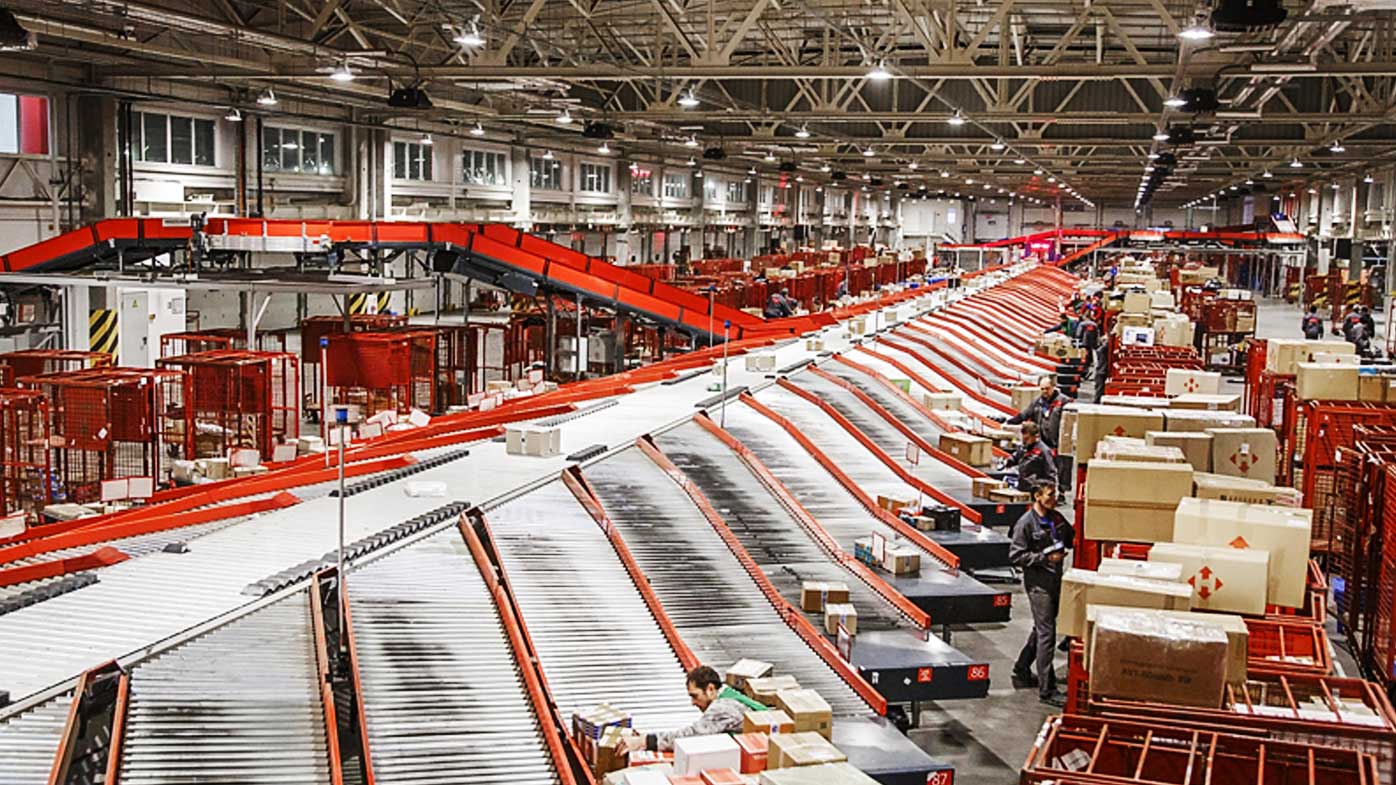
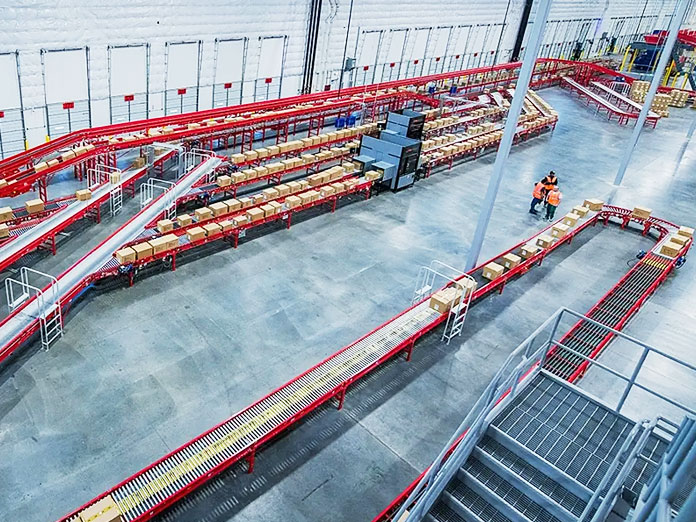
Toyota Automated Logistics' portfolio comprises a host of technologies to create a total warehouse automation offering.
Get news, papers, media and research delivered. Sign up for our free newsletters.
Stay up-to-date with news and resources you need to do your job. Research industry trends, compare companies and get weekly market intelligence with Robotics 24/7.
Toyota Automated Logistics
Toyota Automated Logistics' portfolio comprises a host of technologies to create a total warehouse automation offering.
Toyota Automated Logistics (TAL) is the new business combination of Bastian Solutions, Vanderlande’s warehousing business and viastore.
While Toyota Industries Corporation has a strong hold in material handling forklifts and AV offerings, it looked to expand its offerings within its four walls as warehousing automation continued to grow.
This prompted the formation of TAL, which formally launched ahead of MODEX 2026, combining the capabilities of an integrator along with some of the strengths of an OEM company, making it one of the only logistics companies to offer both successfully, said Alex Haines, head of accounts at TAL.
Toyota Automated Logistics said that it made those acquisitions to best position itself as an all-inclusive material handling business for its customers.
“It gives us the full suite to look at any problems inside the four walls, from manual warehouses to semi-automated to fully automated, lights-out facilities,” Haines said. “We have an integrated mindset.”
That means TAL can utilize its deep engineering bench, software expertise and other capabilities to determine if the customer needs a third-party offering, the capabilities of an OEM or some combination of both, Haines said.
“We look at what is the best fit for the customer,” he added. “There are some applications where you really need to have an OEM competency for you to be competitive from a market standpoint, and others that warrant third-party engineering or third-party technology for integration…We can modify third-party equipment or our equipment, integrate them, harmonizing material flows between automation, equipment and orchestration.”
Haines said that the three formerly separate companies offer a “Swiss Army knife” offering for customers.
Bastian, an integrator, provides systems engineering, software, controls and third-party technology expertise.
Vanderlande warehousing contributes manufactured technologies for grocery, retail, and goods-to-person applications. Haines said that it’s more OEM-focused, selling products it manufactures directly to customers, with limited third-party integration, such as different types of material handling equipment for the grocery, food & beverage, and general merchandise industries.
viastore provides unit-load automation, pallet handling, cranes, mini-loads, software, controls and conveyor systems.
Haines said that this combination enables TAL to provide any of the Swiss Army knife tools that customers may need.
As companies like Amazon continue to grow, Haines said that faster, accurate delivery becomes more important, and efficient warehousing capabilities are becoming more critical. Haines said that this is driving the need for a company like TAL.
“There is more complexity, more requirements and more need for flexibility,” Haines said. “The market continues to be very strong through the gamut of semi-automated to fully automated systems.”
Only a small subsection of the market (roughly 2%, according to Haines) is fully automated, “lights out” facilities without any humans. “Those companies need a high level of consistency in order demand and what they are processing,” Haines said.
More common are warehouses with changing demand and processing needs. “That’s much more difficult to automate because automation likes some level of consistency,” he added.
Most of today’s warehouses still have humans, automating those portions that produce the best return on investment. TAL advises those companies on where automation can reduce the most wasted movement.
Whether the warehouse is semi-automated or fully automated, there are those that are very efficient and those that don’t meet the needs of the users.
Often the difference comes down to the initial design, according to Haines. “You have to understand what your business is today and what it’s going to look like in the future.”
Automation won’t provide any benefits if the underlying processes are flawed, Haines added. “If you try to automate a broken process, then you’re going to be in trouble. That’s step one. Step two is refinement of data and understanding expectations and assumptions.”
TAL said that it helps companies understand why they have bottlenecks and other issues that prevent warehouse automation from producing the expected benefits. The answer can range from something as simple as routing material a different way to something as complex as an entire automation overhaul.
“You need to engineer and understand what your critical, limiting factors are, to be successful,” Haines said.
Haines said that understanding what you automate is one of the top five best practices in automated warehousing.
He said that the others are:
TAL’s current and future processes are benefiting from internal deployment of artificial intelligence, particularly as part of the Kaizen (a Japanese word meaning “change for the better”) philosophy of continuous improvement.
AI helps employees write code, aiding TAL in automating business processes and workflows, Haines said. “By being more efficient, we can make ourselves more competitive in the market and offer lower-cost solutions to our customers.”
AI also helps identify where TAL is succeeding and why, so those strategies can be repeated throughout the organization, since sharing is another critical element of Kaizen.
TAL said that it is also using AI for predictive maintenance so it can repair systems during slow times before failures, better utilize software and improve customer management.
Haines said that he expects TAL to become established in the marketplace within the next year.
As part of Toyota Industries Corporation (TICO), which was taken private in March, he said that TAL benefits from not having the market pressures of showing fast returns on what are long-term investments. Prospects and customers see that as well, and therefore view TAL as being a long-term partner.
“There’s a lot of private money in our space; it’s hard to know who’s going to be sold and not be in business,” Haines said. “I think what is unique is our long-term strategy.”

Britt owns S&P Enterprises and is a technology writer who lives in the greater Chicago area. In addition to Robotics 24/7, he has written for financial services and business publications, including magazines, newsletters, conference dailies, and Web sites.
Artificial Intelligence Machine Learning Autonomy Lift Trucks Mobile Robots Industrial Automation Software Cloud and Edge Data Management Fleet Management News Features Editors Pick Acquisition Bastian Solutions Conveyors Delivery Service Forklifts Goods to Person Grocery OEM Predictive Maintenance Toyota
Enjoyed this article? Add Robotics 24/7 as a preferred source in Google Search.
Edge computing gives AI agents the processing power to turn instructions into…
Daimon-TWM world model debuts for the public
Platform helps robots adapt to complex tasks

Look beyond the headlines for the latest in humanoid robots