Get news, papers, media and research delivered. Sign up for our free newsletters.
Stay up-to-date with news and resources you need to do your job. Research industry trends, compare companies and get weekly market intelligence with Robotics 24/7.
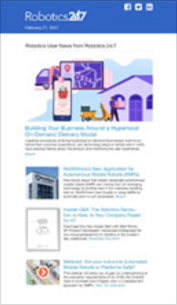
J ust-in-time manufacturing depends on supply chains operating at the highest-levels of precision possible. Materials arrive on-site just before manufacturing commences, enabling production operations to stay lean and squeeze maximum output out of available space, but leaving little slack time or margin for error. This paradigm pressures each piece of the supply chain to hold up its end of the bargain, from shipping vessels to materials handling equipment.
The COVID-19 pandemic presented unique challenges to global supply chains, with lockdowns and public health effects wreaking havoc and causing delays for finely tuned manufacturing operations. But that was just the beginning – semiconductor and other commodity shortages in the automotive industry led to temporary plant closings and a shift to a more proactive approach to component sourcing, rather than the purely lean methods that have guided manufacturers for decades.
Because of this, just-in-time philosophies are giving way to a resurgence of “just-in-case” planning, but the underlying drive for maximum efficiency remains exceptionally intense at all levels. Profit margins that are often less than 10 cents on the dollar mean manufacturers cannot afford to abandon the just-in-time philosophy’s extreme cost consciousness. Rather than adding waste for the sake of “just-in-case” planning, manufacturers need resiliency in supply chains, achieved through simplicity, flexibility, speed – and yes, some strategic, efficient stockpiling and redundancy. This white paper examines how industrial trucks can support lean, just-in-time strategies, helping manufacturers manage supply chains for maximum efficiency and resiliency.

News Automation Hyster Just-In-Time Lift Trucks Manufacturing Operations Warehouse
Enjoyed this article? Add Robotics 24/7 as a preferred source in Google Search.

Edge computing gives AI agents the processing power to turn instructions into…

Daimon-TWM world model debuts for the public
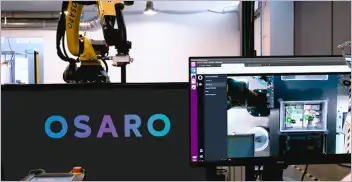
Platform helps robots adapt to complex tasks

Look beyond the headlines for the latest in humanoid robots