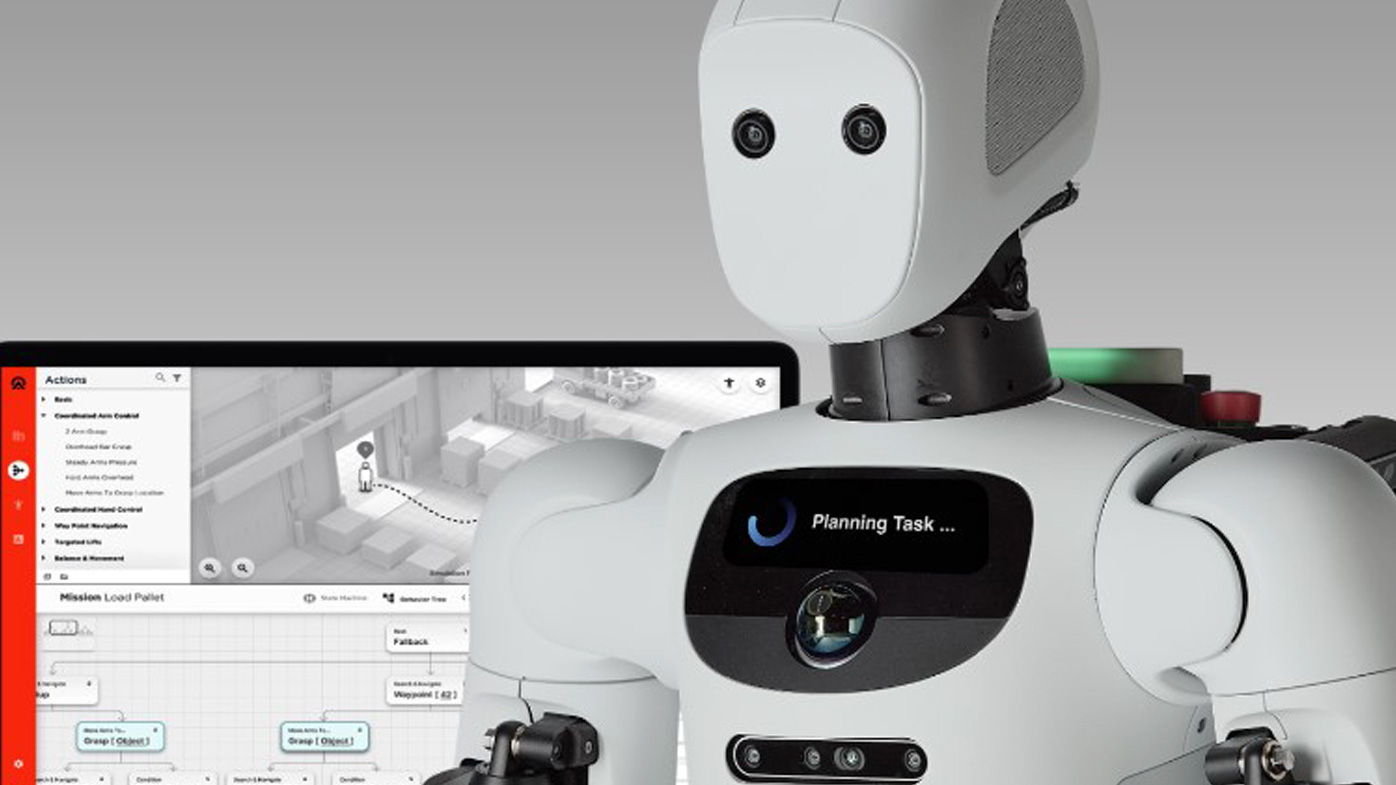
Apptronik
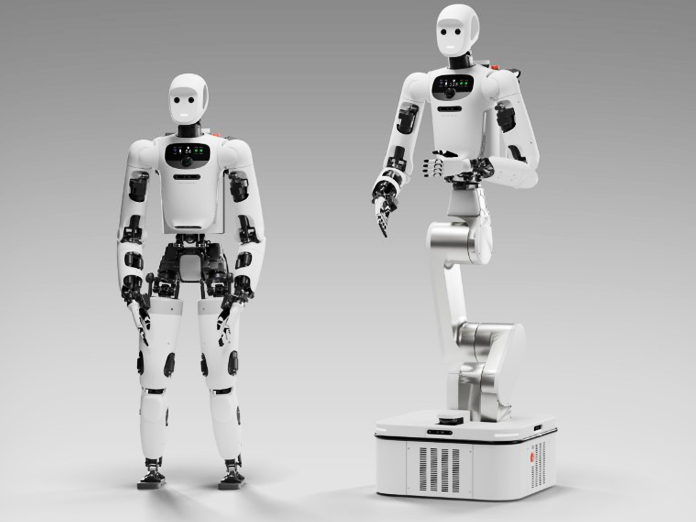
Apptronik announced the opening of its first Robot Park data collection and training facility in Austin, Texas, and unveiled the Apollo 2 humanoid, with bipedal and wheeled configurations.
Get news, papers, media and research delivered. Sign up for our free newsletters.
Stay up-to-date with news and resources you need to do your job. Research industry trends, compare companies and get weekly market intelligence with Robotics 24/7.
Apptronik
Apptronik announced the opening of its first Robot Park data collection and training facility in Austin, Texas, and unveiled the Apollo 2 humanoid, with bipedal and wheeled configurations.
AI-powered humanoid robotics company Apptronik announced the opening of the newly expanded Robot Park, its flagship data collection and training facility for humanoid robots in Austin, Texas.
The company said that the facility in Austin anchors a growing global network of Robot Parks at customer and partner sites around the world, and it plans to open new Robot Park locations in more cities soon.
Additionally, Apptronik also unveiled Apollo 2, the current version of its humanoid robot platform, in both bipedal and wheeled-base configurations. Designed to learn real-world work through large-scale data collection, Apptronik said that Apollo 2 enables the company to gather diverse data across a wide range of tasks and environments. As part of Apptronik’s research partnership with Google DeepMind, the high-quality data collected by Apollo 2 helps to advance Gemini Robotics - Google DeepMind’s foundational AI models for robotics.
Together, Apptronik said that Robot Park, Apollo 2 and the research partnership with Google DeepMind form an integrated system for rapidly developing and deploying humanoid robot intelligence. With operational fleets of Apollo 2 robots already active across Robot Park and at customer and partner sites worldwide, Apptronik said that it is accelerating the path to scalable, real-world humanoid robot deployment.
“The industry has spent years showing what robots can do in demos. We’re focused on what they can do every day on the job,” said Jeff Cardenas, co-founder and CEO of Apptronik. “What we’re building is a continuous learning loop with the Google DeepMind Robotics team: robots working, collecting data and improving with every cycle, in real environments, on real tasks. Robot Park enables the data collection that is fuel for that, and Apollo 2 is the machine that makes it possible. That’s how you move from early prototypes to real, deployable humanoid robots.”
The company said that humanoid robots like Apollo need large amounts of real-world data to train the embodied AI models that will enable robots to operate autonomously, and Robot Park is where much of that data is created. Inside the newly expanded, nearly 90,000-square-foot facility in Austin, the company said that the Apollo 2 robots, in bipedal and wheeled configurations, learn across an extensive array of customer use cases, performing tasks in logistics, manufacturing, retail and other customer-driven activities.
To capture diverse real-world experience at scale, Apptronik said that similar data-collection workflows have been deployed across a growing network of Robot Parks, including at research partner Google DeepMind and at customers like Mercedes-Benz and GXO. Through a combination of teleoperation and autonomous execution, Apollo 2 robots continuously generate significant quantities of high-quality training data. The company said that this growing dataset is used to train and refine the Gemini Robotics AI models that will prepare Apptronik’s commercial fleet for real-world deployment.
While Robot Park provides the foundation of physical experience, Apptronik said that its platform is built to adapt as Gemini Robotics and the science of embodied AI evolve. Today, the company said that it captures high-quality data through a state-of-the-art teleoperation stack and high-fidelity physics simulations to accelerate both hardware design and algorithmic development. Apptronik said that this multi-modal approach allows its robots to learn from a wide variety of experiences, ensuring the platform scales alongside the latest advancements in AI.
Apptronik said that Apollo 2 is a modular, AI-powered humanoid robot that has been the workhorse behind Robot Park for over a year. Built as a data collection and training platform, Apollo 2 enables continuous learning through deployment across Robot Park locations and at customer and partner sites.
By offering Apollo in modular configurations, Apptronik said that it can optimize data collection across a variety of operational environments. The company said that the wheeled-base configuration is designed to conform with existing safety standards for industrial mobile robots, allowing it to fit easily into existing customer operations.
Apptronix said that the bipedal configuration provides maximum adaptability for complex environments, allowing the company to continuously refine the safety and reliability of its walking platform in real-world scenarios.
"For truly useful humanoid robots, safety and reliability have to advance alongside capability," said Barry Phillips, chief commercial officer at Apptronik. “The modular design of Apollo is a direct response to customer demand for adaptable automation. By developing Apollo as a modular platform, we’re able to deploy the same core humanoid technology across different configurations, including wheeled robots that align with current industrial safety standards, and bipedal robots for maximum adaptability. This approach helps us build better robots for customers today while laying the groundwork for broad adoption of humanoid systems in the future.”
The company said that everything it is proving and learning through the Apollo 2 platform is directly powering the development of its next-generation commercial product, Apollo 3. By utilizing the massive data streams generated by Apollo 2 today in partnership with Google DeepMind, Apptronik said that the upcoming commercial fleet will debut with unprecedented, out-of-the-box embodied intelligence.
GENISOM AI makes ICRA debut at conference in Vienna
World's first omni-modal evaluation including tactile sensing for…
North America’s largest robotics and automation event winds down
Automate’s largest day ever draws huge crowds to McCormick Place