Generative Bionics
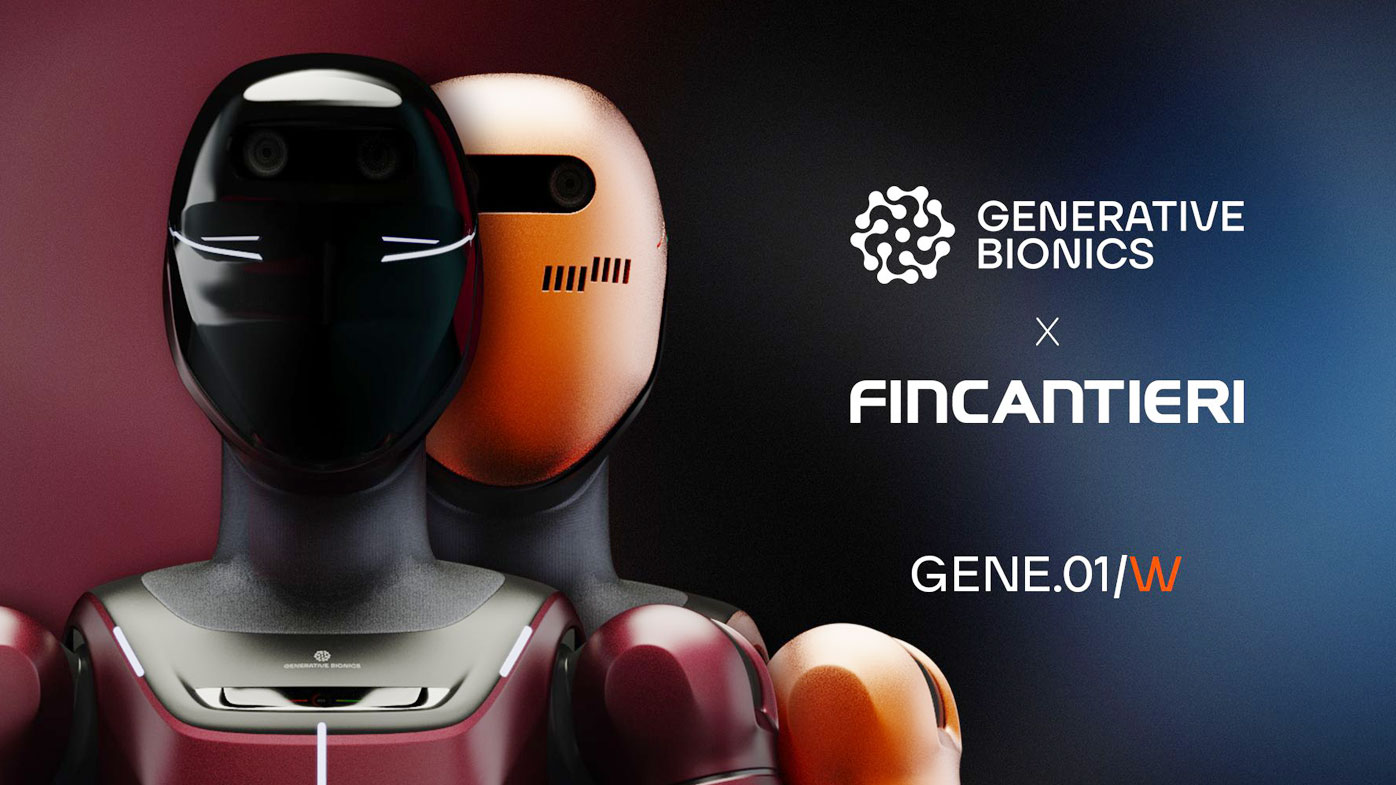
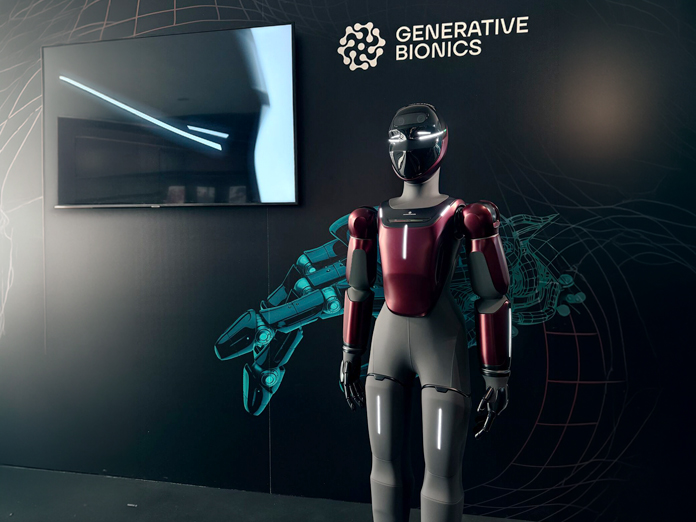
Generative Bionics launched the Gene.01 smart-skin humanoid robot platform at AAI 2026.
Get news, papers, media and research delivered. Sign up for our free newsletters.
Stay up-to-date with news and resources you need to do your job. Research industry trends, compare companies and get weekly market intelligence with Robotics 24/7.
Generative Bionics
Generative Bionics launched the Gene.01 smart-skin humanoid robot platform at AAI 2026.
Generative Bionics, an Italian deep tech company developing humanoid robots for industrial applications, unveiled Gene.01, which it said is a fully functional, sensorized humanoid robot platform designed to work safely and intuitively alongside people.
Built in just six months, Generative Bionics said that Gene.01 combines full-body tactile sensing with physics-native AI, integrating the robot's body, mechanics, and intelligence so it can better interpret and respond to the physical world.
The company said that it is already adapting the platform for its first industrial use case through a collaboration with Fincantieri, a global shipbuilding organization, focused on shipyard operations.
Additionally, Generative Bionics said that it is also open-sourcing Gene.01's robot model to give physical AI developers a foundation for building industry-specific applications. The fully functional platform made its U.S. debut at AMD Advancing AI 2026 in San Francisco.
Human-centric by design, Generative Bionics said that Gene.01 is built to prioritize collaboration with people over isolation. The company said that its multimodal sensing system goes beyond touch: full-body distributed tactile skin can detect touch, temperature, proximity and force, helping the robot anticipate human presence and respond before and during contact.
This human-aware approach is designed to make interaction safer and more natural. Generative Bionics said that force sensing allows people to teach tasks by demonstrating not only motion, but also the force required: a capability that helps address problems video-only learning cannot solve, such as how to tightly grip an object.
Generative Bionics also said that it treats design as a source of intelligence and trust, not an aesthetic layer. The company said that its design principle - beauty, grace and safety - is intended to help people intuitively read the robot's intention through proportions, posture and movement, supporting both operational excellence and societal acceptance.
"Unlike other one-size-fits-all humanoids, Gene.01 is a scalable platform, customized at the edge of AI, design and end-effector level to maximize each customer's needs,” said Daniele Pucci, CEO of Generative Bionics. “It is also the first expression of our belief that physical AI must be human-aware, physics-native and industrial from day one.
The company said that Gene.01 is built on its proprietary physical AI, a physics-native approach that engineers the robot's body, mechanics and motion intelligence as one system. Instead of designing hardware and control separately, Generative Bionics said that the platform optimizes how the robot moves, senses and collaborates with people from the start.
Using models of both the robot and its human partner, the company said that this architecture tunes hardware and motion intelligence together against measurable factors such as ergonomics and walking stability. Generative Bionics said that the result is a robot designed around safe, efficient collaboration with people - not just standalone performance.
“In six months, our team moved from concept to a fully functional and sensorized humanoid platform by combining deep humanoid robotics expertise with AI, biomechanics and design,” Pucci added. “Our goal is to amplify humans with robots that can sense, feel and learn from the physical world - and adapt to the specific industrial work each customer needs."
The company said that Gene.01's digital twin is engineered for accessibility, not just openness: Generative Bionics said that it is the first humanoid robot model published and maintained across the software channels that physical AI developers already use - PyPI, conda-forge and the official ROS build farm - rather than a repository people have to configure by hand.
The company said that a single pip, conda or ROS install brings Gene.01 directly into existing AI, simulation or robotics environments, letting developers start building against it immediately.
Click here to learn more about Gene.01, including its initial use cases in manufacturing.
Enjoyed this article? Add Robotics 24/7 as a preferred source in Google Search.

Edge computing gives AI agents the processing power to turn instructions into…

President Trump orders a review of robotics imports over national security…
Platform helps robots adapt to complex tasks
Look beyond the headlines for the latest in humanoid robots