By
Roberto Michel
April 13, 2021
Get news, papers, media and research delivered. Sign up for our free newsletters.
Stay up-to-date with news and resources you need to do your job. Research industry trends, compare companies and get weekly market intelligence with Robotics 24/7.
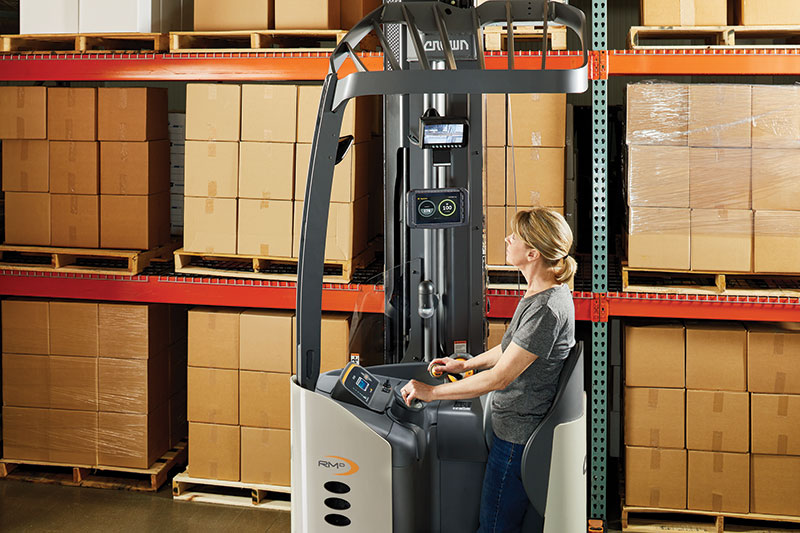
There is big difference between recording data for lift truck fleet management and digitizing the fleet management process. Paper-based or spreadsheet methods might work for a small operation, but they don’t provide a full picture for fleet management, points out Jim Gaskell, director of global automation and emerging technologies at Crown.
“If you only have one part of the picture, like how much was spent on repairs for a truck, the problem is you might be spending several thousand on one asset, but you don’t know how many hours of use it’s seeing or how harsh the environment is,” says Gaskell. “Without knowing factors like hours of use and task environment, it’s hard to look a repair cost figures and draw too many conclusions from it.”
Here’s where advancements in lift truck telematics and fleet software can help, along with analytics dashboards in fleet software that bring different data together, possibly including data from a warehouse management system (WMS), which gives insight on the tasks and productivity generated by the fleet and its operators.
To properly manage a fleet, it helps to have accurate, online data on repair events and costs, hour meter and usage data collected automatically from each lift truck, and insight into tasks a particular truck is being used for.
“If you take 10 lift trucks in a fleet, those repair costs are going to vary, and one unit might show a cost that is maybe 50% higher than the others,” Gaskell says. “But if you want to truly understand why those costs are higher, you’d want to know how many hours that truck is being used and the harshness of the environment.”
For example, some lift trucks might get used for loading rail cars, involving ramps, uneven surfaces and tight spaces, so it might make sense that a lift truck used for rail car loading shows higher repair costs than similar units used elsewhere. “When you combine telematics with fleet software, you can see all the factors involved and get answers to what is driving your costs, and how to manage those costs more effectively,” says Gaskell.
Data from a WMS will allow for fleet productivity insights down to pallets per hour an operator/truck is generating. “When you have accurate repair data and usage data, and productivity metrics—when you pull that all together in fleet software, that is the triangle of information you want to have,” says Gaskell.
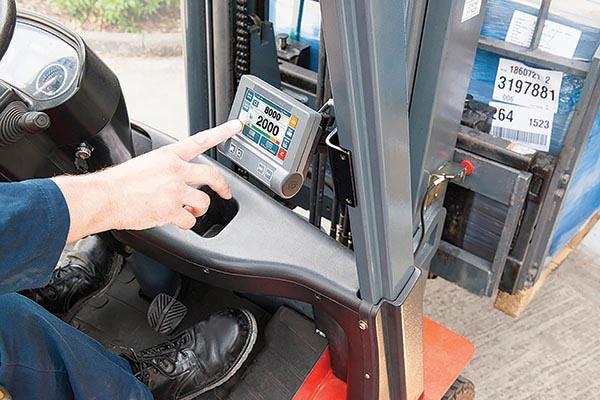
Fleet software functions such as lift truck operator notes on potential vehicle problems can trigger alerts to supervisors and maintenance staff so any issues get addressed in a digital workflow, rather than relying on verbal communication or paper reports or notes.
Even as something as seemingly straightforward as recording hour meter data from lift trucks is more accurate with telematics because it’s a real-time digital reading coming from the lift truck’s electronics, rather than a reading entered by a technician, which, like any data entry, is prone to error.
“The digital aspect of having telematics ensures that meter readings are accurate, and that anything that needs to be checked out with a unit gets done,” says Gaskell.
Telematics also monitors other meter data straight from a lift truck’s electronics, such as hours a unit is traveling or time spent lifting. This data stream allows for deeper analysis of how each unit is used, and can be used to spot anomalies versus similar units. Users of fleet software can configure a dashboard with the metrics they want, and some get more detailed in pulling in productivity-related data from WMS.
“Some users, especially third-party logistics providers or users in industry like grocery, leverage fleet software to have a detailed view of productivity, down to the cost per pallet, per hour, to really understand the costs of their operation or in serving their clients. But any operation can benefit from having a fuller picture of how their fleet is performing,” adds Gaskell.

Roberto Michel, senior editor for Modern, has covered manufacturing and supply chain management trends since 1996, mainly as a former staff editor and former contributor at Manufacturing Business Technology. He has been a contributor to Modern since 2004. He has worked on numerous show dailies, including at ProMat, the North American Material Handling Logistics show, and National Manufacturing Week. You can reach him at: [email protected].
Enjoyed this article? Add Robotics 24/7 as a preferred source in Google Search.
Edge computing gives AI agents the processing power to turn instructions into…
Daimon-TWM world model debuts for the public
Platform helps robots adapt to complex tasks

Look beyond the headlines for the latest in humanoid robots