Gravis Robotics
Gravis Robotics announced a $200 million Series A round from SoftBank to expand its autonomous construction technology.
Get news, papers, media and research delivered. Sign up for our free newsletters.
Stay up-to-date with news and resources you need to do your job. Research industry trends, compare companies and get weekly market intelligence with Robotics 24/7.

Gravis Robotics
Gravis Robotics announced a $200 million Series A round from SoftBank to expand its autonomous construction technology.
Gravis Robotics, a Switzerland-based construction robotics company, announced a Series A funding round.
SoftBank is investing $200 million in Gravis Robotics, which the company said represents the largest Series A in construction robotics history.
Gravis said that this funding will be used to accelerate its mission in physical AI - scaling autonomous heavy machinery across jobsites globally.
The company, which was founded in 2022 to bring software-defined intelligence to an industry that has relied on purely mechanical hardware for decades, spun out of ETH Zurich.
Gravis said that it has spent the last four years building on that technical foundation to turn heavy iron into commercial robotic systems.
As global infrastructure continues to expand rapidly, the company said that across every sector, construction has become a primary bottleneck. Coupled with labor crises around the world, Gravis Robotics said that a future that navigates both construction growth and labor shortage requires solving some of the hardest challenges in deep tech: translating advanced artificial intelligence into precise, real-world physical execution.
"Skilled operators read the earth through subtle physical feedback - listening to the engine strain, sensing the machine vibration and reacting to hydraulic resistance,” said Dominic Jud, co-founder and CTO of Gravis Robotics. “Our AI takes that same physical input and grounds it in machine telemetry, responding to varying subterranean forces and soil mechanics at microsecond speeds. We didn’t try to simplify the world for our software; we gave it the physical intuition to handle real jobsites with precision that goes beyond what any human can feel from inside the cab.”
The company said that its AI doesn’t just find a clear path through a static world; it actively takes that world apart and puts it back together. Gravis said that it solves this challenge with models that are enriched by vast simulated experiences and that efficiently bridge the sim-to-real gap.
The company added that this synthetic training lets it move billions of cubic yards of virtual earth - from soft clay to rock-filled soil - and enables the software to bring factory-floor precision to historically unpredictable civil jobsites. Rather than simply imitating individual operators, Gravis said that its AI world model incorporates the distinct performance characteristics of a wide range of manufacturers, making it generalizable and adaptable in a way single-machine systems can't match.
“To build the future, we need to change the world, literally,” said Ryan Luke Johns, co-founder and CEO of Gravis Robotics. “Whether we are building housing, modernizing energy grids or scaling data centers, every project starts with moving earth. That foundational work has been the bottleneck slowing down the entire built environment. Our machines are built for the messy, unscripted reality of live job sites that breaks traditional automation. With SoftBank’s backing, we can hire the best builders and engineers, put Gravis-powered autonomy on every major job site, and scale faster than anyone thought possible."
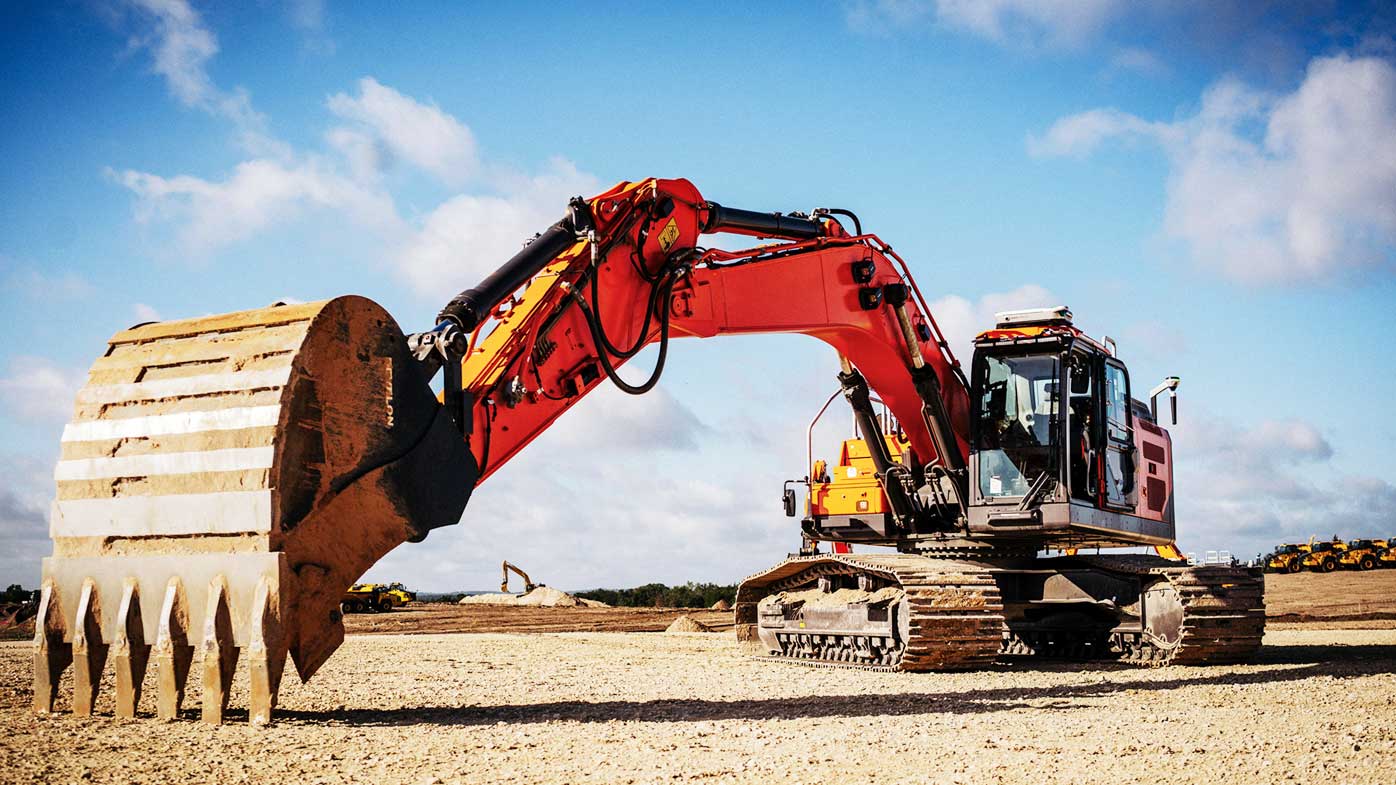
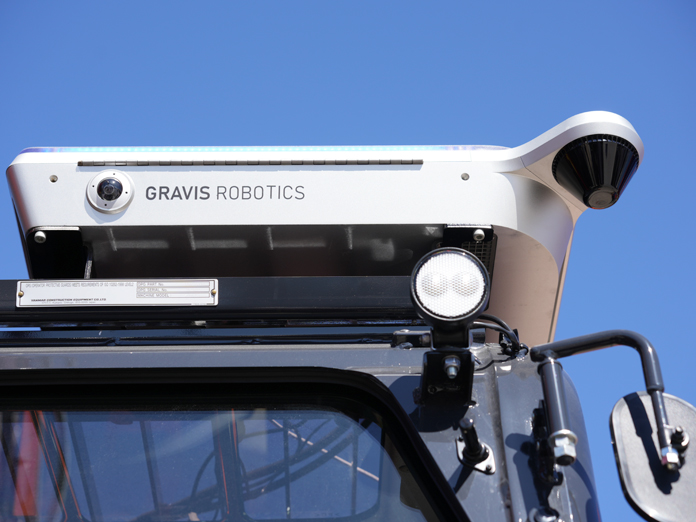
Acting as an operating system for mixed fleets, the company said that its software runs on the Gravis Rack - an autonomous control kit - which has been installed across a range of machinery brands including:
Because the learning-based models excel at adapting to the nuances of machines, Gravis Robotics said that the same core software can drive a compact excavator or a machine five times its size without custom reprogramming.
Gravis Robotics said that this deep understanding of the nuances of individual machines and how they interact with the ground has allowed the company to squeeze productivity from these systems - delivering up to a 30% boost in jobsite productivity compared to peak manual operation, while simultaneously improving overall worksite safety.
The company said that its software stack is built for ultimate operational flexibility, offering a full spectrum between AI-augmented manual control and full autonomy. With Gravis Copilot, the company said that operators can stay in the cab, utilizing real-time 3D guidance and hazard detection to elevate daily performance. When full autonomy is engaged, Gravis said that those same operators can step away into safe and social environments to supervise entire robotic fleets at once. Regardless of the mode, the company said that every Gravis-equipped machine acts as a continuous site sensor - automating surveying and hazard mapping in the background as the work gets done.
“Physical AI is central to SoftBank’s vision for the next phase of AI,” said Dai Sakata, managing director of SoftBank Group. “Gravis is bringing AI-powered autonomy to construction, helping build smarter, more efficient infrastructure, and we look forward to supporting its mission.”
Enjoyed this article? Add Robotics 24/7 as a preferred source in Google Search.

Colette Kress, current EVP and CFO of NVIDIA named interim CEO

China's Office of the Working Mechanism for Foreign Investment Security…

President Trump orders a review of robotics imports over national security…
Platform helps robots adapt to complex tasks