Physicl
Physicl, a Paris-based startup, raised $10M and aims fix physical AI’s edge-case problem.
Get news, papers, media and research delivered. Sign up for our free newsletters.
Stay up-to-date with news and resources you need to do your job. Research industry trends, compare companies and get weekly market intelligence with Robotics 24/7.

Physicl
Physicl, a Paris-based startup, raised $10M and aims fix physical AI’s edge-case problem.
Physicl, a Paris-based platform for generating targeted training data for physical AI, announced $10 million in seed funding.
The company said that the funding round was led by Inovia Capital, with participation from US Venture Partners, and aims to address physical AI's edge-case problem.
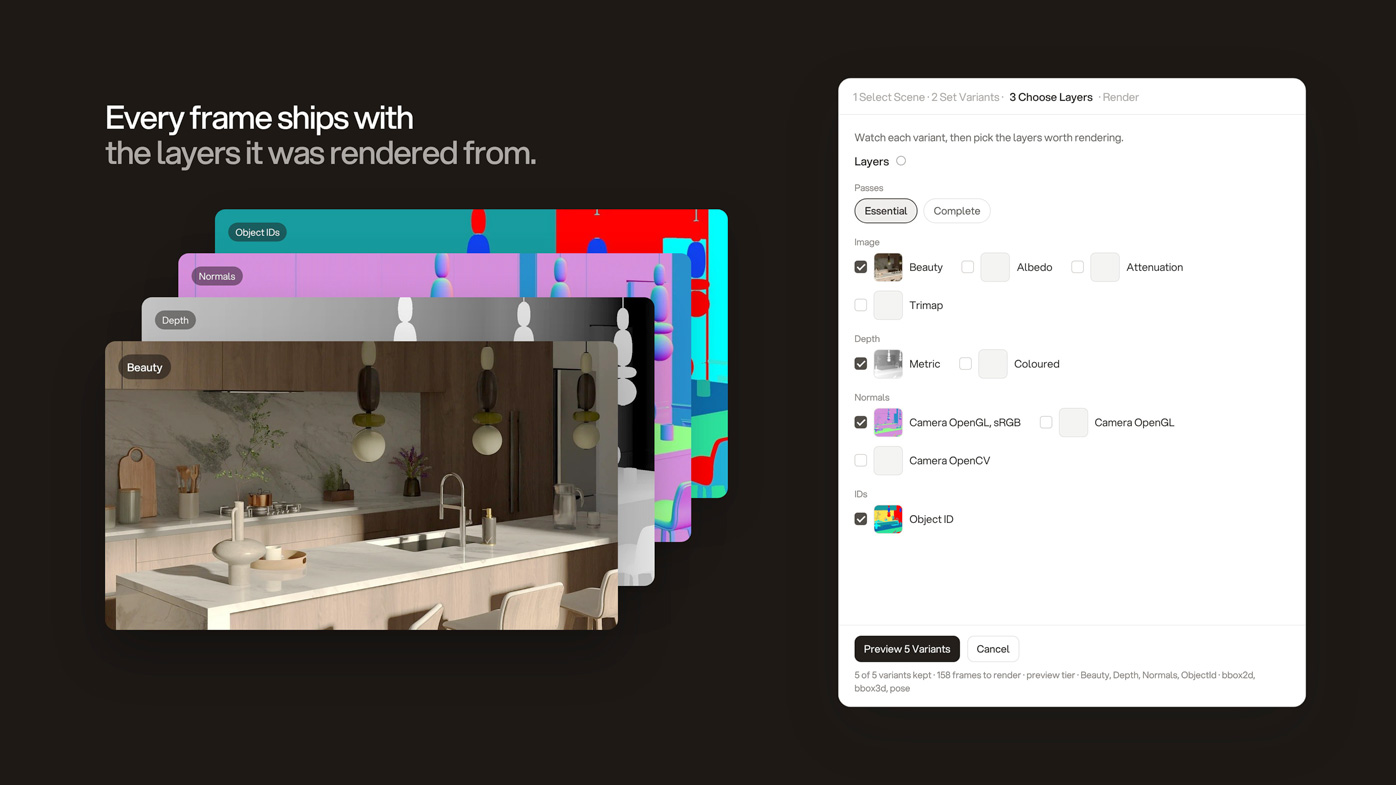
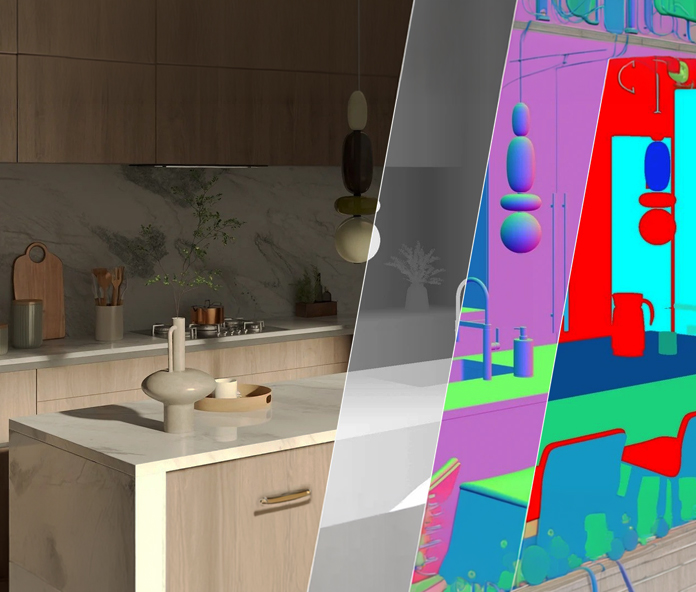
Additionally, Physicl also introduced Studio, which the company said lets researchers generate customized environments and high-fidelity physical training data with precise ground-truth, targeted to improve models on specific shortcomings.
For physical AI to advance from labs to broad deployment, Physicl said that models need to be able to operate reliably within every situation and environment. However, the company said that capturing sufficient quantities of data to accomplish this in pre-training is nearly impossible given the long-tail of scenarios they can encounter in the real world.
Physicl said that its platform allows teams to generate ground-truth data for targeted post-training on the specific situations their models fail in, giving researchers a reference against which to train and evaluate their models. The company said that it works with AI labs including Meta, World Labs, Epic Games and SpAItial, helping them create the data needed to train and evaluate increasingly capable models.
“An impressive demo doesn’t tell you how a model will perform in all the situations it could encounter " said Alex de Vigan, founder and CEO of Physicl. “Models fail on edge cases. When researchers find these weaknesses, they need a way to generate data that specifically addresses them and test whether the model improves. We built Physicl to make that process easy and repeatable.”
Physicl said that its launch represents the culmination of six years of work in 3D, simulation and machine learning. de Vigan said that the company grew out of his experience building 3D infrastructure at scale, and Physicl is now applying that expertise to one of physical AI’s emerging bottlenecks: providing researchers with the data required to systematically train and evaluate models against the long tail of real-world conditions.
The company said that its seed funding will be used to expand the team and further advance Physicl’s platform as robotics and world models move toward broad deployment.
“We believe physical AI represents one of the most significant emerging opportunities in technology, but the industry still faces fundamental challenges in translating model capabilities into real-world performance,” said Steve Woods, partner at Inovia Capital. “Physicl is tackling a critical piece of that puzzle: scalable, high-quality physical data grounded in real-world physics. That's what makes this team and its approach so compelling to us.”
The company said that its first offering, Studio, provides access to 10,000 ground-truth 3D environments, more than 100,000 assets and billions of possible scene variations. Physicl said that AI researchers can select an environment or describe the scene in which their model struggles, and then adjust variables like lighting, camera viewpoint and object placement to recreate specific conditions. The company said that Studio then generates targeted data focused on the identified weakness.
With Studio, Physicl said that edge cases that have been nearly impossible to capture sufficient data for can now be reproduced at scale. The company said that researchers can recreate a failure, test fixes and measure progress in a continuous loop, providing a direct path to reach the level of reliability needed for broad deployment.
“A home robot might be able to recognize a cup on a clear counter, but miss it when clutter hides half of it or once the sun sets and shadows change in the kitchen,” de Vigan added. “Physical AI teams are faced with challenges like this daily. Studio helps teams recreate those situations, generate variations with precise ground-truth, and train directly against the conditions where their model has failed in the past.”
Physicl said that its collaboration with SpAItial, a developer of world models that generate explorable 3D environments, shows how its high-fidelity physical data can address a specific model weakness. Physicl said that SpAItial’s model was struggling with high error rates when reconstructing real rooms, but by adding data generated with a Physicl library to its model’s training data, SpAItial more than halved the model’s reconstruction error rate.
“Physicl gives any researcher access to virtually any physical training data they can imagine,” said Matthias Niessner, CEO of SpAItial and professor of computer science at Technical University of Munich. “That changes what a small team can build in physical AI, and we saw it in our results right away.”
Enjoyed this article? Add Robotics 24/7 as a preferred source in Google Search.

Edge computing gives AI agents the processing power to turn instructions into…

China's Office of the Working Mechanism for Foreign Investment Security…

President Trump orders a review of robotics imports over national security…
Platform helps robots adapt to complex tasks