KUKA
By
Tim Culverhouse
May 19, 2026
KUKA
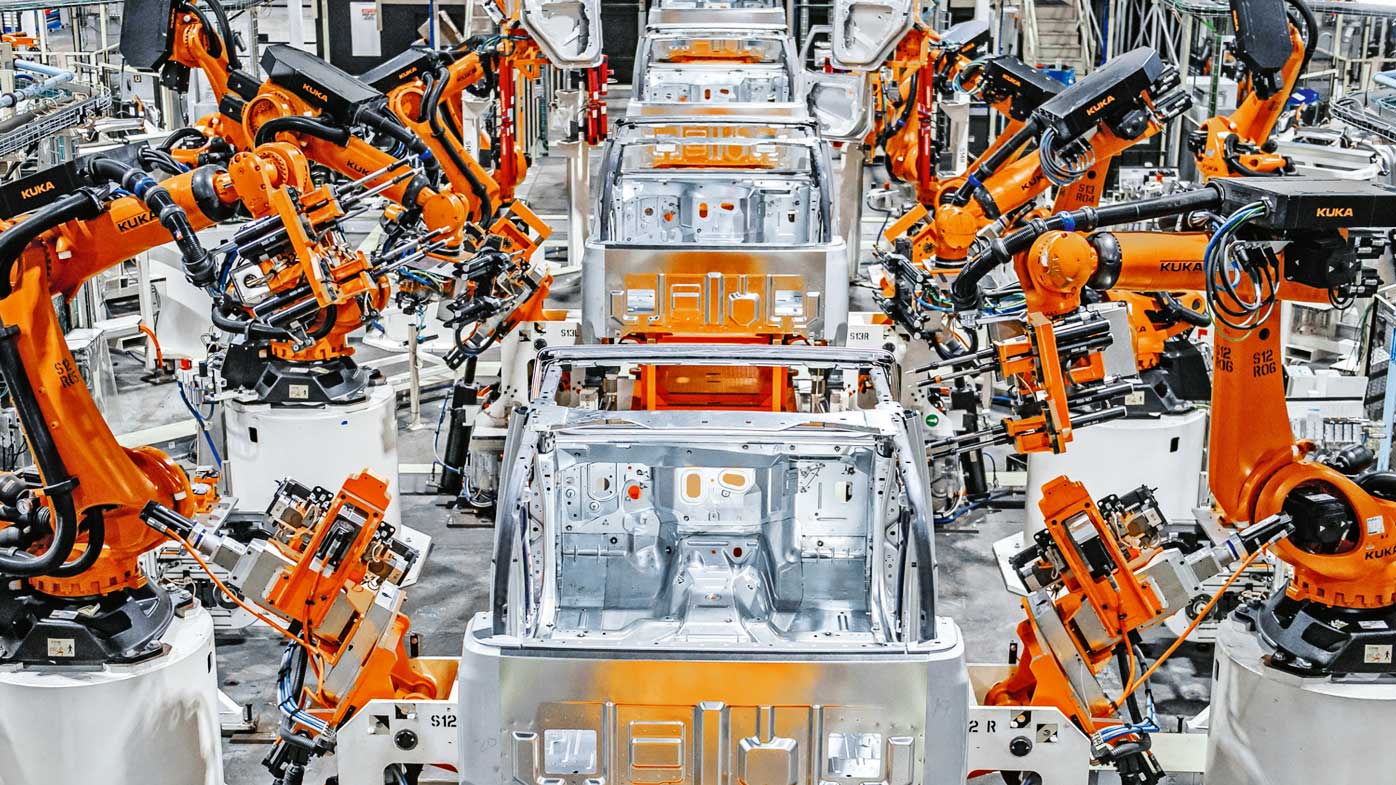
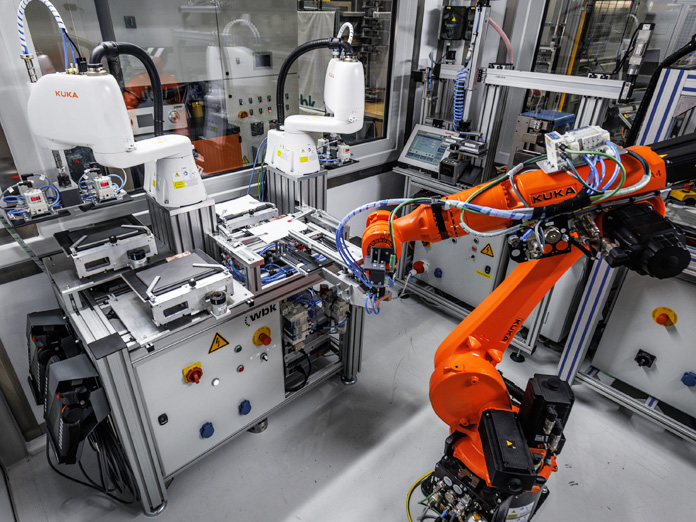
KUKA's 11 different assembly robot series options handle a variety of tasks with precision.
Get news, papers, media and research delivered. Sign up for our free newsletters.
Stay up-to-date with news and resources you need to do your job. Research industry trends, compare companies and get weekly market intelligence with Robotics 24/7.

KUKA
KUKA's 11 different assembly robot series options handle a variety of tasks with precision.
As one of the world’s largest robotics companies, KUKA’s expansive portfolio of robots performs tasks of varying complexity across industries, managing small and heavy payloads with precision.
Specifically related to assembly tasks, KUKA’s lineup consists of 11 different robot series, capable of handling the different reach, applications and weights required for industrial assembly.
Across its assembly portfolio, KUKA’s robots offer industrial-grade repeatability of around ±0.02mm to ±0.08mm (20-80 microns). Whether that’s the smallest, LBR issy cobot (with a 3kg payload), or the largest, Titan robot (up to 1500kg), KUKA’s robots operate at micron-level precision to handle the biggest (or smallest) tasks.
For those applications that need precision and accuracy, KUKA has them covered with software options that improve the accuracy of a standard robot. The accuracy is typically improved by a factor of 10.
“We have extremely accurate robots, and also have options to increase that accuracy and consistency,” said Josh Diaz, territory account manager at KUKA. “We hear people sometimes say, ‘Hey, a robot’s, a robot.’ And while that’s true, when you need the best accuracy possible, it’s more than a robot, and we have the options.”
The KUKA System Software (KSS) and iiQKA OS represent specialized software and technology packages to enhance the robot’s precision. KUKA.CNC directly integrates NCpath planners, offering increased path performance, while KUKA.Sim simulation software enables virtual commissioning of a system in a few minutes, without in-depth programming knowledge.
“We have a broad portfolio of very repeatable and stiff robots,” Diaz said. “The software options can make them even more accurate for the application, too.”
KUKA’s expansive assembly robot portfolio tackles countless assembly tasks. Specifically, Diaz highlighted the aerospace and construction industries as areas where KUKA’s orange robots tackle tasks with precision.
When micron-level precision is needed for aerospace or manufacturing, KUKA’s robots can handle the task.
“The first industry that comes to mind with this extra level of precision is aerospace,” he said. “We’ve categorically had demand in this space. Historically, KUKA has performed very well in aerospace applications.”
Another area of growth is in the assembly of construction equipment. Driven by innovations in assembly and fabrication technology, KUKA’s assembly robots are managing these tasks.
“Earth-moving equipment, such as bulldozers, excavators, and these types of things are a growth area for us,” Diaz said. “When we’re looking at a project for cab or frame assembly, it involves tasks like inserting a dowel into a metal sheet. The tolerance for that is so tight, and the fit is really snug. We need two robots working in coordination, one to place the dowel inside the opening using machine vision, and then another one to tack-weld it. That's where repeatability and precision come into play.”
Automotive, as Diaz calls it, is the “meat and potatoes” of the KR QUANTEC high-payload robot series. With a load capacity ranging from 120-300 kg, and an arm length reach range of 2671-3904 mm, the 48 models in the KR QUANTEC (6 axes) lineup handle a myriad of tasks.
“The two biggest questions that we want to answer in any robot project are payload and reach,” Diaz said. “Those are the big requirements of the work that robots can need to do. So we are constantly filling in gaps with these robots.”
As the KR QUANTEC series expanded, so too did the design and development of the robots from KUKA. With space at a premium, KUKA has added more payload and reach to its robots, without expanding floor space.
“Footprint is a huge requirement that comes from customers because floor space is money for these people in their production environment,” Diaz said. “So the more creative we can get, the better.”
Beyond shrinking the overall size of the robot and the platform, KUKA incorporated other elements to reduce floor space: mounting the robot inverted or mounting it on a shelf.
“The longest reach robot in our portfolio is in the QUANTEC series,” Diaz said. “It has a reach of 3900 millimeters, but it's one of our K variants, which is a shelf-mounted robot. This means that it's meant to work completely underneath itself. That's a way to save on floor space. If I just go vertical and put everything down below, as opposed to reaching out and working out this way, this is a huge lever in a project for a lot of our customers.”
In addition to the plethora of robot arms, KUKA’s SCARA robot lineup debuted in 2020. The KR SCARA robots provide flexibility for several tasks, including small parts assembly, material handling, testing or more.
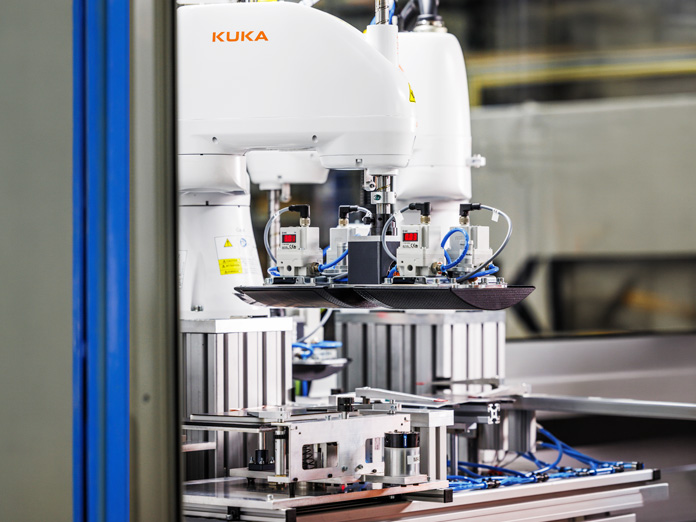
“Sometimes, people don’t think about SCARA robots and Kuka,” Diaz said. “It’s an enormous lineup. It goes all the way from what you think of as a normal SCARA, the super small, high-speed pick-and-place SCARA, to the top end, we have one that can handle 60 kgs of rated payload. That's 132 pounds. It’s just a monster of a SCARA. And then the reach profile is close to an entire pallet size.”
The smaller robots enable users to manage these tasks and incorporate other technologies, such as KUKA.VisionTech, to add inspection to its repertoire.
“The SCARA robots really pair nicely with the KUKA vision options that we have,” he said. “A lot of KUKA VisionTec is more used for object detection, pick and place, object tracking or positioning. It’s not necessarily the inspection side of it, but it absolutely can be. You see a lot of SCARA is being used in inspection applications, where I have maybe 100% inspection requirement for small components, and I need to cycle them through really quickly. It's a big, strong part of our portfolio now, for sure.”

Tim is the Editorial Director of Robotics247.com. His mission is to provide valuable information and insights to robotics professionals and decision-makers, and to help them solve business challenges. He is a creative, deadline-driven, and detail-oriented storyteller. In addition, he is a sports broadcaster and public address announcer.
Artificial Intelligence Machine Vision Machine Learning Industrial Automation Collaborative Robots Robot Arm Components Controllers Motion Control Software Data Management Simulation News Features Editors Pick Assembly Inspection KUKA Materials Handling Path Planning Precision SCARA Test
Enjoyed this article? Add Robotics 24/7 as a preferred source in Google Search.
Edge computing gives AI agents the processing power to turn instructions into…
Daimon-TWM world model debuts for the public
Platform helps robots adapt to complex tasks
Look beyond the headlines for the latest in humanoid robots