Palladyne AI
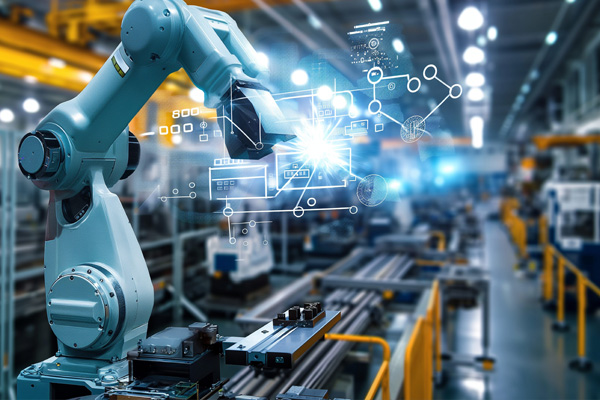
Palladyne IQ from Palladyne AI is a closed-loop automation platform.
Get news, papers, media and research delivered. Sign up for our free newsletters.
Stay up-to-date with news and resources you need to do your job. Research industry trends, compare companies and get weekly market intelligence with Robotics 24/7.
Palladyne AI
Palladyne IQ from Palladyne AI is a closed-loop automation platform.
Dangerous, dirty and boring tasks are ripe for automation. Repeatability offers a prime opportunity for automation to help uplift and upskill the human portion of the labor force.
Closed-loop AI helps robots function more like humans through flexibility and adaptability when changes arise.
In this podcast, we discuss the closed-loop AI platform Palladyne IQ, and how to utilize the system on these tasks.
Speakers:

Sterling Gerdes, VP of Product Management, Palladyne AI
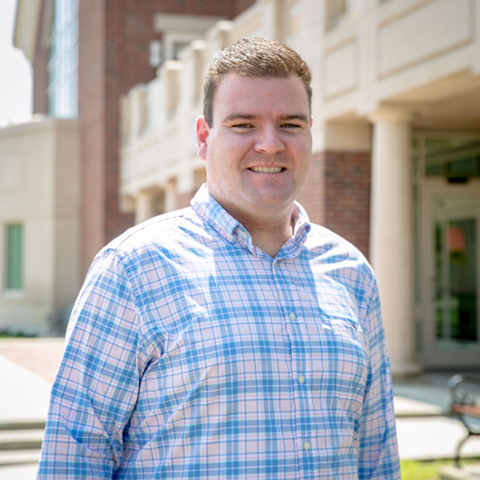
Tim Culverhouse, Editorial Director, Robotics 24/7
Tim Culverhouse
Hi everybody, and welcome to the next edition of the Robotics 24/7 podcast today, sponsored by Palladyne AI. I'm Tim Culverhouse, Editorial Director of Robotics 24/7, and on today's episode, I'm excited to be joined by Sterling Gerdes, VP of Product Management at Palladyne AI. Sterling, how you doing today?
Sterling Gerdes
Doing great. Thanks, Tim. How are you?
Tim
I'm doing well as well. Thank you for joining me today, and as we get going into today's program, why don't you tell us a little bit about yourself, your background, and also a little bit of background about Palladyne AI and what you do with the company?
Sterling
Yeah, great. Thanks so much. Tim. I appreciate it. Great to be here with you today. So Palladyne AI is really an AI software platform for robotics and for drones. We're in both the industrial and the defense sectors, so really plugging into those spaces,
I actually got to know Palladyne AI, back when it was Sarcos Robotics. I was working at Delta Airlines, and did a bunch of different things from venture as well as AI. I got to know the team really well and know their products really well, and I understood who they were and where they're going.
Tim
One of the main things that as we get into today's program that, you know, I read about a lot, get to write about a lot, fortunate enough to work with you guys at Palladyne AI, is your closed-loop automation.
And I guess the main question as we move into today's program is, how does the closed-loop automation that Palladyne AI has, promotes and puts into their technology, differ from the open-loop approach?
Sterling
Yeah, so the closed-loop AI approach really empowers automation, and makes it so that you can function more like humans in terms of the flexibility and adaptability to changes.
So it takes those things, the reliability, the repeatable characteristics of machines, and then combines them with that human like ability to observe, learn, reason and act.
And so that's what really makes the workflow automation more agile and helps drive autonomy into these operational deployments.
So there's a bunch of pieces there we can dig into. But it actually is what makes it possible to scale these kinds of things, whereas in the past, they would just get stuck, right? And so it just opens up a lot more.
Tim
And you mentioned, I guess, the scalability of it. As fast as all this technology across all of the different industry verticals that are going on out there, scalability is like arguably the most important thing. If you have a piece of technology and now you have to ramp it up to a major scale of production.
Sterling
Yeah, definitely. There are a few key features that unlocks. One of those things is requiring minimal training time. Typically, if you're familiar with the robotics space, it takes a lot of time, in terms of industrial robot programming, on assembly lines.
It's like millions of lines of code, months to perform. This kind of flips you into this user-friendly robot training that allows line workers, technicians to quickly set up those tasks with no coding experience required. It also unlocks things, pausing for a second and double clicking on that, the reason that helps with scalability is, as you scale, things always change, right? And so this next piece, where it's this dynamic, agile tasks, so most robots do one thing specific, and it's a highly programmed task over and over.
With closed-loop AI software, a robot can operate in a way that is almost like as dynamic and versatile and agile as a human, to perform multiple tasks instead of just performing a single task repeatedly.
It's almost like railroad tracks. If you have to go off track, that's a big deal, right? You have to go lay new tracks.
In our context, it actually shifts you more into like a car. You don't have to deal with the same way if the road changes. If you're going to take a different turn, that's doable, right? Because you've got this ability to adapt in real time and because again, going back to that, the closed-loop: it's the observe, learn, reason, act. It's reasoning about what's happening. It's already observed the environment. It's figured like, ‘okay, what is this environment?’ It's learned what it needs to do. So then it can reason before it acts. And that really changes how you think about dynamic tasks, especially things that haven't been able to be automated in the past.
Tim
When I think of Palladyne AI, I'm obviously familiar with the drones that the organization has, so it's, it's funny to hear you mentioned the train and the car analogy when I'm so used to viewing Palladyne in the drone space.
It makes perfect sense in terms of, you know that that variability that happens in the course of production.
You mentioned no code, and I'm going to come back to that in a little bit, but I did want to focus a little bit in terms of, almost like a history lesson, in terms of Palladyne AI.
I'm wondering if you could speak a little bit about the genesis behind this closed-loop automation, and then how that has initially served, but then also continues to serve the company's vision?
Sterling
I alluded to this earlier, it has a deep history as Sarcos Robotics. So they've been around for a long time, building out the first humanoid robots, building out exoskeletons, all sorts of different robotic arms and capabilities. Things with DARPA and NASA. They took all that robotic expertise and experience and they learned.
And from that learning, they identified: ‘Hey, this closed-loop automation can actually enable us,’ rather than focusing on scaling hardware, which is hard to scale on all hardware that exists. If you think about that, this market really opens up, because now you can go put that on all the different major players.
Tim
And I think that leads into this next question is. When you think of this platform and its abilities from the AI standpoint, and what it can do.
It's placed at the edge. When you have this at the edge, what does that allow you in the engineering and design team at Palladyne to, learn and then train the models as you're getting all of this data at a very real and very close proximity to where the action is going on?
Sterling
By utilizing edge-based computing that's co-located with the robot, versus cloud-based computing, robots can analyze, learn and reason to changing circumstances on the fly. And you avoid the latency as well as the cost associated with associated with cloud computing.
It's also really great for security. A lot of times we get those questions. ‘How do you handle the cyber security piece?’ Once we tell people, it's on the edge, it's on this box at your facility, it changes those dynamics, and people are really excited about it.
Tim
And then, as a follow up to that, because it that piece of I'll say hardware in this instance, but because it's in the facility, does that allow the users with Palladyne AI to refine these AI libraries and training models through the use of the platform? Is that something that you guys are handling? Can you kind of elaborate in terms of, as you said, the continuous learning element of what you guys are doing with this?
Sterling
Yeah, definitely. There's a lot of different pieces that the users can tweak. And that's actually, I know we're going to hit on this in a second, but what really adds value to the end user, and why this becomes so scalable: because it's simple.
But in that context, you have AI libraries, you also have the ability to upload. Case in point, maybe there's certain industries that have very specific ways that a part might need to be handled. And those libraries, you're actually able to upload CAD models or other ways of understanding and knowing those parts. We can then train on locally and then use within their specific install base.
That machine can understand that this technician says, ‘this is the piece, and this is how you need to pick up that piece.’ And it actually allows the technician to give much more information, and make that that robot better able to understand the environment and what it needs done to complete the tasks.
Tim
I would also envision circling back a little bit to the security side of it again, because so much of that is done in house, you are eliminating that potential concern of third-party network, cloud, data outside of the facility from when you're doing something like this, right?
Sterling
Yep, exactly.
Tim
Gotcha.
I know you mentioned no code, and that's definitely something I wanted to hit on today. And again, thank you for joining us today. Sterling. Sterling Gerdes, the VP of Product Management at Palladyne AI. You mentioned the no-code capabilities of the products that you guys have going on at Palladyne AI.
And I want to focus first on the company side of it, because as the writer, the editor and the viewer of all this technology, I'm always sort of skeptical, and I think it's just part of my nature to hear the term no code and what that means for end users.
Two-sided question here, I guess the first one from the Palladyne AI side of it, what are some of the design complexities in the coding and the programming that you guys have to do to create Palladyne IQ to then enable your users to be able to train and operate those robots without the coding experience?
Sterling
So there's a lot of different pieces that we could touch on here.
Tim
Loaded question.
Sterling
Zooming out for a second. In my past, we looked into major inflection points. You had this major inflection point in terms of what is AI that happened in 2015-2016. I was a data science manager back in those days at different companies.
Then we were going forward with AI. You had this inflection point where you got compute, data and all these models that became available to end users. You could actually start going out and doing machine learning, which is really where a lot of things started moving forward.
Coming full circle, there's a bunch of stuff in our tech stack that creates these AI pieces that we have to go get ready, that then make it easier for that end user. And the core thesis here is that, this is something I learned early on my career and that I felt like Palladyne really nailed: the right thing to do, needs to also be the easiest thing to do.
If you hit that, especially when you start scaling, then all of a sudden, when you're dealing with typically hundreds, thousands or hundreds of thousands of frontline workers, if the right thing to do is also the easiest thing to do, then you always do that thing.
If it's super complex, it's just hard. Especially when you deal with these dangerous jobs where it can be fatiguing. In that context, what we’re doing is putting in several different pieces, I won't get into all the technical things here, but that unlocks these capabilities for the no code
Tim
From the design side of it. From you guys, I'm curious, you mentioned the complexities on it, and you were going on about the hundreds of thousands on the labor side of it. I'm also curious, now, you know also the hundreds of potential robots in production too, because that's the technical point of it. But you know that that element, again, is something as the writer, when you hear no code or low code, programming it really is wild to see.
Do you guys really think, and are you able to make it so that way a user doesn't have to have any coding experience that they need, just a little bit of background? How do you guys support that to make sure somebody is up and running with it?
Sterling
Actually, with one engagement, we actually trained a person who, they're a technician. They work in this environment, it's a manufacturing environment, and they have a GED. And in that context, English is their second language.
We actually trained them, in minutes, how to pick up and set up our platform. There's a couple different steps. We typically start off with physics-based simulation for the customer. Once they have that physics-based simulation, they're able to see, hey, does this work or does it not work in our environment? And because it's physics-based, you can really understand those complexities.
Then there's a basic setup. Understanding how does the robot interact within its environment, information that the end user can give, and we trained that person in minutes. The customer, in this case, they wanted to take their worst technician, because they're really trying to challenge us. They're like, ‘Hey, let's grab the worst technician.’
They didn't tell us that ahead of time, and let's see what they can do. We trained the worst technician that they had, and enabled them to be effectively as powerful as like, an automation or senior automation engineer.
You really see this big change where it's like, wow, you can now do this thing. We also took people, salespeople, all sorts of other different backgrounds, and said, ‘Hey, let's get you on this.’ Let's have you interact with this system and see what they can and can't do, and then take those insights and build a better product that continues to get to this low-code/no-code capability.
Tim
You mentioned the simulation capabilities in the Sterling and light bulb went off in my head, and I'm curious if you could elaborate on how the simulation capabilities of Palladyne IQ in this example that you just brought up, a real-world example of the worst technician in a plant, running the simulation through the platform and now essentially becoming the manager of this robot. Is that upskilling now of the labor force, kind of like an expansion of the simulation capabilities that have been brought in by the no-code elements of the platform?
Sterling
One of the key things here to your point, you’re upskilling and also upleveling.
I remember way more than a decade ago, one of my boss's bosses was like, ‘Hey, I don't need to get 100% better. I need to get this bottom quartile of the workforce and make them just a little if I can bring them up to 50%, we're going to have this massive uptick in performance.’
In the same way, the technicians on the line are able to see, okay, great, here's what I need to show the robot. They're actually learning, and to your point, they're upskilling, and start to think through not just the tasks that have historically, you got the classic ones that we're solving for, which are the dangerous, the dirty, the really mundane tasks that are boring. And they can even start asking themselves, as a lot of people now are asking, like humans used to always do this, that's really boring, or it's really dangerous, what are the things that we should be doing? And then how do we help put ourselves into those places?
And in that context, then they're able to up level and start supervising the robot to get more done, to get greater throughput and output.
Case in point, you think about like a task like sanding, surface preparation, blasting, grinding, all these kind of things where, in certain organizations, you actually have these scenarios where people are putting on full hazmat suits.
They're going there, doing these tasks. It's super hot. There may not even be, like a lot of the locations we've been to, there's no AC. So there's full hazmat, no AC, middle of the summer, sanding something. What turns out, even though they're in full hazmat and they're taking showers, there's actually high rates of cancer. People have to be tested on a regular basis, typically annually, for cancer.
You get that and you're like, ‘Why is a person doing this specific task?’
Well, you put in our system, it's like, okay, great. The person can oversee what's happening. This technician, who's been there, or a brand-new technician. We're actually seeing one of our customers was like, ‘Hey, I've got people have been here for four years, and I've got people who we just hired them last week, I need them to get up and running in two days. And we're plugging them in and they're saying, ‘Great, now I can understand this. I can oversee it.’
Especially with the younger generation, brand-new employees, they actually don't want to go do the things the way that’s been done for 40 years. They want to use the robot. They like the way they're able to interface with it. They then are now more focused on, it's not just this specific task of sanding or whatever it might be, it's did this part get sanded the way that's best for what I need to move forward? Can I do more parts? Can I change things that maybe were good enough before, but then cause downstream implications so that they're solved in my station?
Then it solves problems downstream for the next guy, and you get this positive flywheel, like things are getting done more effectively, quickly. It creates a lot of really good benefits, and then again, going back to the dangerous, dirty, boring tasks, you're able to uplevel these people into something where they're more excited to come to work and be engaged in that context.
Tim
You've mentioned. And we've kind of hit on a lot in terms of the manufacturing sector. And I'm curious, from what Palladyne AI kind of views as some of the industries that Palladyne IQ would be, you know, most targeted, most beneficial for as you continue the rollout of this platform, and again, you mentioned manufacturing and sanding, and those are, you know, these major areas with the repetitiveness and potential health dangers. But you know, can you speak to some of the industries that you feel that Palladyne IQ would be best benefiting?
Sterling
Palladyne AI is helping solve a growing variety of automation challenges for industries, including industrial manufacturing, defense, infrastructure maintenance, repair and surveillance, energy, aerospace and aviation.
In that context, a lot of times we're looking at tasks that, going back to some of our early discussion, on things that are dynamic or require adaptability. The things that you want to automate that you haven't been able to automate before, or things where you're really trying to increase your throughput. We're able to come in and automate those things that haven't been automatable before.
Tim
Now it's time, and I like to do this as part of all the podcasts that we're able to record here. And again, thank you to Palladyne AI for sponsoring today's program and kind of crystal ball time, both looking forward and then a bit of a look back.
I'm curious what you would say, all the advancements in AI the last even 12 months, but I'm going to extend the window back to five years, what would you say is the most important advancement in the artificial intelligence sector that's happened?
And the follow up to that would be, what do you think that's enabled you at Palladyne AI to accomplish because of this advancement that you're about to list here?
Sterling
There are so many different advancements.
Tim
I know it's a loaded question.
Sterling
In the last 12 months, or the last five years. I mean, these are major step functions.
So you're going from, I mentioned earlier on, this 2015-2016 time horizon. Wow, we just had a massive shift. You've had that multiple times since.
It used to be back in the day in data science, we would look out and be like, wow, we really want to get towards prescriptive. You're now getting to a scenario where not only do you see the things that you want to do, but like the tool sets are even getting more effective.
Case in point, in 2020, the best AI engineers that I had, were doing computer vision. Now, every single engineer we have has done something with computer vision. And it's almost getting the point where it's like, ‘Oh yeah, it's computer vision.’
There's nuances about how you train the models. There's nuances about, we talked about being closed-loop and being on the edge, how you compress that down into smaller platforms? How do you make that run more efficiently on really cheap hardware, so you can compress the costs?
I say in each of these areas, with computer vision, even you look at computer vision models, there's multiple different computer vision models that can be leveraged at any given time to help you accomplish the next best task.
You also have things like LLMs. Obviously, that's been a massive shift. But that's caused this proliferation of AI, where all of a sudden I can do all these different things, and so many people are working on it, that you get this overall, everybody's getting better at these capabilities. They're getting better at training, getting better understanding. So that helps these products continue to mature faster.
Tim
Name of the game must evolve faster and do so cheaper, right?
So now crystal ball time. Five years down the road, if you had to list the next big thing or the next major innovation for AI and automation, what would you prophesize or think that that could be in the next evolution of AI and in robotics and everything that's going on with it right now?
Sterling
When you actually look at the future, there's so many different variables that can change. I do think though there's a lot of major trends that you'll see those things start to grow.
You know, case in point, you look back at autonomous vehicles. We were supposed to get autonomous vehicles, and we were supposed to get autonomous vehicles and we were supposed to get autonomous vehicles. This year, we've got autonomous vehicles being tested, and it's growing in scale. I think that it's going to get there.
I think in the same way, as you look back, even back to the iPhone, the iPhone obviously had this massive change in how we understand and interact with technology, especially on a focus on going back to our low code, no code, making it simple. It made it simple so that a little kid could pick it up and like, hey, I can now interact with technology. I think you can see this big shift in how humans interact with technology and the expectation of it. And I think especially when it comes to this industrial automation place, you're going to have these capabilities.
Like now I don't necessarily have to go learn a foreign language or a computing language to get the robot to do the task or the thing I need it to do.
I can take as an expert technician, or even a new technician, this task to me like, hey, robot, I need you to go do this thing, and that's going to get a lot better.
Everything from LLMs to computer vision, other sensing capabilities, will unlock this interaction between humans and robots that will enable them to get more done together than they've ever been able to do before.
Tim
The human machine-interaction is something that I can say, writing for the site, we're seeing so much more in terms of that focus with the technology and then that collaborative model, not just cobot, collaborative robot, but that collaboration between a piece of technology and the human operating it, either physically or digitally throughout the platform. So very much so I’m in agreement on that.
The last question I had for you, and he actually started to touch on a little bit, but you mentioned the industrial automation space, and not even necessarily related to AI or anything else, if you want to go down the humanoid road, I've heard that story plenty of times as well. But curious, what you think in the industrial automation sector, what do you think will be some of the major changes coming down the pipe in the near future?
Sterling
Definitely some of the things I mentioned, but then a lot of it's actually hitting on some of the same things we talked about before.
There's all these tasks that have been hard to automate because they require adaptability. I think that that's going to change. I think that we're out talking to customers at all these different conferences, as well as just in general, and we're hearing this desire for automation. I think that that's going to get unlocked.
I think the other big thing is, we often talk about more the technology, but there's a human factor here. I'm seeing a lot of scenarios with customers where they actually have these desires, but they haven't been able to do them in the past, because they've tried the robot thing and they couldn't get it to work. Or, it takes so long to program, they're like, ‘We bought this robot for X hundreds of thousands of dollars for this many, and now they use them as a paperweight.
I think you're going to see that unlock where it's like, okay, people are actually going to start using them because it's easier, and the technicians see the value add. Rather than blowing out their arm, they want to go use the robot, because they actually can get the throughput that they're being told they have to get. They actually can go interact with this robot in a way that makes their job easier, and that keeps them from getting injured. It actually makes their job more enjoyable as they're interacting with it, because they're not just doing the same repetitive tasks over and over and over.
I think there's a lot of those pieces, when you start looking at the human factors, that's going to change in the near future,
Tim
Completely agree, in terms of the industrial automation space, Sterling, and it's fun to follow along on the editorial side for you and the Palladyne AI team is doing with Palladyne IQ and the other products and systems and platforms you have going on.
It's awesome to see, and it's great to kind of kind of peek behind the curtain a little bit to what's going on in Salt Lake City with Palladyne AI.
I really appreciate you taking sometime today to chat and go over some things, and again, take out your crystal ball and see what's going to happen down the road. I really appreciate it. Sterling,
Sterling
Yeah, for sure. Thank you. Appreciate it.
Tim
And for our listeners, you can follow Palladyne AI Corp. on LinkedIn. And once again, thank you to Sterling Gerdes, the VP of Product Management at Palladyne AI for joining me for today's podcast and for the company Palladyne AI for sponsoring today's program.
You can listen to this podcast and download it on Apple Podcasts, Podbean, TuneIn and Amazon. We look forward to our next Robotics 24/7 podcast in the near future. Thanks so much for tuning in.
Artificial Intelligence Deep Learning Machine Learning Industrial Automation Collaborative Robots Robot Arm Software Cloud and Edge Simulation Soft Robotics News Features Editors Pick Media Podcast Artificial Intelligence Industrial Automation Labor Productivity Labor Shortage Manufacturing Palladyne AI Podcast Safety Sanding Security
Enjoyed this article? Add Robotics 24/7 as a preferred source in Google Search.
Edge computing gives AI agents the processing power to turn instructions into…
Daimon-TWM world model debuts for the public
Platform helps robots adapt to complex tasks
Look beyond the headlines for the latest in humanoid robots