Humanoid
Humanoid announced it has integrated its humanoid lineup with several NVIDIA technologies.
Get news, papers, media and research delivered. Sign up for our free newsletters.
Stay up-to-date with news and resources you need to do your job. Research industry trends, compare companies and get weekly market intelligence with Robotics 24/7.
Humanoid
Humanoid announced it has integrated its humanoid lineup with several NVIDIA technologies.
UK-based AI and robotics Humanoid said it is accelerating the development of its humanoid robots by integrating NVIDIA technologies - including NVIDIA Jetson Thor, NVIDIA Isaac Sim, and NVIDIA Isaac Lab - into its technology stack.
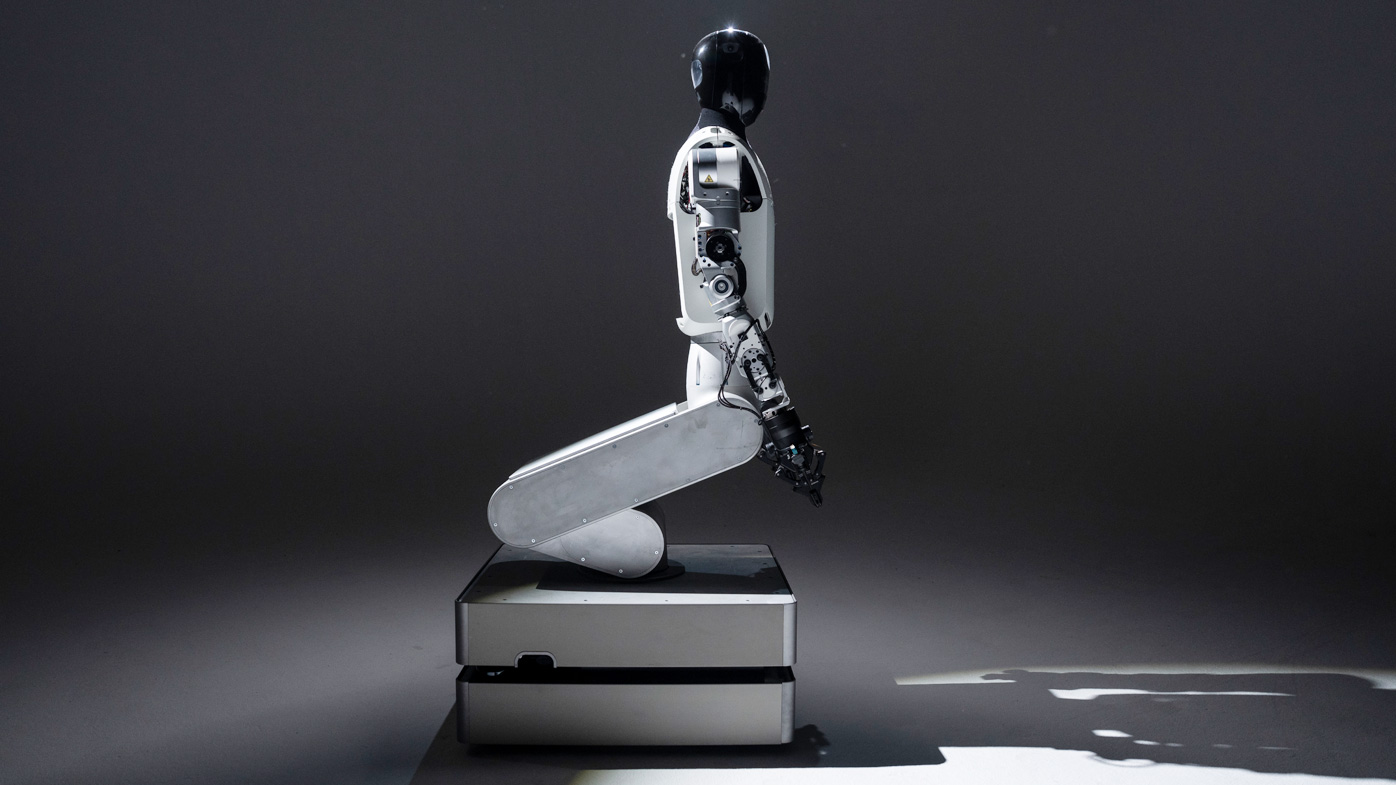
Humanoid said that these tools have powered the HMND 01 Alpha humanoid robots, now successfully tested in real-world environments, including a recent proof-of-concept with Schaeffler.
Humanoid said that Jetson Thor drives the alpha prototype of HMND 01 robots across two platforms: a wheeled system designed for industrial environments, and a recently released bipedal robot, which is intended mainly for R&D for future service and household applications.
Humanoid said that this serves as an extremely powerful edge computer that allows the company to run the latest, largest and most capable robotic foundation models directly at the edge, bringing unprecedented intelligence to the robots. Jetson Thor significantly simplifies the robot's system architecture, wiring, manufacturability, and field service ability.
“NVIDIA’s open robotics development platform helps the industry move past legacy industrial communication standards and make the most of modern networking capabilities,” said Jarad Cannon, CTO at Humanoid. “We’re currently working closely with NVIDIA and other partners on a new robotics networking system built on Jetson Thor and the Holoscan Sensor Bridge. We believe this co-developed open network standard for AI-enabled robots could make a big impact across the industry. Together, we can open the way for software-defined robots.”
To accelerate development, Humanoid said it also follows a simulation-first approach using NVIDIA Isaac Lab and Isaac Sim, open-source frameworks for robot learning and simulation. For example, Isaac Lab powers reinforcement learning for improving locomotion and manipulation capabilities. The Humanoid team has also developed custom hardware-in-the-loop validation with Isaac Sim, creating digital twins that use the same interfaces as the real robots.
The company said this allows engineers to seamlessly switch between simulated and physical robots when testing middleware, control systems, teleoperation and full-body control. Isaac Sim is also used to validate navigation and manipulation policies long before the robot is deployed on site.
To learn more about the integration, click here.
GENISOM AI makes ICRA debut at conference in Vienna
World's first omni-modal evaluation including tactile sensing for…

Ultrasonic sensing enhances robotics perception

Cybernetix Ventures’ event kicks off Robotics Tech Week 2026 slate of events