By
DE Editors
January 21, 2019
Get news, papers, media and research delivered. Sign up for our free newsletters.
Stay up-to-date with news and resources you need to do your job. Research industry trends, compare companies and get weekly market intelligence with Robotics 24/7.

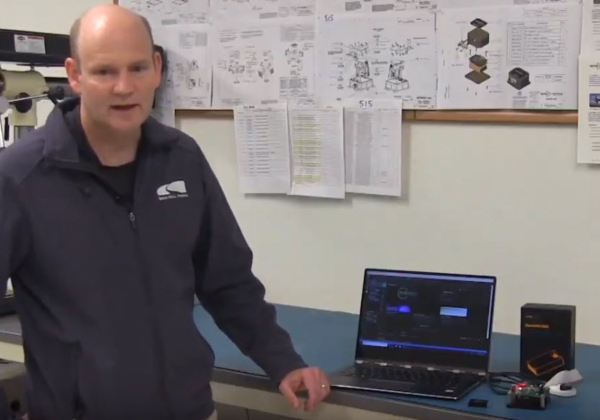
ACEINNA announces a new video on the ACEINNA YouTube Video Channel–“All About the New ACEINNA OpenIMU Package.” This short video provides a quick and easy overview of ACEINNA’s new OpenIMU package.
ACEINNA’s OpenIMU solution consists of three key parts. First is a family of inertial measurement units consisting of three accelerometers, three gyros and an ARM Coretex. Zoom in on OpenIMU and OpenIMU CAN Second is an OpenSource tool chain and reference code for programming the IMU. It consists of basic download and debug to reference implementations of loosely-coupled GPS/INS. Third is a full Developer Site and tools with charting, graphing and algorithm simulation.
“OpenIMU enables advanced, easy-to-deploy localization and navigation algorithm solutions for a fraction of the time and cost of traditional methods. OpenIMU's combination of open-source software and low-cost hardware enables rapid development of advanced solutions for drones, robotics, and autonomous applications,” explains Mike Horton, CTO of ACEINNA. “OpenIMUTM is a first of its kind, professionally supported, open-source GPS/GNSS-aided inertial navigation software stack for low-cost precise navigation applications.”
The OpenIMU Development hardware development kit includes JTAG-pod, precision mount fixture, EVB and an OpenIMU300 module. The OpenIMU module features ACEINNA’s 5 deg/Hr, 9-Axis gyro, accelerometer and magnetometer sensor suite with an onboard 180MHz ARM Coretex floating-point CPU. The IMU is delivered in a small (24x37x9.5mm), easy to integrate module that operates from 2.7-5.5VDC.
This freely downloadable stack includes:
Sources: Press materials received from the company and additional information gleaned from the company’s website.

DE's editors contribute news and new product announcements to Digital Engineering 24/7 and the Robotics 24/7 sites. Press releases may be sent to them via [email protected].
Enjoyed this article? Add Robotics 24/7 as a preferred source in Google Search.

Edge computing gives AI agents the processing power to turn instructions into…
Daimon-TWM world model debuts for the public
Platform helps robots adapt to complex tasks

Look beyond the headlines for the latest in humanoid robots