General Robotics
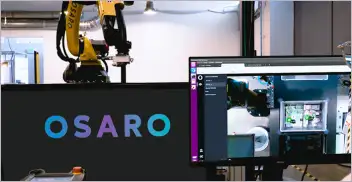
General Robotics said that its GRID robot intelligence platform is always reasoning over what must be built, tested, fixed, or improved next, across every robot and task connected to the platform.
Get news, papers, media and research delivered. Sign up for our free newsletters.
Stay up-to-date with news and resources you need to do your job. Research industry trends, compare companies and get weekly market intelligence with Robotics 24/7.

General Robotics
General Robotics said that its GRID robot intelligence platform is always reasoning over what must be built, tested, fixed, or improved next, across every robot and task connected to the platform.
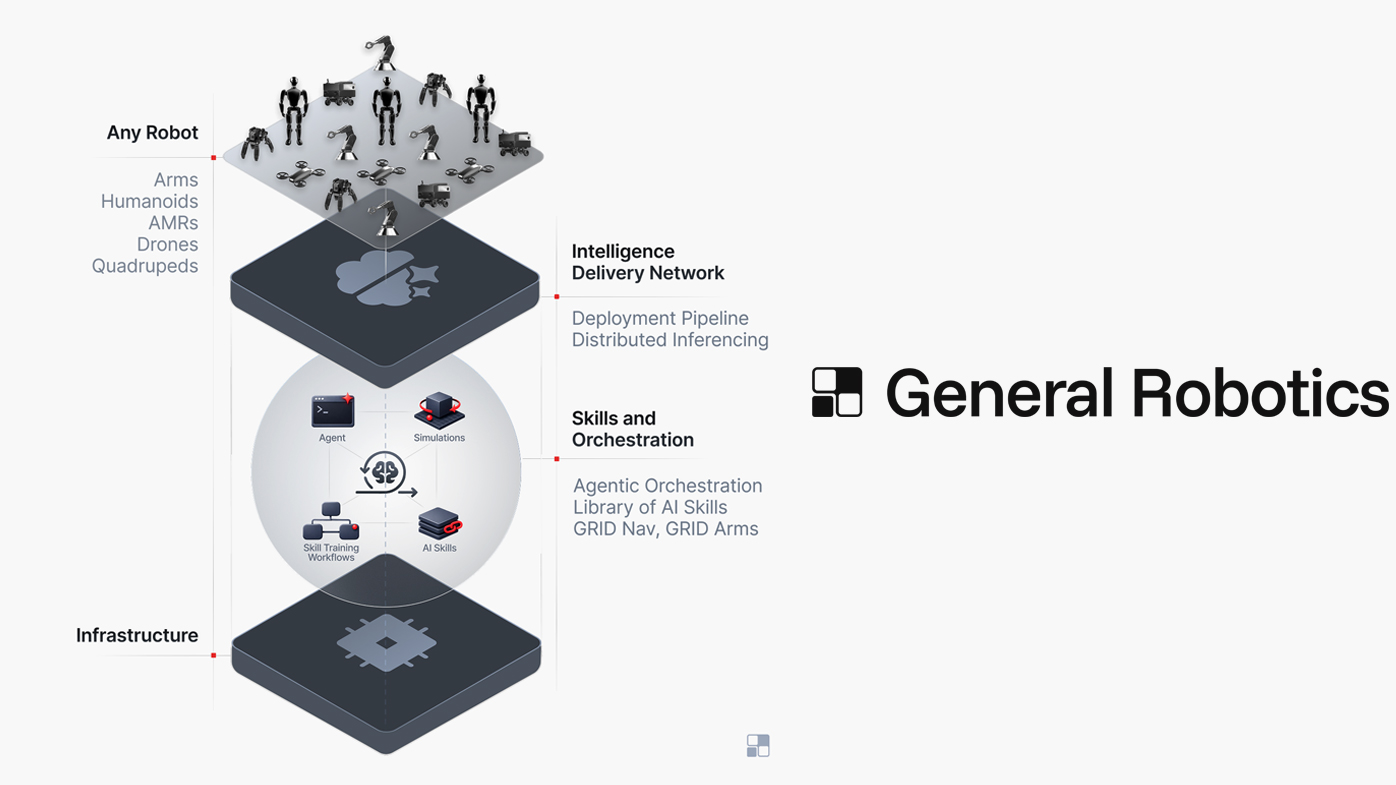
General Robotics, a Washington-based company that said it is building the intelligence layer for physical AI, said that GRID, its robot intelligence platform, can now auto-engineer its own processes, from robot onboarding to skill deployment.
The company said that GRID is built from the ground up as an agentic system that continuously improves itself and every robot connected to it.
General Robotics said that this has resulted in a significant reduction in time and the specialized robotics expertise required to bring robots into production.
General Robotics said that GRID utilizes a set of knowledge graphs to turn every deployment into structured, reusable intelligence. Each robot onboarded, task performed, model ingested and failure encountered feeds back into the platform, raising the baseline of future deployments for everything that comes after it.
Together, the company said that these graphs turn individual engineering efforts into a shared knowledge layer while ensuring customer data and IP remain protected. General Robotics said that GRID is now using AI to engineer the entire process of onboarding new robots and AI models, to the creation and deployment of new skills.
“People have been trying to deploy advanced robotic systems the same way for 50 years. With the rapid advances in AI it’s time to rethink the approach,” said Ashish Kapoor, founder and CEO of General Robotics. “Our GRID architecture is fundamentally different. It is the most efficient and flexible way to deploy and make robots useful by bringing decades of robotics knowledge, from research to software and AI models to simulations, data and hardware, into one agent-first platform with intelligence that compounds.”
The company said that its latest evolution of GRID has dramatically reduced the time and specialized talent organizations require to bring robots into production. Additionally, General Robotics said that it greatly expands the scenarios that GRID supports for customers:
The company said that GRID customers span a growing roster of industry leaders, including global companies across automotive manufacturing, port operations, energy generation, and food and beverage production, as well as multiple government agencies.
General Robotics said that these companies, and others, rely on the freedom to choose the robot manufacturer and form factor best suited for each task.
“GRID runs autonomous operations in some of the most dangerous work in logistics and delicate manipulation in consumer goods R&D,” said Shiquan Wang, CEO of Flexiv Robotics. “That range is where physical AI starts being useful to the world's largest enterprises."
The company said that GRID empowers an expanding ecosystem of leading robot manufacturers with immediate access to transferable intelligence for rapid deployment and expanded capability.
“As a FANUC Authorized System Integrator (ASI), General Robotics is advancing frontier physical AI across the FANUC portfolio - unlocking new AI-driven use cases and greater value for customers," said Ryan Patterson, Jr. General Manager (Sales, Engineering & Operations), United States General Industries (USGI), FANUC America Corporation, Robotics Division.
With this evolution, the company said that GRID's architecture is purpose-built for agentic development and is now automating the end-to-end robot engineering lifecycle. When given a task, General Robotics said that GRID determines which skills are required, assembles the optimal recipe of models and approaches, and orchestrates the skill's creation, automatically building and running the simulation environments needed to train, evaluate and refine it.
From there, the company said that GRID manages AI skill deployment, monitors performance and failures, and determines what needs to change next.
General Robotics added that the closed loop - from onboarding, to skill deployment, to real-world evaluation and back again - runs continuously. GRID is always reasoning over what must be built, tested, fixed or improved next, across every robot and task connected to the platform.
Click here for a technical overview of GRID.
Enjoyed this article? Add Robotics 24/7 as a preferred source in Google Search.
Edge computing gives AI agents the processing power to turn instructions into…
Daimon-TWM world model debuts for the public
Platform helps robots adapt to complex tasks

Look beyond the headlines for the latest in humanoid robots