LG Electronics
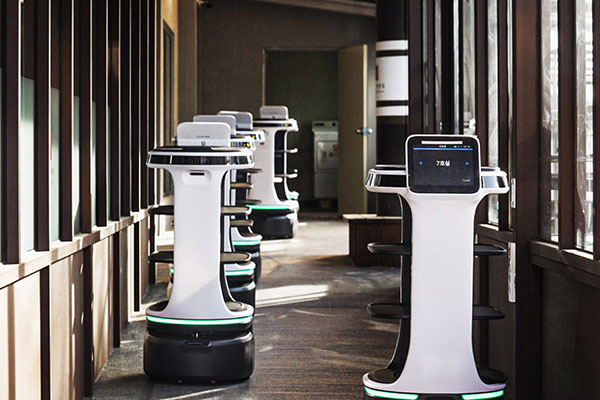
LG intends to create an integrated software platform for commercial, industrial, and home robots based upon Bear Robotics’ technology.
Get news, papers, media and research delivered. Sign up for our free newsletters.
Stay up-to-date with news and resources you need to do your job. Research industry trends, compare companies and get weekly market intelligence with Robotics 24/7.
LG Electronics
LG intends to create an integrated software platform for commercial, industrial, and home robots based upon Bear Robotics’ technology.
South Korean consumer appliance and electronics manufacturer LG Electronics (LG) recently secured a majority stake in Bear Robotics, a Silicon Valley startup specializing in AI-enabled autonomous service robots.
LG said this acquisition aligns with its strategy to strengthen its presence in the robotics sector, a key growth area for the company.
On Jan. 22, LG’s board of directors exercised a call option to acquire an additional 30% stake in Bear Robotics. This follows an initial investment of $60 million in March 2024, which secured LG a 21% stake and a call option agreement for up to an additional 30% stake.
Upon completion of the call option exercise, LG will hold a controlling 51% stake in Bear Robotics, effectively incorporating it as a subsidiary.
As part of this strategic move, LG’s commercial robot business - primarily centered around its CLOi autonomous mobile robots (AMRs) for service and hospitality - will be integrated with Bear Robotics. LG said the key management team of Bear Robotics, including CEO John Ha, will remain in place to ensure stable business continuity.
“This additional investment underscores our dedication to positioning robots as a pivotal growth engine for the company, reflecting our belief in their inevitable role in the future,” said Sam-soo Lee, LG Electronics chief strategy officer. “We will persist in driving innovation across all sectors of robotics, encompassing commercial, industrial and home applications.”
Founded in 2017, Bear Robotics creates AI-powered indoor delivery robots, catering to markets in the U.S., South Korea and Japan. Its systems include distributed multi-robot control, remote options for fleet management, and an AI-enabled robot platform.
LG aims to expand its presence in the commercial robot market through Bear Robotics. Concurrently, LG also said it intends to leverage its AI and manufacturing knowledge to reinforce its home and industrial robot businesses.
In the realm of industrial robots, which LG said is a cornerstone of its smart factory business, the company’s Production Engineering Research Institute is researching the integration of AI and digital technologies.
One example is an “Autonomous Vertical Articulated Robot,” a robot arm which employs sensors including cameras, radar, and lidar to perceive its surroundings, navigate efficiently, supply materials, and execute tasks.
LG said this robot can help facilitate seamless automation across a range of operations, such as assembly and defect inspection.
The home and consumer robot segment will be spearheaded by the LG Home Appliance Solution Company. The company’s focus will be on delivering a holistic experience where home robots, powered by LG’s Affectionate Intelligence, can discern the well-being of people and integrate with home appliances and services.
One example is the Self-driving AI Home Hub, also known as Q9, slated for release within the year. The Q9 harnesses multimodal sensing capabilities, encompassing voice, sound, and image recognition, coupled with autonomous driving technology. This technology enables it to navigate the home, identify users’ statuses, and respond to their needs by connecting and controlling home appliances and IoT devices. The Q9 can navigate around obstacles such as carpets and uneven surfaces, while its expressive display can convey emotions, which LG said can encourage human-machine interactions and engagement.
The Q9 also features Microsoft’s voice recognition and synthesis technology, enabling natural and intuitive conversations with users. Its ability to understand diverse accents, pronunciations, and colloquial expressions garnered the attention of attendees at CES 2025. To foster an open development ecosystem, LG has also introduced a software development kit (SDK) for the Q9, encouraging developers to expand its capabilities further.
At CES 2025, LG Electronics CEO William Cho said, “Robots are a certain future.” Cho hinted at plans to expand beyond the current focus on hospitality and logistics delivery robots to include the Self-driving AI Home Hub and other home robots to advance toward LG’s vision of the “zero-labor home.”
LG said the acquisition of management control of Bear Robotics is expected to create connections across its entire robotics business, including commercial robots. As the robotics industry increasingly shifts towards AI-enabled solutions, LG said this collaboration will contribute to its overall robotics software capabilities.
LG intends to create an integrated software platform for commercial, industrial, and home robots based upon Bear Robotics’ technology. According to the company, this platform has the potential to deliver consistent and high-quality user experience across various applications.
By applying this integrated platform universally to the development of different types of robots, LG expects to shorten development cycles.
LG said its manufacturing capabilities and supply chain management knowledge will help the company improve the operational efficiency and market responsiveness of its robotics business. By integrating commercial robots with a range of B2B devices, including hotel TVs, digital signage, and IT devices, LG said it can achieve a competitive edge through a turnkey order approach, delivering tailored products that meet the specific needs of corporate clients.
Artificial Intelligence Autonomy Mobile Robots Industrial Automation Robot Arm Components Sensors Cameras Lidar Software Fleet Management IoT News Press Release Assembly Autonomous Mobile Robots Bear Robotics CES Collision Avoidance Delivery Service Human-Machine Interaction Inspection Investment LG
Enjoyed this article? Add Robotics 24/7 as a preferred source in Google Search.
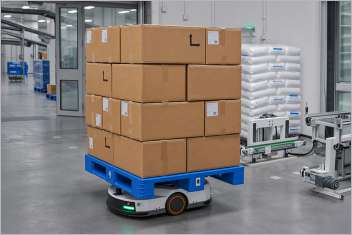
The iWMC is a four-in-one integrated drive module for wheeled mobile robots,…
Comes 11 days after his resignation amidst multiple personal scandals
Automaker is developing its own robots at Kokomo, Ind. plant
Colette Kress, current EVP and CFO of NVIDIA named interim CEO