By
Brian Albright
January 10, 2019
Get news, papers, media and research delivered. Sign up for our free newsletters.
Stay up-to-date with news and resources you need to do your job. Research industry trends, compare companies and get weekly market intelligence with Robotics 24/7.

Metal 3D printing is expanding its reach by air, by land, and now by sea if the U.S. Navy sees positive results as it tests additive manufacturing for ship-building applications.
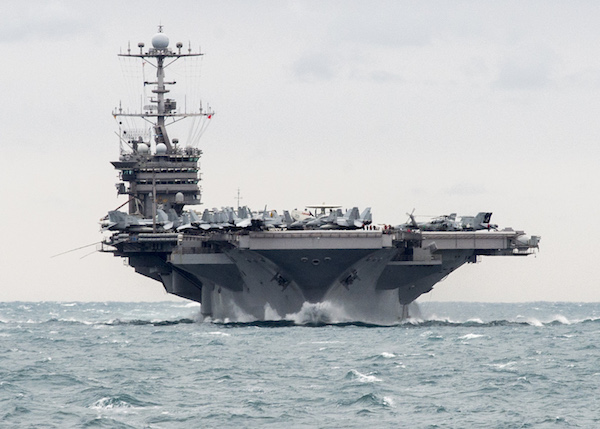
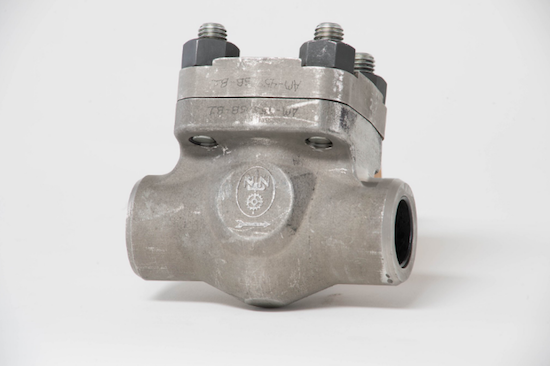
Back in October, Naval Sea Systems Command announced it had approved a 3D-printed metal drain strainer for use on the aircraft carrier the Harry S. Truman. The prototype part was installed in the carrier’s steam system as part of a one-year trial.
The strainer was originally a cast part that required a nine-month lead time to produce. The printed piece was created by Huntington Ingalls Industries and Newport News Shipbilding, which has been working on on its own maritime printing projects. The printed part took just three days to build.
The company is working with the Navy to establish specifications for 3D printed ship parts.
"We're still paving the road because the Navy, rightfully so, has to pay a lot of attention to the reliability of the parts, safety of their sailors and operability of their ships," said Don Hamadyk, Newport News’ director of research and development, in an interview with the NavyTimes. "So, the technical work that we've done over the last, really, four years is all aligned toward making the Navy comfortable with the parts that are going on their ships."
Newport News installed a 3D Systems ProX DMP 320 metal additive manufacturing system at its facility last year.
“We have delved into uncharted territory to create a positive disruption in our industry in much the same way the modern welding processes supplanted rivets, revolutionizing the way ships are built,” said Charles Southall, Newport News’ vice president of engineering and design. “We’re proud to be leading the way.”
The Navy hopes to cut lead times on important parts and find a way to produce spare parts at less cost.
Source: NavyTimes

Brian Albright is the editorial director of Digital Engineering and a contributor to Robotics 24/7.
From geometry preparation to AI-assisted analysis, integrated CFD workflows…

Software-based GripperAI manages mixed picking through basic geometry
Safety, communication and motion control components enable smooth operation

North America’s largest robotics and automation event winds down