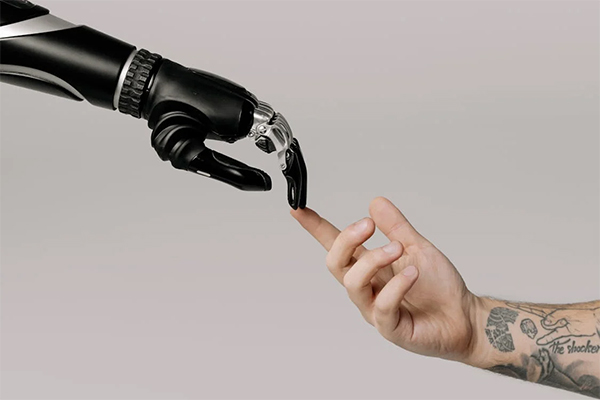
Pexels, used via Lamber Goodnow
A new research study from Lamber Goodnow explores how the coming wave of AI-driven change might make some jobs not only more efficient, but far safer.
Get news, papers, media and research delivered. Sign up for our free newsletters.
Stay up-to-date with news and resources you need to do your job. Research industry trends, compare companies and get weekly market intelligence with Robotics 24/7.
Pexels, used via Lamber Goodnow
A new research study from Lamber Goodnow explores how the coming wave of AI-driven change might make some jobs not only more efficient, but far safer.
Analysis from a new research study published by injury lawyers Lamber Goodnow found that with predicted automation development and workplace injury rates, workplace injuries are forecast to decrease by 5.9% by 2030, preventing approximately 161,000 injuries annually within five years.
The study, which utilized federal data along with sector and industry automation forecasts, identified key trends and technological innovations that are helping various industries work more safely.
By 2030, the World Economic Forum predicts that 30% of tasks will have been automated, with some sectors seeing automation and AI usage as high as 40%, while every industry is forecast to become at least 20% more automated than it is today.
Historically, studies have found that a 10% increase in automation has been associated with a roughly 2% reduction in workplace injuries.
Prediction models revealed that automation and AI use in the private healthcare sector will lead to the most significant drop in injury numbers of any sector, with the injury incidence rate expected to fall by 6.3%, preventing nearly 30,000 injuries annually.
Goods manufacturing (18,143) and retail trade (16,405) are predicted to have the second- and third-largest drops in injury numbers at the sector level, representing 5.5% and 4.9% improvements, respectively.
Nationally, figures suggest that workplace injuries will fall from 2.43 per 100 workers to 2.29 per 100 by 2030.
Per 100 workers, the study found that state-run nursing and residential Care currently has the second-highest workplace injury rate (8.9 per 100 workers), behind only spectator sports (including professional athletes), where more than 40% get injured at least once per year.
While automation and AI are predicted to take on 32% of tasks within state-run nursing and residential care by 2030, the prediction models suggest injury rates will fall to just 8.7 per 100, keeping incident rates close to four times higher than the predicted national average (2.29).
Couriers will still have the second-highest rate per 100 workers, falling from 7.9 to 7.4. This represents a 6.4% decline and 3,352 incidents annually by 2030; however, it is still close to three times the national average rate.
Of the ten industries expected to retain the highest injury rates per 100 workers, Scientific Professional Services ranks 7th but sees the steepest drop in annual injuries after the forecasted adoption of automation. By 2030, injury rates are expected to fall 7.8%, from 5.7 to 5.3 per 100 workers, reducing incidents per year by 2,761.
“Automation is predicted to move fast, and get faster - our sources estimate a 6% drop in workplace injuries in America over the next 5 years, driven by automation taking on 30% of current tasks,” according to the report. “From there, researchers believe there is a 50:50 chance of AI outperforming humans in all tasks within 45 years and, eventually, automating all human jobs within 120 years.
Enjoyed this article? Add Robotics 24/7 as a preferred source in Google Search.

Edge computing gives AI agents the processing power to turn instructions into…
Daimon-TWM world model debuts for the public
Platform helps robots adapt to complex tasks
Look beyond the headlines for the latest in humanoid robots