enVista
By
Tim Culverhouse
January 13, 2026

enVista
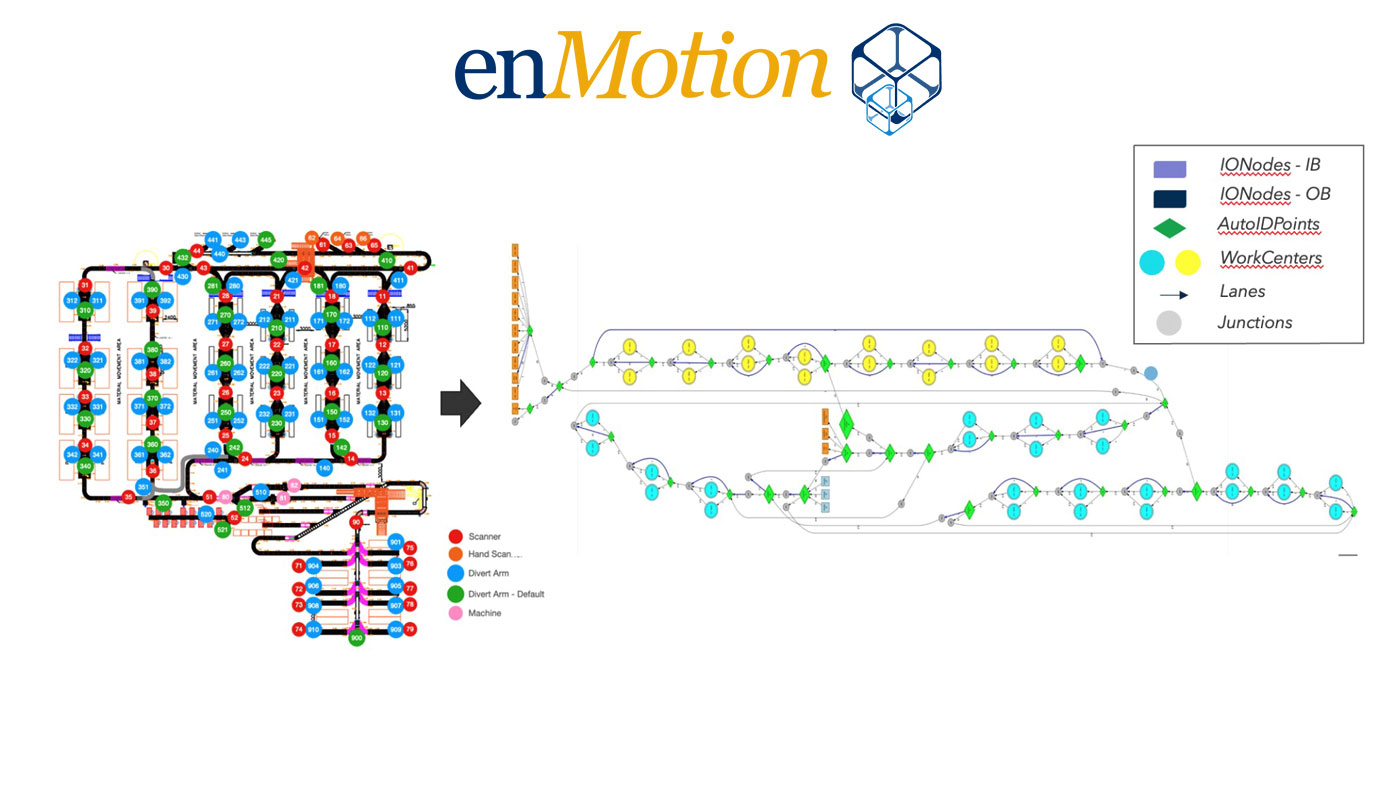
The enMotion WES+ platform manages the orchestration of various types of warehouse automation.
Get news, papers, media and research delivered. Sign up for our free newsletters.
Stay up-to-date with news and resources you need to do your job. Research industry trends, compare companies and get weekly market intelligence with Robotics 24/7.
enVista
The enMotion WES+ platform manages the orchestration of various types of warehouse automation.
Everything in motion.
That’s the impetus for the name and the driving force behind enVista’s WES+ platform.
But beyond the play on words, the name represents how enVista envisions its AI-powered multi-agent orchestration engine that optimizes a host of intralogistics processes.
Real-time data collection is at the heart of enMotion. Various types of robots and automation systems constantly relay data back to the platform.
AutoIDPoints capture data from scanners, weight scales or sensors to inform next-step decisions.
“When cartons or totes are on conveyors, we know the distance traveled, when it arrived and what lane it went to,” said Suneel Krishnaswamy, CTO of enVista. “At the same time, we collect data from the AMR to monitor the time since we gave it a task.”
As WES platforms and other related warehouse automation software have developed over the years, ongoing advancements in technologies like AI and simulation, in conjunction with the aforementioned sensors, allow platforms like enMotion to optimize tasks in real-time.
“We're decoupling the work from the task assignment, and then we're making tasking decisions as late as possible to ensure that we meet the SLA,” said Jim Barnes, CEO of enVista. “What we are doing is using postponement theory and optimizing the constraints within the distribution centers to evaluate when we give somebody a task dynamically. We don't give you 100 missions and say, ‘Go get the missions,’ and now we're done. We're dynamically evaluating every mission, every task in real time. That's where the juice is and where our differentiation is.”
In the early days of WMS platforms, as both Barnes and Krishnaswamy described it, limited automation options generated limited data. And with limited data, insights were passed on an incomplete view of the warehouse and overall process.
“Early WMS were built for first-generation automation like conveyors and while they may have been able to build in an AMR, they are dependent on the AMR vendor to provide the orchestration for that layer,” Krishnaswamy said. “That means that each of these different resources, when you build it in, it’s optimized for only the local optimization of each of that equipment. There's nothing that is going across and doing a global optimization across different resources that are there. That’s where enMotion WES+ differentiates. We’re able to not only balance the work across these different zones, but also make sure that there is optimum utilization across these different resources.”
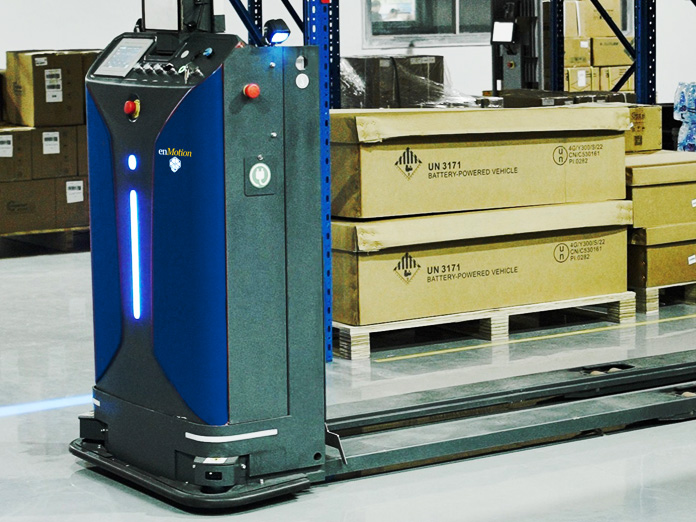
As part of the resource usage and optimization, enVista utilizes digital twins and simulations to paint clear and futuristic pictures of environments to get the most out of various warehouse systems.
“We can go from simulation to configuration very, very quickly and then show the customer what’s happening in real-time,” Barnes said. “We just did a project with a client, and the way they were leveraging their cross-belt sorter into their chutes, they were only getting about 30- 35% overall throughput utilization on the way they manage the work. We came in with our technology and modeled what they did today. We built a twin, and we said, ‘Look, this is really how you should orchestrate the work in the future.’ We went from a 35% utilization to 92% utilization. We used the same cross-belt sorter. We’re just ripping out their warehouse control software and their current legacy WES that is managing this in a batch environment, and now we're going to a dynamic environment.”
Along with the automation systems in the warehouse, humans also play an integral part in the warehouse orchestration game. For enVista and enMotion, humans and their associated tasks represent another data point in the overall choreography of the intralogistics process.
“We don't really care who or what the node is,” Barnes said. “The node could be a robot. The node could be a human being. The node could be a conveyor. The node can be anything that is actually doing a task which takes time and effort. That's how we look at this. Conceptually, that's what we're solving for. We're not replacing warehouse management systems. We're actually making them better, and we are sequencing where the work gets done in highly automated facilities.”
By linking these configurable nodes, enVista said enMotion WES+ enables dynamic routing, decision-making and task assignment across all agents and systems. The company said that the result is a scalable, adaptive workflow that evolves with operations, without hard-coded logic or vendor constraints.
“We abstract different resources. AMR, AGV, human. We model what the capabilities are, which zones it can operate in and what the productivity is of each, so we know how much of each type of equipment can do and what it can do so we appropriately assign the task,” Krishnaswamy said. “The execution part obviously will have specific interfaces to the different equipment to drive those tasks once they are assigned. In this model, even a human is a resource with defined capabilities. They can pick at this rate; they can reach these many locations, depending upon the type of equipment they are using. They are ordered and optimized, just like any other resource.”

Tim is the Editorial Director of Robotics247.com. His mission is to provide valuable information and insights to robotics professionals and decision-makers, and to help them solve business challenges. He is a creative, deadline-driven, and detail-oriented storyteller. In addition, he is a sports broadcaster and public address announcer.
GENISOM AI makes ICRA debut at conference in Vienna
World's first omni-modal evaluation including tactile sensing for…

Ultrasonic sensing enhances robotics perception
North America’s largest automation and robotics event takes place June 22-25