By
Jamie Gooch
May 1, 2019
Get news, papers, media and research delivered. Sign up for our free newsletters.
Stay up-to-date with news and resources you need to do your job. Research industry trends, compare companies and get weekly market intelligence with Robotics 24/7.
At the Additive Manufacturing Users Group (AMUG) conference in Chicago last month, a lunchtime conversation summed up the state of additive manufacturing/3D printing technology, and many other technologies.

A large supplier to the aerospace industry was voicing a minor complaint about his company’s 3D printers to a representative from a competing 3D printer company. That representative, as you might expect, said his company’s 3D printers did not suffer from that particular malady.
“Where were you five years ago when we did all this?” asked the aerospace supplier.
“We weren’t a company yet,” replied the 3D printer manufacturer.
It was a small example of concerns I’ve heard again and again from many sectors Digital Engineering covers: The state of the art is changing so quickly, it’s tough to keep up. In additive manufacturing (AM), new processes may require new materials, new design techniques with new CAD and simulation software to support them, new testing and quality control measures, and on and on. (You can read more about how the AM industry is meeting those challenges here.) Adopting a new technology causes a ripple effect that can disrupt tried-and-true workflows and even entire industries.
The 3D printing sector isn’t alone in this, of course. Last fall when we asked our audience what challenges or issues they face when developing a digital thread, “keeping up with new technologies” was second only to “complexity of design and development.”
Perhaps no recent technological upheaval embodies disruption more than autonomous vehicles. Self-driving cars that can get us safely from point A to point B would have ripple effects felt beyond the auto industry. How would they change healthcare and insurance? What about city planning and infrastructure? What jobs would they create or eliminate? What entertainment options would people purchase as they ride along? Established businesses and start-ups are scrambling to correctly envision (and invest in) the future.
But there’s a lot of engineering to get those self-driving cars, or aircraft or watercraft from point A to point B, as we describe in this issue’s focus. That engineering will take time, as will the regulations and cultural shifts that would accompany such a disruption.
Hype is part of the innovation process. It gets researchers, regulators, investors, corporations and the general public all moving in the same direction to advance a particular set of technologies. Even if full autonomy isn’t achieved by a certain date, the road to that goal is filled with important milestones that advance the various technologies involved.
The danger to design engineers in the rush to meet hyped up expectations is two-fold. Most importantly, product designers and engineers may be pressured to cut corners, which could have life-and-death consequences. Design engineers have a responsibility to be the voice of reason, balancing the desire to meet short deadlines and incredibly complex product development with the need for rigorous simulation, testing and quality control.
Engineers aren’t immune to hype. At AMUG, I heard a number of anecdotes from different rapid prototyping and manufacturing service providers who were still fielding requests for additive manufacturing, rather than requests for the most efficient, cost-effective way to produce a part.
The other, less dire, danger is that companies will wait until things slow down before investing in new technologies that could actually help them meet the oft-opposed goals of better, faster, cheaper. Technologies such as AM, computer-aided optimization, artificial intelligence, augmented reality and more are all moving so fast, it’s difficult to discern the leading edge from the bleeding edge. Here again, engineers must be involved in determining when and where to invest the company’s resources.
Approach new technology adoption with the same rigor as you would product design, validation and testing. There will always be something better coming along, but the current iteration of technology may be just what you need now.

Jamie Gooch is the former editorial director of Digital Engineering.
Enjoyed this article? Add Robotics 24/7 as a preferred source in Google Search.
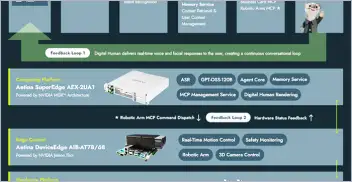
Edge computing gives AI agents the processing power to turn instructions into…
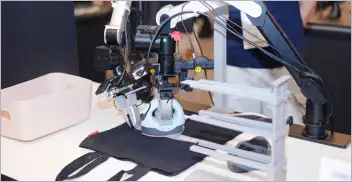
Daimon-TWM world model debuts for the public
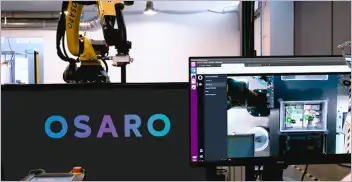
Platform helps robots adapt to complex tasks
Look beyond the headlines for the latest in humanoid robots