Wilder X
Wilder X has unveiled WCSA, a proposed machine-facing governance architecture intended to check current authority, conditions, readiness and evidence before consequential machine capability is allowed or restored.
Get news, papers, media and research delivered. Sign up for our free newsletters.
Stay up-to-date with news and resources you need to do your job. Research industry trends, compare companies and get weekly market intelligence with Robotics 24/7.
Wilder X
Wilder X has unveiled WCSA, a proposed machine-facing governance architecture intended to check current authority, conditions, readiness and evidence before consequential machine capability is allowed or restored.
Wilder X, a pre-seed technology company that said it is developing the proposed missing layer between AI decisions and real-world action, has publicly introduced the Wilderson Coordinated Sufficiency Architecture, or WCSA, a proposed machine-facing governance layer intended to sit between an intelligent request and consequential physical action.
The company said that it is also launching a bounded robotic-arm validation initiative for qualified builders, independent reviewers, industrial operators, researchers, and investors.
Wilder X said that the idea is simple: intelligence may recommend an action, but intelligence alone should not create force. Before a protected machine output becomes available, Wilder X proposes checking whether the right actor is asking, the authority is current, local conditions are suitable, the machine and surrounding system are ready, contradictions have been resolved and evidence is being preserved.
Wilder X describes that discipline as “permission before consequence.” The company said that its operating model gives a system five possible answers:
“AI can generate an answer in milliseconds, but a machine can create a consequence that cannot be taken back,” said K. P. Wilderson, founder of Wilder X. “Our question is not whether intelligence is impressive. Our question is what must remain true at the machine before intelligence is allowed to become motion, force, energy, route or access.”
Wilder X said that the timing is material. The International Federation of Robotics reported 542,000 industrial robot installations in 2024 and 4.664 million industrial robots operating worldwide, up 9% from the prior year. At the same time, the U.S. Occupational Safety and Health Administration identifies hazards including unexpected movement, control and programming errors, unauthorized access, mechanical failures, electrical and fluid-power hazards, environmental interference, improper installation and pressure to restart operations quickly.
The company said that existing disciplines already address major parts of the problem. Functional safety governs safety functions. Cybersecurity protects systems and information. Robot standards address robot and integration safety. AI governance addresses model and organizational risk. Lockout/tagout controls hazardous energy during covered service and maintenance. Wilder X said that it is not claiming those systems have failed or should be replaced.
The company said that its narrower thesis is that a coordination gap may remain when an AI or network request crosses into physical capability: the decisive machine-side boundary should independently require current concurrence across the conditions that make the requested capability sufficient for that moment and use. Wilder X said that whether WCSA is distinct, technically feasible and commercially valuable remains to be established through controlled testing and independent challenge.
Wilder X said that it has completed a substantial controlled architecture and development record, including doctrine, requirements, interfaces, failure states, restoration conditions, buildbooks, component maps, action cards and validation planning. The company reported two U.S. provisional patent applications on file. Those records are advanced engineering plans - not proof of a completed prototype, certified product or validated safety function.
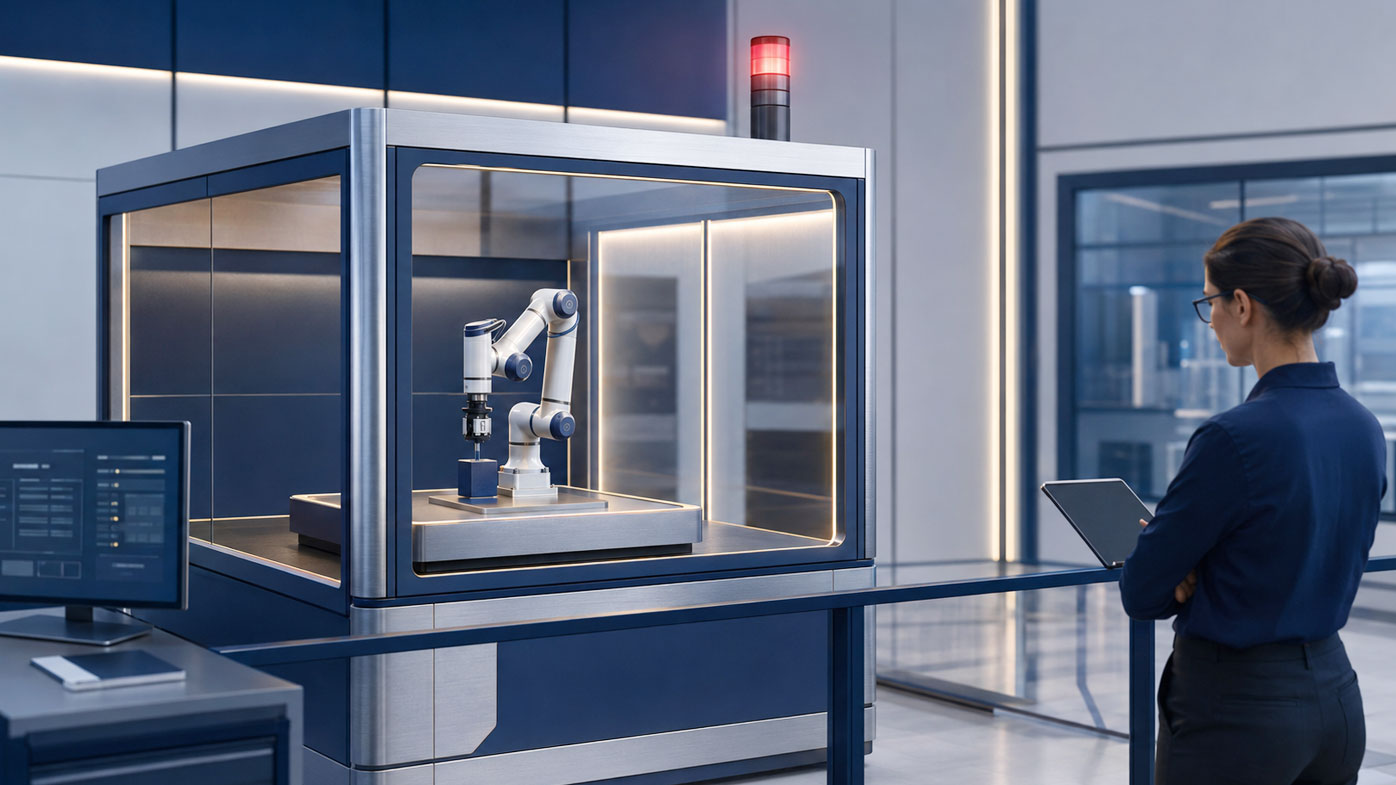
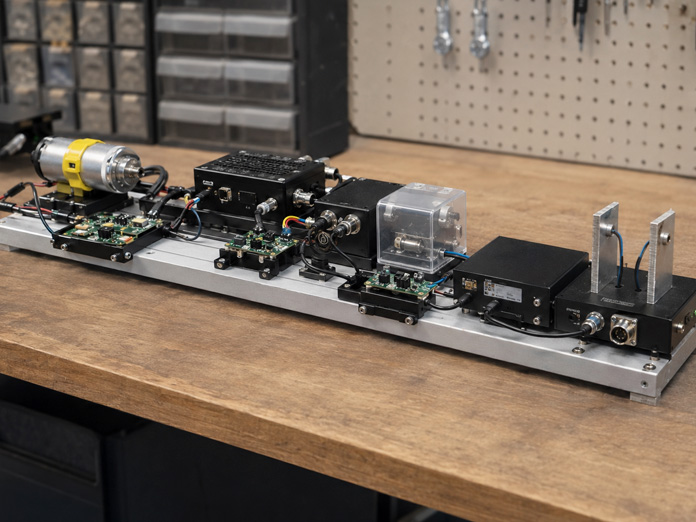
The first proposed evidence program uses a low-voltage, guarded robotic-arm bench. The company said that it is intended to test a narrow question: can an external local boundary reliably refuse or remove a protected motion-enable signal when required evidence is absent, stale or contradictory, while preserving a reviewable record and complementing the existing robot controller and safety system? Detailed thresholds, topology and patent-sensitive implementation remain controlled.
Wilder X said that planned work includes:
The company said that any timing or performance targets remain provisional until reviewers approve the measurement method and pass/fail criteria.
Wilder X stated that it is actively recruiting qualified partners to challenge and attempt to break the architecture. The company said that the near-term milestone is a funded, controlled evaluation on a guarded robotic-arm bench - producing repeatable measurements, an independent technical review, and a written go, adjust or hold decision.
The company said that priority conversations include robot and automation engineers, integrators, industrial operators, functional-safety and machinery-assurance specialists, cybersecurity and AI-governance researchers, universities, insurers, standards participants, public-sector technology programs and investors who fund evidence before scale.
“A serious idea should survive people trying to disprove it,” Wilderson added. “If the evidence says adjust, we adjust. If it says hold, we hold. If it proves that a governed boundary can make physical AI more reviewable without interfering with existing safety responsibilities, then we will have earned the right to take the next step.”
The company said that its near-term commercial test is equally bound:
Wilder X said that interest and introductions will not be described as traction unless they produce a recurring problem, an identified budget owner and a concrete funded next step.
Enjoyed this article? Add Robotics 24/7 as a preferred source in Google Search.
Edge computing gives AI agents the processing power to turn instructions into…
Daimon-TWM world model debuts for the public
Platform helps robots adapt to complex tasks
Look beyond the headlines for the latest in humanoid robots