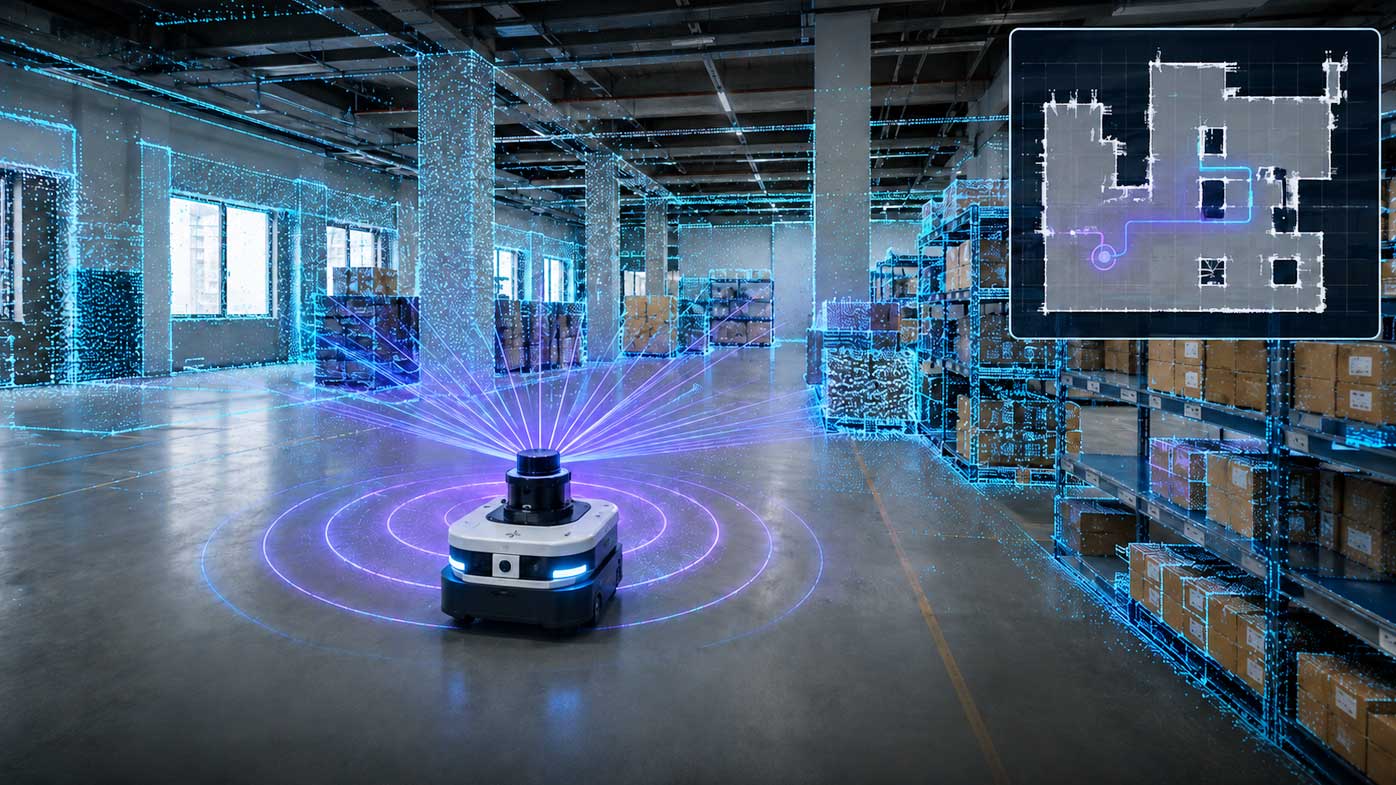
Simultaneous Localization and Mapping (SLAM) is a robotics technique that allows a robot to create a map of an unfamiliar environment while simultaneously determining its own position within that map.
SLAM is particularly important for autonomous mobile robots (AMRs) because a robot needs to understand both where it is and what its environment looks like to effectively navigate.
SLAM systems can combine data from technologies such as LiDAR, cameras, inertial measurement units (IMUs), wheel encoders and other sensors. The resulting map can support navigation, obstacle avoidance, localization and path planning.
SLAM is often associated as a foundational technology behind many AMRs and other robotic navigation systems.
Related terms: AMR, LiDAR, Sensor Fusion, Path Planning, Computer Vision
Get news, papers, media and research delivered. Sign up for our free newsletters.
Stay up-to-date with news and resources you need to do your job. Research industry trends, compare companies and get weekly market intelligence with Robotics 24/7.
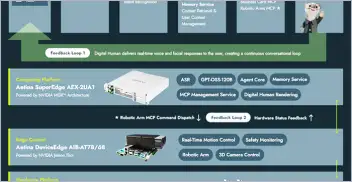
Edge computing gives AI agents the processing power to turn instructions into…

Colette Kress, current EVP and CFO of NVIDIA named interim CEO

China's Office of the Working Mechanism for Foreign Investment Security…

President Trump orders a review of robotics imports over national security…