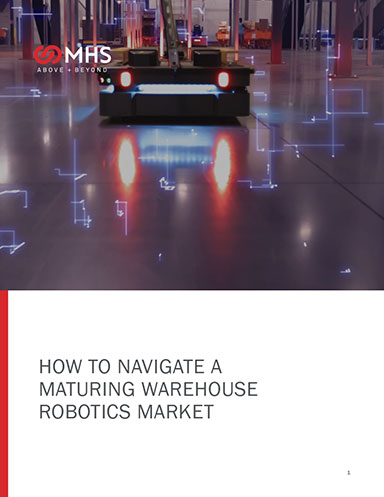
Today's robotics solutions are more advanced than ever, capable of taking on more and more of the warehouse workload. Self-driving vehicles can move loads from point A to B, robotic arms can pick and place individual items and still other robotic solutions can load and unload freight on the dock.
LogisticsIQ estimates the warehouse automation market will grow to $30 billion by 2026, up from $15 billion in 2019 – a compound annual growth rate of 14%. This growth is powered by the intersection of key technology advances and major labor challenges.
The labor challenge boils down to this – businesses lack the staff necessary to handle the physical and repetitive tasks of the distribution center. And the labor that is available is expensive and prone to high turnover.
But how high? According to the Bureau of Labor Statistics, the turnover rate for warehouse labor stood at 46% as of the latest data available and has hardly cracked below the 40% mark in the last five years.
Fill out the information below to download this resource
By making a plan and taking a step-by-step approach to introducing automation, operations can create facilities with exceptional labor efficiency, order accuracy and more - whether technically a fully automated warehouse or not.
Edge computing gives AI agents the processing power to turn instructions into…

Daimon-TWM world model debuts for the public
Platform helps robots adapt to complex tasks

Look beyond the headlines for the latest in humanoid robots