Found in
Researchers at Columbia University’s Irving Medical Center have leveraged 3D printing to literally create a new “hair raising” process. The group has used a 3D printer to create plastic molds that can function as a microenvironment for hair follicle growth. The process could be a way to facilitate the growth of human hair follicles in a laboratory to slow or…
Found in
Small and medium-sized enterprises (SMEs) are often challenged to deploy additive manufacturing (AM) technology because of the high cost of entry. A European Union (EU) program can help address this challenge. The EU-funded AdditiveManufacturABLE (AMable) program is helping SMEs develop their ideas into final products, as well as creating a digital framework to provide access to European AM knowledge. According…
Found in
As autonomous vehicles and unmanned aerial drones are adopted for more applications, advanced control systems will be required to direct them safely, particularly in crowded urban environments. Researchers at Aarhus University in Denmark are working on ways to develop these controllers, and to integrate artificial intelligence to improve their operation. The team is also designing and 3D printing is own…
Found in
Robots are slowly working their way into a variety of applications, from moving goods in warehouses to delivering packages. An increasing shortage of healthcare workers is also prompting the use of caregiving robots. Right now, these robots are limited to activities like asking questions and monitoring patient safety. They aren’t designed to provide the type of hands-on care a nurse…
Found in
New international standards are on the way that could help aircraft parts manufacturers better meet safety and performance requirements in the aerospace sector. ASTM International’s additive manufacturing technologies committee (F42) is currently developing the four standards. “The industry uses standards to ensure that public safety, quality, and readiness levels are maintained,” said Shane Collins, general manager at Additive Industries North…
Found in
3D printing with glass is rife with challenges—some methods require very high heat, while others product opaque end products or print at very low resolutions. Canadian researchers have successfully 3D printed an optical glass that could enable the low-cost manufacture optical fibers and other components for sensors, telecommunications components and biomedical equipment. Researchers from the the Centre d’Optique, Photonique et…
Found in
A research team at Kansas State University 3D printed batteries using freeze casting and hybrid MoS2-graphene aerogels. The process uses inkjet printing and freeze casting to control the microstructure and macroporosity of the structures during printing. Ink droplets (consisting of a molecular MoS2 precursor missed with graphene oxide nanosheets) are frozen during the 3D print process using a cold substrate…
Found in
The market for 3D metal printing is expanding. IDTechEx predicts that the global market for 3D printing metals will reach $12 billion by 2028, as more companies turn to additive manufacturing to create production parts in the automotive, aerospace and other industries. Giants such as HP and GE have launched large-scale metal printing efforts, but other companies have focused on…
Found in
Multi-material 3D printing can enable the creation of even more complex components and structures than single-material printing—by printing an object from several materials at once, manufacturers could further drive down complexity for a given assembly. Researchers at the University of Wisconsin-Madison have developed a 3D printer that uses visible and ultraviolet light to enable multi-material printing. The printer uses light…
Found in
Amazon has received a lot of attention for its plans to use robotic drones to deliver packages, but there are other, potentially more economically feasible, uses for autonomous drones in the supply chain. Sabrewing Aircraft Co., for example, has developed a pair of cargo carrier drones designed for large payloads (up to 800 lbs.) that could be used to move…
Found in
Consumer products giant Procter & Gamble has teamed up with bioprinting firm Aether to advance 3D bioprinting with machine learning and in situ print monitoring, while also developing the next-generation Aether printer. The companies announced a two-year joint development in agreement in February. The companies will use the Aether 1 multi-material printer to develop hardware and software capabilities that can…
Found in
As urban centers become more congested with traffic, a number of companies are designing small, autonomous air taxis that could ferry passengers across a city. Bruchsal, Germany-based Volocopter is currently working with Fraport AG, the entity that acts as airport manager for the Frankfurt Airport, to develop concepts for ground infrastructure and operations that would enable the use of Volocopter’s…
Found in
Additive manufacturing is rapidly being adopted in the healthcare sector. A Fact.MR report predicts that the global market for 3D printed medical devices could reach revenues of more than $1.7 billion by 2022. QY Research puts the global 3D printed dental market alone at $260 million in 2018, reaching $930 million by 2025. In 2018, printer giant HP announced new…
Found in
Artificial intelligence (AI) is becoming a common part of the technology landscape, in hardware and software, including the use of machine learning and deep learning. Design engineers will be challenged to use both deep learning and machine learning in their own design processes to more quickly explore the design space and optimize final designs, as well as incorporate deep learning…
Found in
A new light-based 3D printing technique developed at the University of California at Berkeley can create objects from a viscous liquid in just a few minutes. The technique avoids layering, and can create flexible object as well as encasing existing objects in the material. “I think this is a route to being able to mass-customize objects even more, whether they…
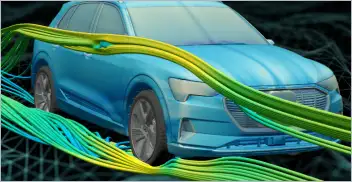
From geometry preparation to AI-assisted analysis, integrated CFD workflows…
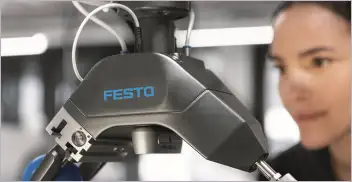
Software-based GripperAI manages mixed picking through basic geometry
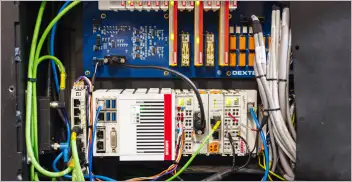
Safety, communication and motion control components enable smooth operation

North America’s largest robotics and automation event winds down